When violence becomes the language of childhood.

I was travelling on a train recently when I found myself sitting close to a young boy, perhaps five years old. For about 30 minutes he talked almost continuously, not about school, friends, football, dinosaurs, superheroes or adventuring in the woods, but about destroying things.

He described blowing things up, exploding buildings, wrecking vehicles, smashing and killing. There was no context, no story, no apparent game, just a stream of imagined destruction that seemed to fascinate him. His parents barely responded and other passengers hardly noticed, but I couldn’t stop thinking about it.

Today, the Children’s Commissioner has published a report examining children referred to the Prevent programme. One of its most striking findings is that around seven in 10 children referred do not fit traditional definitions of extremist ideology. Instead, many display a worrying fixation with violence, weapons, mass casualty attacks and harmful online content. The report argues that our systems struggle to respond to these children because they do not fit neatly into existing categories of radicalisation.

As I read the report, my mind returned to that little boy on the train, not because I believe he was a clear and present danger, he was five years old, but because I found myself wondering when it was that violence became such a normal language of childhood.

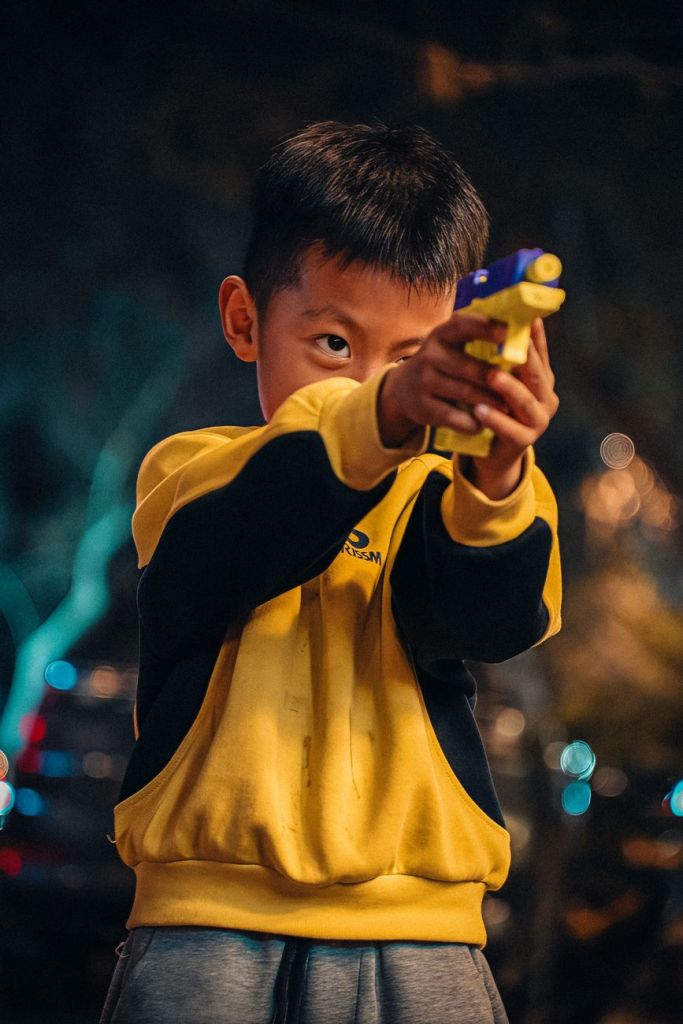
Of course, this is not entirely new. I grew up watching cowboys and Indians films. We played war games. Toy guns appeared every Christmas. Many of us pointed plastic revolvers at our friends before we were old enough to understand what a real gun could do.

It would be easy, and wrong, to pretend that previous generations were somehow innocent. Children have always explored power, risk and conflict through play. Stories have always contained villains. Boys in particular have often been encouraged to test boundaries through rough-and-tumble play, competition and confrontation.

Yet something feels different. The violence of my childhood was usually embedded within a story. However simplistic and problematic those narratives may have been, there was at least a framework.

Today’s children inhabit a digital world where violence is often detached from meaning. Online platforms can serve up an endless stream of fights, humiliation, cruelty, real-world killings, extreme pornography and videos designed purely to shock. The Children’s Commissioner describes children becoming “fixated on violence” after exposure to harmful online content. Violence is no longer a scene in a film; it is content, and content never ends. That should force us to ask difficult questions about the messages children receive.

Too often, boys are still encouraged to destroy while girls are encouraged to create. A boy knocking down a tower of bricks is laughed at; a girl building one is praised. Boys are given weapons while girls are given crafts. Boys are expected to conquer while girls are expected to nurture.  These are caricatures, of course, and modern parenting and education is more nuanced than this. Yet the underlying messages remain surprisingly powerful. We continue to socialise boys towards domination, aggression and risk, even as we express concern about male violence later in life.

Then we seem surprised when some boys become fascinated by power expressed through destruction. The uncomfortable truth is that violence is not a fringe interest in our culture; it sits at the centre of much of our entertainment, media and public discourse.  We celebrate military victories. We cheer cinematic revenge. We consume true-crime documentaries at extraordinary rates. We replay footage of attacks and atrocities across rolling news channels. We talk constantly about conflict, threat and enemies.  The blame does not solely lie at the feet of social media.

Children are not separate from this culture; they absorb it. The Children’s Commissioner’s report should not simply prompt a discussion about Prevent. It should prompt a discussion about childhood itself.

What stories are children hearing? What images are they seeing? What behaviours are being rewarded? What alternatives are we offering?  Because if we want children to create, collaborate, empathise and care, we have to build a culture that values those things as highly as it values competition, conquest and destruction.

The little boy on the train was not the problem. He may simply have been reflecting the world around him. That is what children do. They absorb our values, our anxieties, our obsessions and our dreams. They hold a mirror up to the culture we have created.

And perhaps that is the most uncomfortable question raised by today’s report: not simply what is happening to children, but what are children are learning from us?
It’s so funny, how we don’t call anymore.

It was my birthday recently.  There were cards on the window sill, thoughtful texts arriving throughout the day, WhatsApp messages from friends I haven’t seen for years, LinkedIn notifications from professional contacts and the familiar stream of digital kindness that reminds us we are remembered. I was genuinely grateful for every one of them.

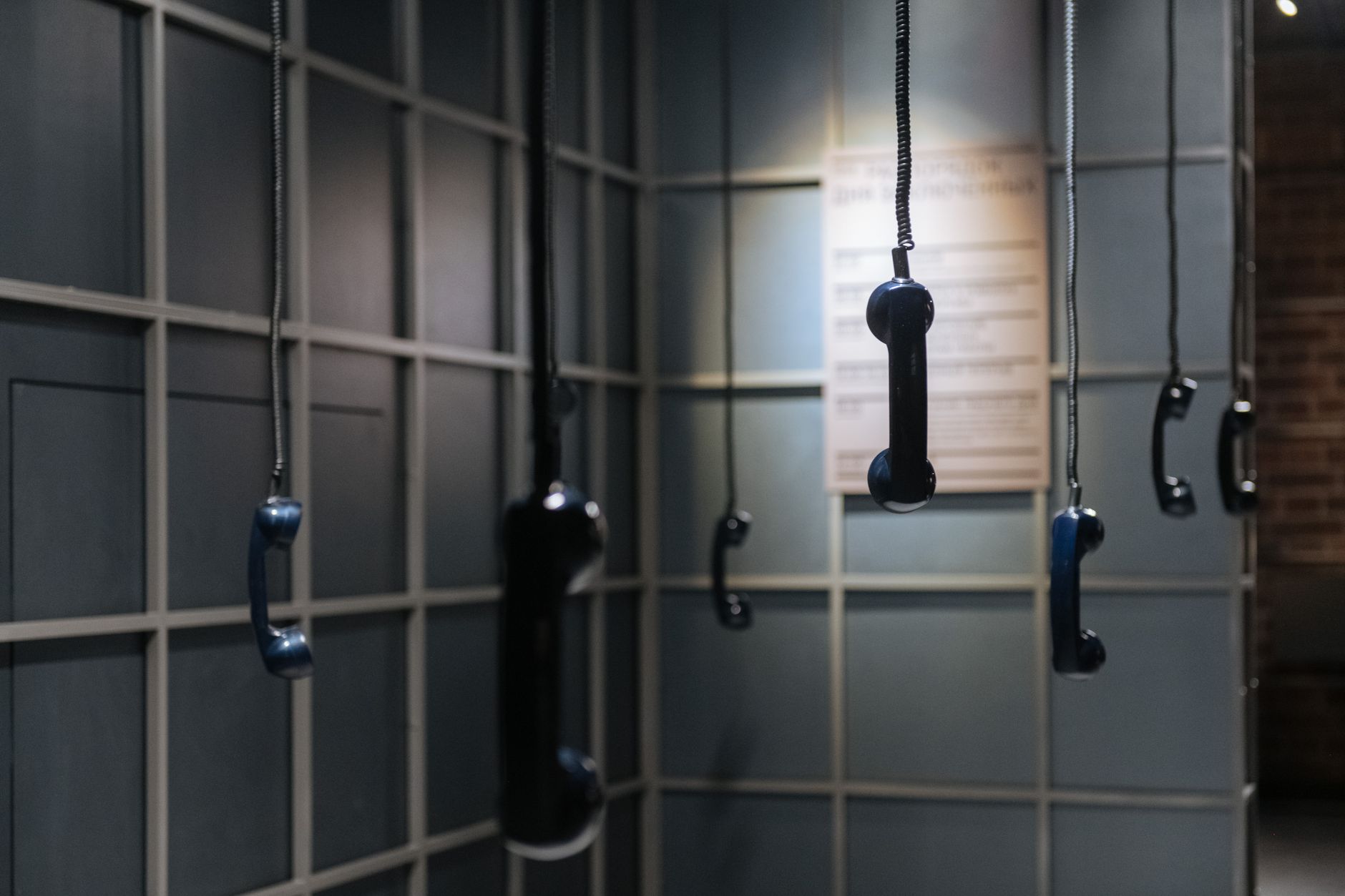
Yet among all those messages, there was just one telephone call.  Something that caused me to paraphrase Cliff Richard.

This isn’t a complaint. I didn’t feel unloved or overlooked. Quite the opposite. The messages were warm, generous and heartfelt. But the imbalance struck me as an observation worth pondering.

Once upon a time, birthdays involved sitting near the telephone, as it would ring continuously. The call itself was never simply about saying “Happy Birthday”. It was the opening line of a much longer conversation. The birthday greeting soon drifted into other territory. How are things really? Have you heard from so-and-so lately? What happened with that project you were worried about? How are the children? Before long, twenty or thirty minutes had passed. Sometimes longer. The conversation wandered and meandered, discovering things neither person had intended to discuss. There was no agenda and no objective other than human connection. The unexpected happened.

Today, the message arrives instead. A quick “Happy Birthday, James”, perhaps accompanied by an emoji or a thumbs-up, and the exchange is complete. The sentiment is still sincere and the affection is still real, but the experience feels different. Less expansive. More transactional. A thoughtful gesture, certainly, but often a completed task rather than the beginning of a conversation.

Perhaps the greatest irony is that we have never been more connected to our phones. We carry them everywhere, rarely letting them out of our sight. We sleep beside them, check them before getting out of bed and glance at them hundreds of times every day. Yet we seem increasingly reluctant to use them for the very purpose they were originally designed for: talking to another human being.

I notice this phenomenon everywhere. People frequently send a message asking whether they can call. I’ve often wondered what response they are expecting. Increasingly, asking permission to make a phone call has become a social ritual, almost an acknowledgement that an unsolicited conversation feels intrusive in a way it never used to.

I see it in the workplace too. Some younger colleagues visibly tense when the office phone rings. The ringing itself appears to create anxiety. Who could it be? What do they want? Why didn’t they send a message first? To many people, a ringing telephone is no longer an invitation but an interruption, a risk rather than an opportunity.

Then there are the callers who politely ask whether I can talk after I have answered the phone – another ritual I feel. I always find myself smiling at that moment. Well, yes, that’s why I chose to pick up, I have that sort of agency. Yet the question reveals something about the way our culture has changed. We have become accustomed to scheduling and managing communication so carefully that even a spontaneous conversation can feel unusual.

This is not intended as criticism. Every generation develops its own communication norms. Text messaging solves genuine problems. It is efficient, convenient, fast-paced, and respectful of people’s time. It allows us to respond when we are ready rather than forcing an immediate interaction. For busy lives, that flexibility matters.

But I do wonder what we lose when conversation becomes increasingly filtered, managed and controlled. A text message delivers information, but a phone call reveals mood. A WhatsApp message conveys words, while a conversation communicates hesitation, laughter, uncertainty, excitement and emotion. We hear the pause before somebody answers. We notice when their voice sounds tired. We recognise enthusiasm that would never fit inside an emoji. We discover things we didn’t know to ask.

Perhaps this is one reason why loneliness continues to feature so prominently in public conversations despite our endless digital connectedness. We have become remarkably effective at communication, but have we weakened conversation? The distinction matters. Communication is the exchange of information. Conversation is the exchange of humanity.

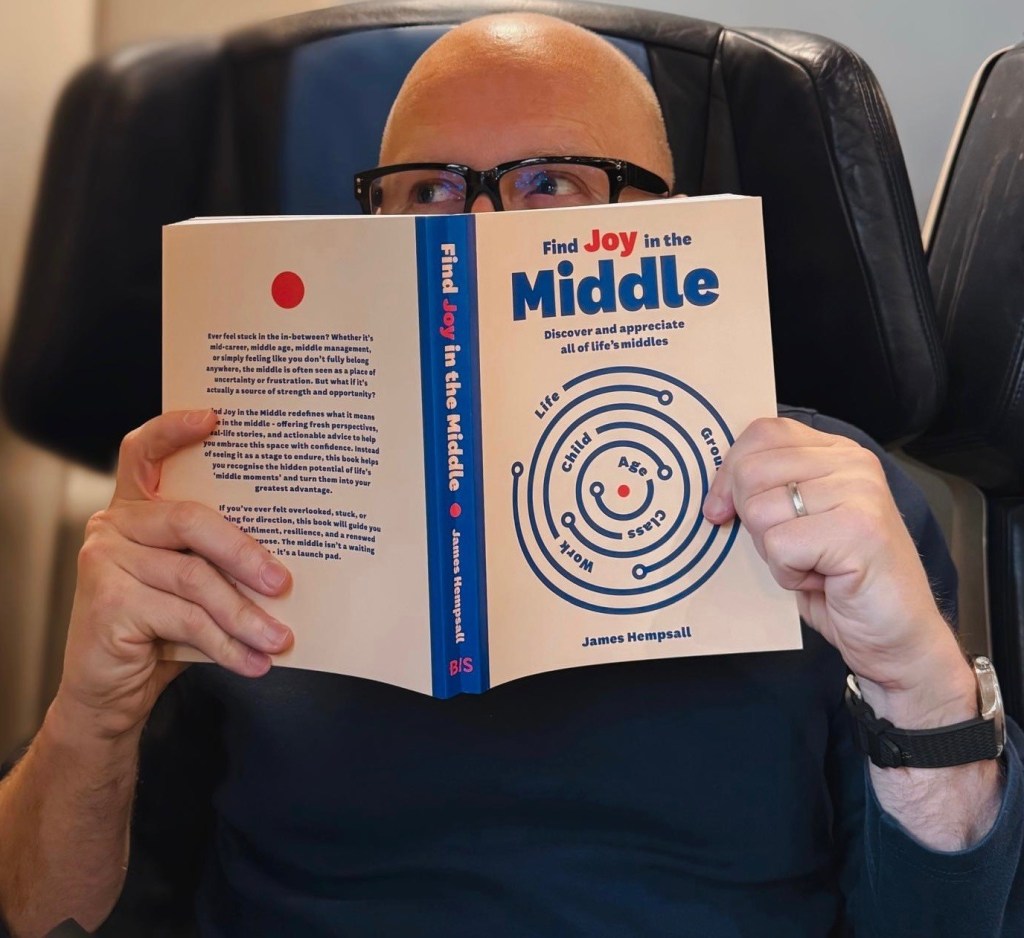
In Find Joy in the Middle, I explore the importance of living in the spaces between life’s milestones. The middle is where relationships deepen, where understanding grows and where meaning often emerges unexpectedly. It struck me on my birthday that phone conversations inhabit a similar kind of middle. A text message takes us directly to the destination, whereas a conversation allows us to wander through the landscape. Often it is in that wandering that joy is found.

I don’t know whether the decline of voice calls is a temporary cultural shift or a permanent change in how we relate to one another. Perhaps future generations will find our nostalgia for telephone conversations as quaint as handwritten letters. Maybe we can ask AI bots to talk to our friends whilst we are busy doing something (I don’t know what) that’s a better use of our time.  But I do know this: the one person who called me on my birthday didn’t simply wish me a happy birthday. We talked, laughed and caught up. We discovered things neither of us knew when the call began. Long after many of the messages had disappeared beneath newer notifications, that conversation stayed with me.

Maybe that’s what all this means.

Not that messaging is wrong. Not that technology has failed us. Not that we should abandon convenience for nostalgia. Rather, that amidst all the pings, alerts, notifications and unread messages, there remains something uniquely powerful about hearing another human voice unexpectedly reach across the distance and ask, “How are you?”

And perhaps, every now and then, that question deserves more than a text.

Photo by Anton Belitskiy on Pexels.com

Are we all Northern now?

I can still remember the day Margaret Thatcher stood at the Conservative Party Conference and declared, “We are a grandmother now.” It was one of those political moments that became bigger than the words themselves. It spoke to an age, a set of values and a particular view of Britain. Whether you agreed with it or not, it captured a mood and the moment.

Forty years on, another phrase has been rattling around in my head. Andy Burnham has not actually said it, but as I watch the early days of his premiership, I find myself wondering whether the message coming from Downing Street is something like: we’re all Northern now. That thought makes me smile.

As someone who is a northerner to some and a southerner to others, having grown up in the Midlands and been educated in a comprehensive school, I have spent most of my life inhabiting a place somewhere between the two. The Midlands has always been a geographical and cultural borderland. We understand the north and the south because we are neither entirely one nor the other. We borrow a bit from both. We are comfortable in the middle.  That might have been an advantage sometimes, but not always.

Regular readers will know that the idea of the middle has occupied much of my thinking over recent years. It became the central theme of my book, Find Joy in the Middle. The book is not really about geography. It is about recognising that life is often lived in the spaces between extremes. Between success and failure. Between youth and old age. Between certainty and doubt. Between arrival and aspiration. The middle, I argued, is not something to endure. It is somewhere to embrace.  Perhaps that is why I find this moment politically fascinating.  After all, the fifth of my main chapters was about the ‘middle ground’ and politics appeared throughout some of the others.

For decades, British politics seemed dominated by a southern gravitational pull. Power, influence, media attention, investment and ambition were drawn towards London and the South East. Even when the north voted the government in, it had a distinct metropolitan and elitist bent.  Regional identities survived, of course, but often as colourful footnotes rather than defining features of national life.  Think Blair and Prescott. 

Burnham represents something different. His political story, whilst formed in Westminster, was built in a city region. His reputation was built through his advocacy for Greater Manchester and through a belief that power works best when it is closer to people and places. We all know that of course.  As Prime Minister, he has already signalled an intention to continue that devolutionary journey.

What interests me most is not whether more government departments move north or whether Treasury spending patterns change. Important as those things are, there is another shift taking place.  The cultural centre of gravity appears to be moving too.  I have noticed it in myself.

Lately, I find myself dusting off my flatter vowels and leaning more readily into some of the rustic vernacular that has always been there. Not that I ever deliberately concealed it. But like many people who have navigated professional environments over several decades, I became adept at smoothing the rough edges. Softening certain words. Modifying an accent here and there. Adapting to the expectations of national institutions that often felt culturally southern.

Now, for the first time in a while, I sense a subtle reversal. The things that once felt like disadvantages increasingly look like advantages.  Regional accents sound less like obstacles and more like authenticity.  Local identity feels less like something that needs explaining and more like something worth celebrating. Being rooted somewhere is becoming fashionable again.

Perhaps age has something to do with it. One of the freedoms that comes with getting older is caring a little less about other people’s assumptions. But I suspect it is bigger than that. The country itself seems to be reconsidering what leadership looks and sounds like.  For those of us working in the world of children, families, education and early years, that matters.

Because some of the most important innovations in public service have emerged not from the centre but from places. They emerge when local leaders understand local communities, when solutions are designed with people rather than for them and when power is distributed rather than concentrated. In that sense, “we’re all Northern now” is not really about the North at all.  It is about valuing place.  It is about challenging the assumption that wisdom only resides in central institutions.  It is about recognising that thriving communities do not need to be identical to be successful.  And perhaps it is also about becoming more comfortable with who we are.

One of the central messages of Find Joy in the Middle is that fulfilment often comes when we stop striving to become someone else and start appreciating where we actually stand. The same may be true for nations as well as individuals.  Britain has spent many years searching for grand ideological answers. Maybe what we need is a little more confidence in our towns, our cities, our regions and our communities. Maybe we need to trust the wisdom that exists outside the centre.  As a Midlander, I am not about to start claiming full northern status. I know better than that. There are people in Yorkshire who would never permit it.

I admit I am enjoying this moment.  I am enjoying hearing different voices at the centre of national debate.  I am enjoying the growing confidence of places that have often felt overlooked.  And I am enjoying the possibility that the characteristics once dismissed as provincial may turn out to be exactly what modern Britain needs.  If that means flattening my vowels a little more and allowing the occasional piece of rustic Midlands vernacular to slip into conversation, then so be it.  After all, perhaps the middle has finally become the centre.

Photo by Alexandre Loureiro on Pexels.com

Can we please stop saying “we work in silos”?


There’s a moment in almost every meeting about children’s services where someone leans forward and says, with a kind of weary authority, “the problem is, we all work in silos.” Everyone nods. It sounds right. It feels truthful. And then, more often than not, we move on.

I’ve heard it so many times now that I find myself getting impatient with it. Not because it’s completely wrong, but because it’s become a stopping point rather than a starting point. It’s the sort of phrase that sounds like insight but often functions as an excuse. It’s a cop out.

Of course, services can feel fragmented. Of course, people are under pressure, operating in different ecosystems, with different targets, languages, acronyms, and accountabilities. None of that is in dispute. But “silos” has become a convenient shorthand that appears to let all of us off the hook. It wraps up a complicated set of choices and behaviours into something that feels structural, inevitable and therefore nobody’s particular responsibility. We work in silos, it is someone else’s fault, and we can’t do anything about it.

The truth is, silos don’t just exist out there somewhere, imposed on us by fate or organisational charts. They are created, and recreated, in small, everyday ways. They show up when we don’t pick up the phone because things are busy. When we stick closely to our remit because it feels risky not to. When we attend a meeting, agree broadly that things should be more joined up, and then go back to doing things exactly as we did before.

None of that is malicious. Most of the time it’s understandable. People are stretched, and systems are complicated. But it does mean that when we say “we work in silos,” what we’re often describing is something we are also participating in. Something we are reinforcing.

There’s something else that bothers me about the phrase, too. It’s completely detached from how children, young people, and families experience their lives. A child doesn’t wake up in the morning thinking about which part of their life belongs to which service. They don’t separate out their mental health from their education, or their safety from their relationships, or their housing from their wellbeing. It all comes as one whole, complicated, human experience.

Yet we design support in neat compartments and then act surprised when it doesn’t join up properly. Calling that silos almost disguises the deeper issue, which is that we’ve built systems around organisations rather than around people. What’s more frustrating is that the phrase carries a kind of shrug with it. It can sound like we’re saying, “this is just how it is.” And if that’s the case, then it’s hard to see where the energy for change comes from. You can’t shift something that feels inevitable.

I’d rather we were a bit more direct with ourselves. Instead of saying we work in silos, we might admit that we don’t always prioritise working together in the way we should. That we sometimes make information too hard to share. That our processes get in the way. That we haven’t invested enough time in building relationships across teams and organisations.

Those are more uncomfortable things to say, but they have an advantage: they point to things we can actually do something about.

Because for all the talk of structures and systems, collaboration is still, at heart, about people. It’s about whether we know each other, trust each other, and feel able to pick up the phone without worrying about whether this is “our bit” or “their bit.” It’s about whether leaders model that behaviour or simply talk about it. It’s about whether we measure success in terms of shared outcomes, or retreat back into what we can individually control. None of that is fixed. None of it is beyond our influence.

Language matters more than we sometimes think. The words we reach for shape how we understand a problem, and what we believe is possible. Silos has become one of those words that closes things down rather than opens them up. It names the issue in a way that feels tidy, but leaves everything else untouched. So perhaps it’s time we retired it. I really don’t want to think that three years into delivering the Best Start in Life strategy that we will still be trolling out this hackneyed get-out. Do you?

Not because the underlying challenges aren’t real, they are, but because repeating the same phrase over and over again isn’t getting us any further forward. Children, young people, families and I must say our workforce don’t need us to keep describing the fragmentation of the system. They need us to behave differently within it. That might sound simple, but it’s not easy. It requires intention, curiosity and, at times, a willingness to step slightly outside of what feels safe or familiar. It asks more of us than a well-worn phrase ever will.

If we’re serious about improving how services work together, then that’s the work. Not naming the silos. Dismantling them, piece by piece, through what we choose to do next.

Photo by Muharrem Alper on Pexels.com

What type of year has it been for you? One year of Find Joy in the Middle.

It’s been a year since my first book, Find Joy in the Middle hit the bookshelves.  When I look back, I see a year that sat squarely in the middle, not just chronologically, but emotionally, socially, and culturally.  It was a year that invited us to pause, to take stock, and to recognise the quiet power of being in‑between. In many ways, it felt like the world was catching up with what I’ve been saying for years: that the middle isn’t a place of stagnation, but a place of movement, momentum, and meaning.

For those of us in middle age, it was a year of reframing. I sensed a shift away from the tired old clichés of crisis and decline. Instead, people were beginning to see midlife as a pivot point, a moment to re-evaluate what matters, to shed what no longer fits, and to step into a more honest version of themselves. The conversations I encountered were full of people renegotiating their work, their relationships, their ambitions, and their wellbeing. It was as if the world had collectively exhaled and said, “right, what now?”

The middle class, too, found itself under the spotlight. Not always comfortably. There was a growing awareness of how squeezed and stretched this group had become, not wealthy enough to feel secure, not struggling enough to be prioritised. Yet this discomfort brought clarity. It forced a reckoning with what fairness means, what opportunity should look like, and how society depends on the very people it so often overlooks. The middle, once again, proved itself essential.

Even middle children, my favourite metaphor for the overlooked middle, found new resonance. Families were talking more openly about identity, birth order, and the subtle dynamics that shape us. I heard from many who felt seen for the first time, who recognised that their adaptability, diplomacy, and resilience weren’t accidents, but strengths forged in the in‑between. The middle child became a symbol of what I’ve always believed: that being neither first nor last can be a superpower.

Workplaces, too, were redefined by their middles. Middle managers, often dismissed or misunderstood, were the glue holding hybrid and flexible work together. They were the translators, the stabilisers, the human connectors in a year when organisations were still figuring out what ‘normal’ meant. I saw so many step into their roles with renewed confidence, realising that leadership from the middle is leadership in its most human form.

And then there was the middle ground, that fragile, precious space between extremes. I sensed a growing fatigue with polarisation. People were tired of shouting matches and binary choices. Others have been grasping onto their pre-extinction burst, fearful of change, angry with it and all perceived injustices, and they took to the streets to protest, or to create harm. Those in the middle ground were craving nuance, balance, and the courage to say, “It’s more complicated than that.” The middle ground, long dismissed as indecisive or dull, began to look like the only place where real progress could happen.

So yes, it has been a middle year. Not in the sense of being average or forgettable, but in the sense of being transitional, reflective, and quietly transformative. It was a year that reminded us that the middle is where life actually happens, where we grow, where we adapt, where we find our footing. And if we’re willing to embrace it, the middle can be the most joyful place of all.

I invite you to wonder how ‘middle’ your next year may be, and to think how you will be the architect of it.

www.findjoyinthemiddle.com

Buy the book

BIS publishers