There is no final edit: what 70 Up reminded me about finding joy in the middle

I watched the final episode of 70 Up last night and found it difficult to shake off. I found it poignant, sad, uplifting and, perhaps most of all, confusing. That last word matters because I don’t think this extraordinary series left me with a neat conclusion about life, and perhaps that is precisely its achievement. For more than six decades we have watched the same people grow from seven-year-old children into adults and now into their seventies.

We have seen ambitions expressed with the beautiful certainty of childhood encounter the much less predictable reality of actually living. Careers have happened, relationships have flourished and failed, families have grown, people have experienced loss, health has changed, expectations have been revised and life has repeatedly refused to follow the script. Watching the final instalment, I found myself thinking again and again about Find Joy in the Middle, because if there was ever a demonstration that the richness of life happens between beginnings and endings, surely this was it.

The original 7 Up was interested in a compelling question: how much of the adult can already be seen in the child? It looked particularly at the effects of class, background and opportunity. Yet, watching those lives from the vantage point of 70, I was struck by how inadequate any simple idea of prediction eventually becomes. Certainly, our beginnings matter. Where we come from, the opportunities available to us and the expectations placed upon us all shape what follows. But they do not tell the whole story. Life intervenes. People surprise us and we surprise ourselves. Things we desperately want do not happen, while other things we could never have imagined become enormously important. Doors close and unexpected ones open. We adapt, compromise, recover, change our minds and sometimes discover that something we once regarded as a disappointment looks very different when viewed from further down the road.

That is one of the things I have tried to explore through Find Joy in the Middle. We are very attracted to beginnings. New jobs, new relationships, new projects, new homes and new years all come beautifully uncluttered by what follows. At the beginning, possibility is everywhere and disappointment has not yet had time to interfere. We are equally fascinated by endings, because endings allow us to construct a story about what happened. Retirement speeches, obituaries, anniversaries and biographies take the untidiness of decades and arrange it into something that appears coherent. What we talk about much less is the enormous space between the two, where most of life actually happens. The middle is where plans meet reality, where certainty becomes doubt, where achievements coexist with disappointments and where we discover that life is much harder to classify as successful or unsuccessful than we once imagined.

There was something almost unnerving about seeing the participants confronted by their younger selves. Most of us are spared the experience of watching our seven, 14, 21 or 28-year-old selves describing confidently what we expect from the future. Yet those earlier versions of us still exist somewhere. I can certainly look backwards and remember times when I thought I knew where my own life was going. There were ambitions I thought would matter enormously, worries that occupied far too much space and assumptions about the future that turned out to be completely wrong. There are also people, experiences and opportunities that became hugely important to me which I could never have predicted. Perhaps one of the gifts of getting older is slowly becoming more forgiving of the person we used to be. They were making choices without knowing what we know now. What looks obvious in retrospect was rarely obvious at the time.

And that was where the sadness of 70 Up sat for me alongside something unexpectedly uplifting. Time is impossible to ignore in the programme. We see what six decades do. People who were once present are no longer there, possibilities have disappeared, relationships have changed and some chapters are definitively over. There is genuine loss in that. Yet the lives we are watching stubbornly refuse to become simple stories of triumph or failure. A life can contain achievement and regret, contentment and disappointment, love and loss without one cancelling out the other. Someone can arrive somewhere very different from where their seven-year-old self expected and still have lived a life of enormous value. There is something wonderfully liberating about that.

Perhaps we spend too much of our lives waiting for the moment when everything will finally make sense. We tell ourselves that things will settle down when this busy period is over, when the project is finished, when work becomes easier, when we have enough money, when the family is sorted, when we achieve the thing we have been working towards. Somewhere ahead of us exists an imaginary point at which the pieces will fall into place and we will finally understand what it has all been about. Then, presumably, we can relax and enjoy ourselves. Yet watching people at 70 reflecting upon lives we have witnessed in fragments since childhood made me wonder whether that moment ever really arrives. Perhaps life remains unfinished and contradictory for as long as we are living it.

That thought could sound bleak, but I find it strangely hopeful. What if we do not have to wait for resolution before we allow ourselves joy? What if something does not have to turn out as we hoped for it to have been worthwhile? What if we do not yet have to decide whether a particular period of our life was a success or failure? We might simply acknowledge that it happened, that it changed us, and that we carried on. Finding joy in the middle has never meant pretending that difficult things are wonderful or encouraging a relentless positivity that refuses to acknowledge disappointment. For me, it is almost the opposite. It is about recognising that joy can exist alongside uncertainty, sadness, frustration and regret. We do not have to eliminate one before we are entitled to experience the other.

That may be why 70 Up left me feeling so many apparently contradictory things at once. It was poignant because we knew we were saying goodbye. It was sad because time, ageing and loss were impossible to avoid. It was uplifting because people keep finding meaning, relationships, interests, humour and reasons to look forward. And it was confusing because there was no great answer waiting at the end. Nobody stepped forward to explain what makes a successful life or reveal the secret of happiness. There was simply the accumulated evidence of people having lived, with all the glorious mess that involves.

Perhaps that is the lesson I am taking from it. There is no final edit while we are living. We do not get to tidy the story before experiencing it. We are always somewhere between what has happened and what might happen next, carrying previous versions of ourselves while becoming somebody slightly different. That middle can sometimes feel frustrating because we want to know how the story turns out. Increasingly, though, I think there is a freedom in accepting that we don’t need to know.

Finding joy in the middle is not about reaching a point where everything has worked out. It is about looking around while the story is still unfinished and noticing what is already here. It is forgiving ourselves for choices made without the benefit of hindsight, accepting that some questions may remain unanswered, valuing the people who are travelling alongside us and staying curious about what might still happen. 70 Up reminded me that a life does not need to have followed the plan to have been a good one. Perhaps the real challenge, whatever our age, is to resist waiting for the final chapter before deciding that the story we are living now is worthy of our attention.

Because we are not waiting for life to happen. We are already in the middle of it.

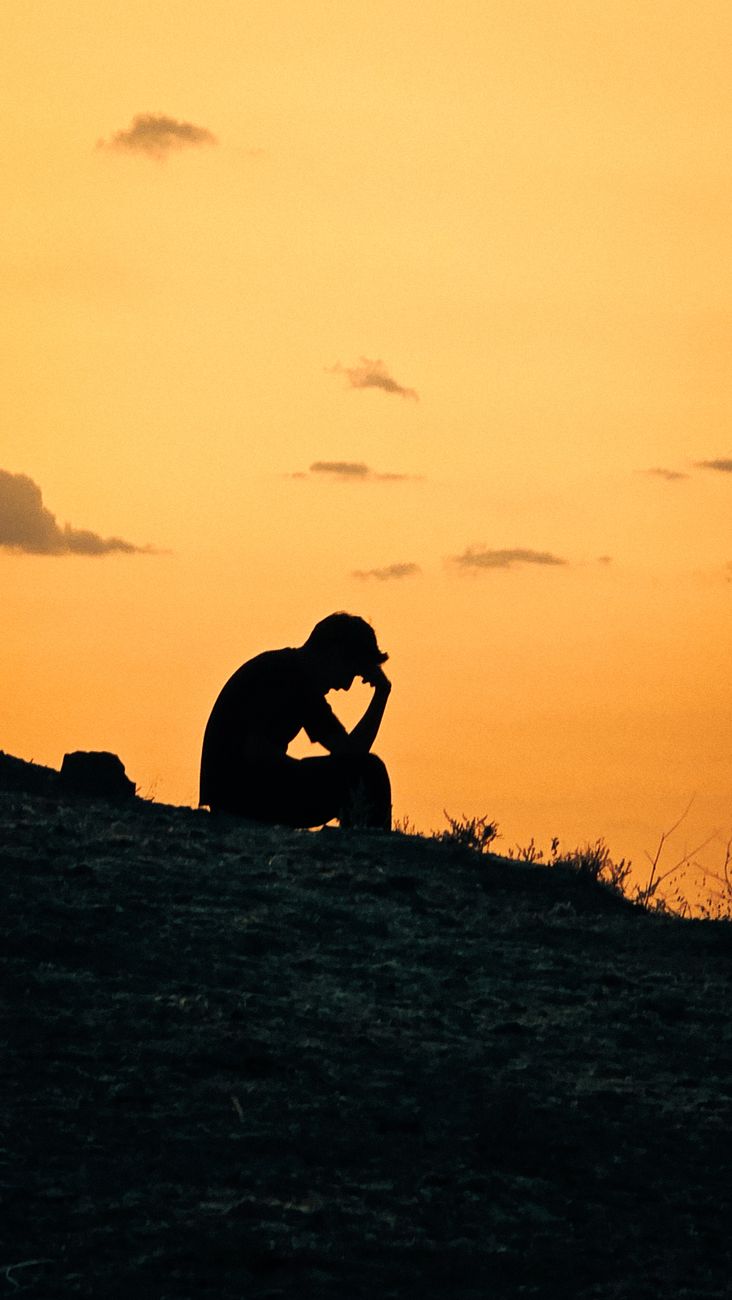
Photo by RDNE Stock project on Pexels.com

The loneliness challenge and the lost art of Finding Joy in the Middle

A recent study has found that people living in areas with weaker local news networks and fewer community connections experience higher levels of loneliness and isolation. Researchers suggest that when the institutions that help us feel part of a community disappear, many people lose not only information but also a sense of belonging and connection.

Yet while headlines increasingly focus on loneliness as a growing social challenge, perhaps the deeper question is this: What do we do when we find ourselves in the middle of it?

Not at the end of the difficult season. Not after life has been fixed. Not once the right relationship, role, opportunity or outcome arrives.  But right in the middle.

For many of us, loneliness is not simply the absence of company. It is the feeling that life is somehow suspended. We are waiting for something to change. Waiting for certainty. Waiting for the next chapter. Waiting to feel like ourselves again.

We can be surrounded by people and still feel disconnected. We can be successful and still feel unseen. We can be busy and still feel empty.  Modern culture is remarkably good at celebrating arrivals. We celebrate promotions, graduations, engagements, retirements and achievements. We tell stories about destinations. We admire people who have reached the summit.  What we rarely talk about is the climb.

We spend a significant proportion of our lives in what I call “the middle”. The middle of a career transition. The middle of grief. The middle of recovery. The middle of parenting. The middle of uncertainty about the future. The middle of a challenge that seems to have no obvious resolution. 

The middle is uncomfortable and confusing to many because it has not yet revealed its ending.  And yet it is in these very places that joy often does its most important work.

Many people assume joy is the reward that follows difficult circumstances. We tell ourselves that we will be joyful when the problem is solved, when the diagnosis improves, when the relationship heals, when the finances recover or when life becomes what we expected it to be.  But joy does not work that way.

Happiness is often dependent on circumstances. Joy is deeper. Joy can coexist with uncertainty. It can live alongside disappointment. It can emerge in places where we least expect to find it.  That distinction matters.

If we wait for perfect conditions before allowing ourselves to experience joy, we may spend years postponing it. We become focused on the destination and blind to what is available along the journey.

The growing loneliness described by researchers is a reminder that human beings need more than productivity, consumption and achievement. We need connection. We need meaning. We need community. We need to know that our lives are part of something bigger than ourselves. Perhaps that starts with paying attention.

Joy is often quieter than we expect.  It may be found in an unexpected conversation. A walk on an autumn morning. A moment of laughter in the midst of stress. A message from an old friend. A chance to help someone else. A reminder that even difficult seasons contain gifts if we are willing to notice them.  These moments rarely make headlines.

But they are often the moments that sustain us.  The irony is that the middle places of life can become some of our greatest teachers. They reveal what truly matters. They strip away illusions of control. They invite us to slow down. They encourage us to invest in relationships rather than simply achievements.  And they teach us that joy is not something we discover after the storm has passed.  It is something we learn to recognise while the rain is still falling.

As society wrestles with rising loneliness and disconnection, perhaps the answer is not only better systems, stronger communities and renewed local institutions, important as those things undoubtedly are. Perhaps the answer also lies in recovering an ancient truth: that life is not lived solely in the destinations. It is lived in the spaces between them.

Most of us are not standing at the beginning of our story or at the end. We are somewhere in the middle.  The invitation is not to wait until circumstances become ideal.  The invitation is to look more carefully at today.  To notice the people around us.  To rediscover gratitude.  To embrace connection.  And to remember that joy is not reserved for those who have arrived.

Sometimes it is found precisely where we least expect it: in the middle.

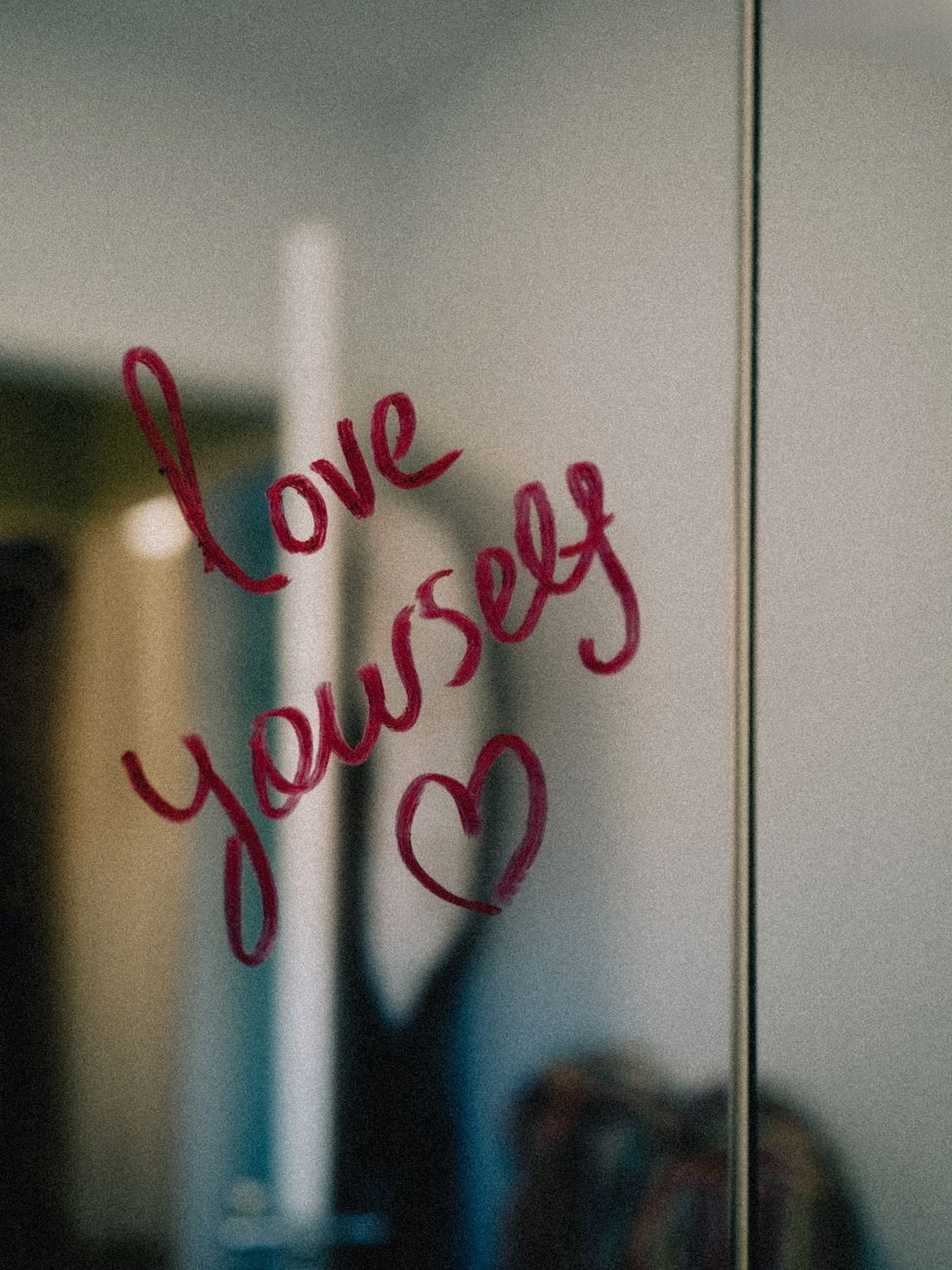
Photo by amir selfish on Pexels.com

Dolly Parton and the courage to remain yourself

Since the news of Dolly Parton’s death, there has been an extraordinary outpouring of grief, affection and gratitude. People have shared memories of concerts, stories of kindness, favourite songs and reflections on the impact she had on their lives. Much of that is entirely understandable. She was one of those rare figures who seemed to transcend the boundaries of her profession. She was not simply a singer, songwriter, actor or philanthropist. She became a presence in people’s lives, someone whose warmth, humour and humanity felt remarkably accessible despite her global fame. Yet as I have read the many tributes, I have found myself returning to a particular aspect of her life that feels especially relevant today: authenticity.

Authenticity is a word that is overused and often misunderstood. It has become a fashionable label attached to personal brands and carefully curated public identities. What made Dolly different was that her authenticity never seemed manufactured. From the beginning of her career, she faced pressures that are familiar to many people who rise beyond the circumstances into which they were born. There is often an expectation that success requires a degree of assimilation; that acceptance is earned by softening the edges of who we are, adopting the tastes and behaviours of more privileged groups, and quietly distancing ourselves from the people and places that formed us. Dolly Parton consistently refused that bargain.

She became one of the most successful entertainers in the world without ever pretending to be anything other than a working-class woman from rural Tennessee. She did not lose her accent. She did not hide the culture that shaped her. She did not abandon the stories, values and experiences that lay at the heart of her songwriting. If anything, she became more determined to celebrate them. At a time when some commentators viewed her appearance as excessive or unsophisticated, she embraced it with humour and confidence. The wigs, the make-up, the sequins and the rhinestones were not signs of insecurity. They were expressions of freedom. She understood perfectly well how others saw her and chose, regardless, to be the woman she wanted to be.

What strikes me most is that this authenticity was rooted in gratitude rather than rebellion. Throughout her life, she spoke about her parents with deep affection and respect. Her upbringing was not something she overcame. It was something she honoured. Again and again, she returned to stories of family, poverty, faith, resilience and love. Songs such as Coat of Many Colors captured not only the hardship of her childhood but also the richness she experienced within it. Her mother and father were not peripheral characters in the story of Dolly Parton. They were central to it. The values they instilled in her remained visible long after fame and fortune had transformed every practical aspect of her life.

That connection to her roots was reflected not only in her storytelling but also in the way she understood success itself. In a culture that often measures achievement through wealth, status and influence, Dolly seemed to recognise that success carries responsibilities as well as rewards. Her creation of the Imagination Library, which has distributed hundreds of millions of books to children, stands as one of the most significant acts of philanthropy by any public figure of our time. There is something deeply fitting about the fact that a woman whose life was transformed by stories chose to invest so heavily in helping children discover stories of their own. While her songs brought joy to millions, the books she placed into children’s hands may ultimately shape generations.

When people ask what Dolly Parton’s legacy will be, they will naturally point to the music. They will talk about Jolene, I Will Always Love You, 9 to 5 and the extraordinary catalogue she leaves behind. Others will highlight her business achievements, her philanthropy or her cultural impact. All of those matter. Yet I wonder whether her greatest legacy is simpler and more profound than any individual accomplishment. Dolly Parton showed that it is possible to become extraordinarily successful without becoming detached from who you are. She demonstrated that ambition does not require the rejection of our origins and that personal growth does not have to involve abandoning the people, communities and values that formed us.

As I reflect on her life, I find myself thinking about the themes explored in Find Joy in the Middle. One of the central ideas in the book is that fulfilment is rarely found in the extremes. We are often encouraged to believe that happiness lies on the other side of achievement, recognition or the next milestone. We tell ourselves that life will become meaningful when we reach a particular destination. Yet joy is more often discovered in the middle: in our relationships, our sense of belonging, our gratitude for what has shaped us and our ability to contribute to the lives of others.

Dolly Parton’s life seems to embody that truth. Despite unparalleled success, she never appeared consumed by the need to become someone else. She remained connected to family, place and community. She found meaning not only in professional achievement but also in generosity, service and storytelling. She held together things that our culture often treats as opposites: glamour and humility, ambition and kindness, confidence and gratitude. Rather than choosing one side or the other, she found a way of inhabiting the middle space between them.

Perhaps that is why so many people feel such affection as they remember her. Beyond the songs and beyond the celebrity was a woman who appeared comfortable in her own skin. In an age of endless performance, comparison and reinvention, that may be one of the most powerful examples anyone can offer. Dolly Parton reminds us that there is dignity in our origins, strength in authenticity and wisdom in remaining connected to the people who helped make us who we are.

Her legacy is not simply that she entertained millions, gave away millions of books or built an extraordinary career. It is that she showed us another way to live. A way rooted in gratitude rather than status, generosity rather than self-promotion, and authenticity rather than approval. In the language of Find Joy in the Middle, she teaches us that joy is not found in becoming somebody else. It is found in becoming more fully ourselves.

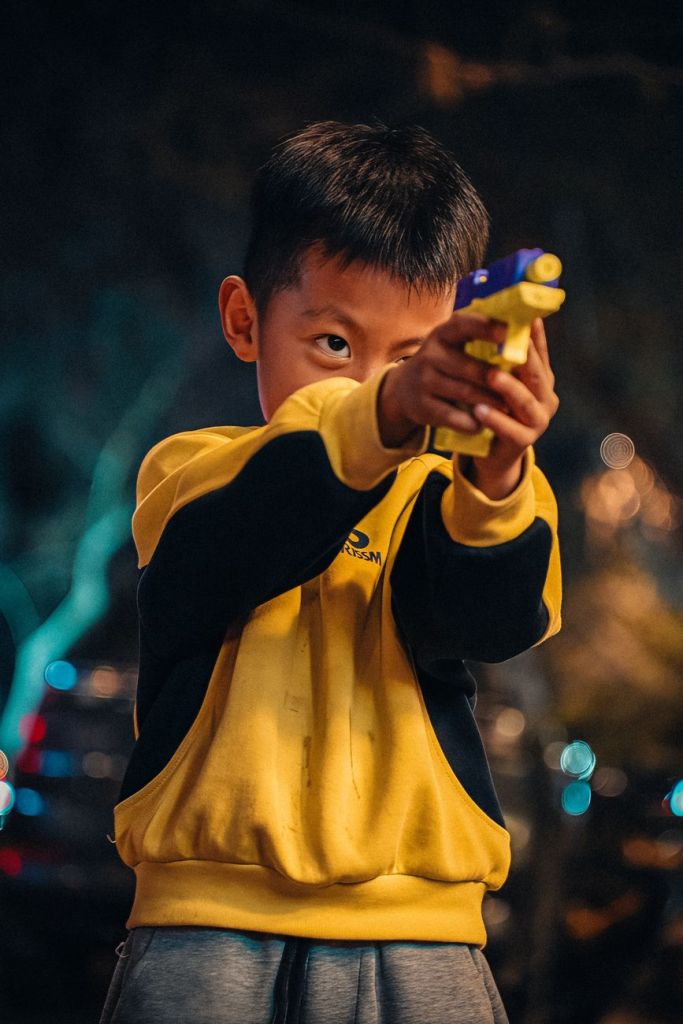
Photo by Lisa Fotios on Pexels.com

Is 50 the magic number when it comes to being middle aged?

There are some mornings when time seems to fold in on itself. This morning, driving into work, I found myself looking out across fields washed in golden hues, the stubble and grasses scorched by the hot summer of 2026. The landscape had that late-summer look: beautiful, brittle, abundant and exhausted all at once. A bookmark to the bounty of autumn.  It was impossible not to think of another legendary summer, 50 years before, the summer of 1976, which I remember vividly from childhood.

I remember the heat, the talk of drought, the cracked earth, the long light, the particular feeling that childhood summers could go on forever. Of course, they do not. Children grow. Parents age. Lives gather complexity. Work, relationships, loss, love, responsibility and reinvention arrive one after another, often without waiting to be invited. And then, one day, you are driving through a summer landscape half a century later and realise that the child who stood at the beginning of one hot summer is now moving steadily through the middle seasons of life.

That is the question I return to in my book Find Joy in the Middle: what exactly do we mean by middle age? Is 50 the magic number? Is it the moment when we officially cross some invisible border between youth and age, ambition and acceptance, becoming and being? I am not sure life works quite so neatly. But I do think 50 matters. It has a symbolism, a heft, a kind of cultural gravity. It is far enough from the beginning to have perspective, and far enough from the end, we hope, to have possibility.

In the book, I posit that middle age is not a narrow corridor squeezed between youthful adulthood and old age. Instead, I suggest it is a generous, expansive period, running from around 50 to 75. That may sound surprising at first, but it feels increasingly true to me. We are living longer, working differently, parenting and caring across wider spans, changing direction later, finding new purpose after old milestones have passed. The middle is not a pause before decline. It can be a season in its own right.

Perhaps that is why the seasons offer such a useful metaphor. Childhood is spring, not because it is always innocent or easy, but because it carries the force of beginnings. Everything is ahead. The world is green with possibility. The summer of early adulthood brings heat, growth, risk, fullness and sometimes drought too. Then comes the middle season, the long turning into autumn, when the light changes. The colours deepen. The harvest matters. We begin to understand what has taken root and what has not. We notice what we have grown, what we have neglected, what we might yet plant.

There is a certain poignancy in standing, or driving, between those two hot summers: 1976 and 2026. One belongs to memory, to the child I was. The other belongs to now, to the adult I have become. Fifty years sit between them, not simply as a measurement of age, but as evidence of a life lived. The fields this morning were not green and new. They were golden, weathered, marked by heat. Yet they were also beautiful. Perhaps that is the point.

Middle age asks us to stop measuring ourselves only by beginnings. It asks us to value ripeness, resilience and depth. It asks us to look honestly at the scorching years as well as the golden ones, and to see that both have shaped us. It is not the end of summer, nor yet winter. It is the time when the light becomes more interesting.

So, is 50 the magic number? Maybe not magic in the fairy-tale sense. No bell rings. No gate opens. No certificate arrives declaring us middle aged. We don’t receive a letter from the Monarch congratulating us on our middling achievement.  But 50 may be a threshold of attention. It may be the age when we begin to notice the view differently, to connect the child we were with the person we are still becoming. It may be the point at which we realise the middle is not something to endure, deny or rush through. It is something to inhabit.

And if we can inhabit it fully, perhaps we can find what I am really searching for in Find Joy in the Middle: not a desperate attempt to stay young, nor a premature surrender to getting old, but a richer, wiser, more generous way of living in the season we are actually in. The fields this morning reminded me that golden does not mean over. Sometimes it means ready.

Photo by Jan van der Wolf on Pexels.com

When violence becomes the language of childhood.

I was travelling on a train recently when I found myself sitting close to a young boy, perhaps five years old. For about 30 minutes he talked almost continuously, not about school, friends, football, dinosaurs, superheroes or adventuring in the woods, but about destroying things.

He described blowing things up, exploding buildings, wrecking vehicles, smashing and killing. There was no context, no story, no apparent game, just a stream of imagined destruction that seemed to fascinate him. His parents barely responded and other passengers hardly noticed, but I couldn’t stop thinking about it.

Today, the Children’s Commissioner has published a report examining children referred to the Prevent programme. One of its most striking findings is that around seven in 10 children referred do not fit traditional definitions of extremist ideology. Instead, many display a worrying fixation with violence, weapons, mass casualty attacks and harmful online content. The report argues that our systems struggle to respond to these children because they do not fit neatly into existing categories of radicalisation.

As I read the report, my mind returned to that little boy on the train, not because I believe he was a clear and present danger, he was five years old, but because I found myself wondering when it was that violence became such a normal language of childhood.

Of course, this is not entirely new. I grew up watching cowboys and Indians films. We played war games. Toy guns appeared every Christmas. Many of us pointed plastic revolvers at our friends before we were old enough to understand what a real gun could do.

It would be easy, and wrong, to pretend that previous generations were somehow innocent. Children have always explored power, risk and conflict through play. Stories have always contained villains. Boys in particular have often been encouraged to test boundaries through rough-and-tumble play, competition and confrontation.

Yet something feels different. The violence of my childhood was usually embedded within a story. However simplistic and problematic those narratives may have been, there was at least a framework.

Today’s children inhabit a digital world where violence is often detached from meaning. Online platforms can serve up an endless stream of fights, humiliation, cruelty, real-world killings, extreme pornography and videos designed purely to shock. The Children’s Commissioner describes children becoming “fixated on violence” after exposure to harmful online content. Violence is no longer a scene in a film; it is content, and content never ends. That should force us to ask difficult questions about the messages children receive.

Too often, boys are still encouraged to destroy while girls are encouraged to create. A boy knocking down a tower of bricks is laughed at; a girl building one is praised. Boys are given weapons while girls are given crafts. Boys are expected to conquer while girls are expected to nurture.  These are caricatures, of course, and modern parenting and education is more nuanced than this. Yet the underlying messages remain surprisingly powerful. We continue to socialise boys towards domination, aggression and risk, even as we express concern about male violence later in life.

Then we seem surprised when some boys become fascinated by power expressed through destruction. The uncomfortable truth is that violence is not a fringe interest in our culture; it sits at the centre of much of our entertainment, media and public discourse.  We celebrate military victories. We cheer cinematic revenge. We consume true-crime documentaries at extraordinary rates. We replay footage of attacks and atrocities across rolling news channels. We talk constantly about conflict, threat and enemies.  The blame does not solely lie at the feet of social media.

Children are not separate from this culture; they absorb it. The Children’s Commissioner’s report should not simply prompt a discussion about Prevent. It should prompt a discussion about childhood itself.

What stories are children hearing? What images are they seeing? What behaviours are being rewarded? What alternatives are we offering?  Because if we want children to create, collaborate, empathise and care, we have to build a culture that values those things as highly as it values competition, conquest and destruction.

The little boy on the train was not the problem. He may simply have been reflecting the world around him. That is what children do. They absorb our values, our anxieties, our obsessions and our dreams. They hold a mirror up to the culture we have created.

And perhaps that is the most uncomfortable question raised by today’s report: not simply what is happening to children, but what are children are learning from us?