When violence becomes the language of childhood.

I was travelling on a train recently when I found myself sitting close to a young boy, perhaps five years old. For about 30 minutes he talked almost continuously, not about school, friends, football, dinosaurs, superheroes or adventuring in the woods, but about destroying things.

He described blowing things up, exploding buildings, wrecking vehicles, smashing and killing. There was no context, no story, no apparent game, just a stream of imagined destruction that seemed to fascinate him. His parents barely responded and other passengers hardly noticed, but I couldn’t stop thinking about it.

Today, the Children’s Commissioner has published a report examining children referred to the Prevent programme. One of its most striking findings is that around seven in 10 children referred do not fit traditional definitions of extremist ideology. Instead, many display a worrying fixation with violence, weapons, mass casualty attacks and harmful online content. The report argues that our systems struggle to respond to these children because they do not fit neatly into existing categories of radicalisation.

As I read the report, my mind returned to that little boy on the train, not because I believe he was a clear and present danger, he was five years old, but because I found myself wondering when it was that violence became such a normal language of childhood.

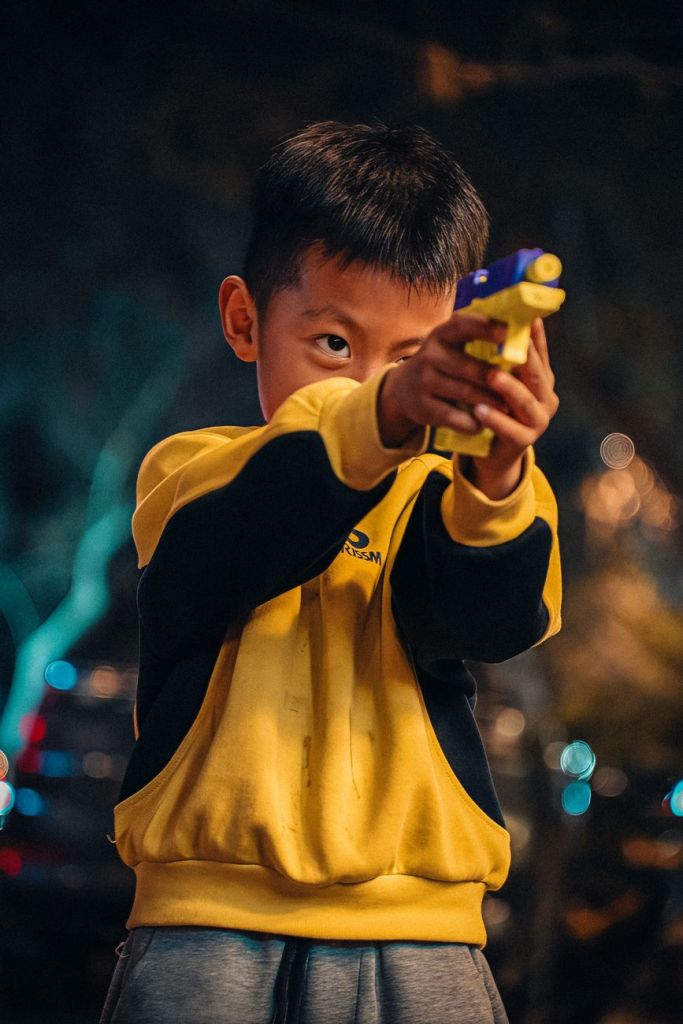
Of course, this is not entirely new. I grew up watching cowboys and Indians films. We played war games. Toy guns appeared every Christmas. Many of us pointed plastic revolvers at our friends before we were old enough to understand what a real gun could do.

It would be easy, and wrong, to pretend that previous generations were somehow innocent. Children have always explored power, risk and conflict through play. Stories have always contained villains. Boys in particular have often been encouraged to test boundaries through rough-and-tumble play, competition and confrontation.

Yet something feels different. The violence of my childhood was usually embedded within a story. However simplistic and problematic those narratives may have been, there was at least a framework.

Today’s children inhabit a digital world where violence is often detached from meaning. Online platforms can serve up an endless stream of fights, humiliation, cruelty, real-world killings, extreme pornography and videos designed purely to shock. The Children’s Commissioner describes children becoming “fixated on violence” after exposure to harmful online content. Violence is no longer a scene in a film; it is content, and content never ends. That should force us to ask difficult questions about the messages children receive.

Too often, boys are still encouraged to destroy while girls are encouraged to create. A boy knocking down a tower of bricks is laughed at; a girl building one is praised. Boys are given weapons while girls are given crafts. Boys are expected to conquer while girls are expected to nurture.  These are caricatures, of course, and modern parenting and education is more nuanced than this. Yet the underlying messages remain surprisingly powerful. We continue to socialise boys towards domination, aggression and risk, even as we express concern about male violence later in life.

Then we seem surprised when some boys become fascinated by power expressed through destruction. The uncomfortable truth is that violence is not a fringe interest in our culture; it sits at the centre of much of our entertainment, media and public discourse.  We celebrate military victories. We cheer cinematic revenge. We consume true-crime documentaries at extraordinary rates. We replay footage of attacks and atrocities across rolling news channels. We talk constantly about conflict, threat and enemies.  The blame does not solely lie at the feet of social media.

Children are not separate from this culture; they absorb it. The Children’s Commissioner’s report should not simply prompt a discussion about Prevent. It should prompt a discussion about childhood itself.

What stories are children hearing? What images are they seeing? What behaviours are being rewarded? What alternatives are we offering?  Because if we want children to create, collaborate, empathise and care, we have to build a culture that values those things as highly as it values competition, conquest and destruction.

The little boy on the train was not the problem. He may simply have been reflecting the world around him. That is what children do. They absorb our values, our anxieties, our obsessions and our dreams. They hold a mirror up to the culture we have created.

And perhaps that is the most uncomfortable question raised by today’s report: not simply what is happening to children, but what are children are learning from us?

Can we please stop saying “we work in silos”?


There’s a moment in almost every meeting about children’s services where someone leans forward and says, with a kind of weary authority, “the problem is, we all work in silos.” Everyone nods. It sounds right. It feels truthful. And then, more often than not, we move on.

I’ve heard it so many times now that I find myself getting impatient with it. Not because it’s completely wrong, but because it’s become a stopping point rather than a starting point. It’s the sort of phrase that sounds like insight but often functions as an excuse. It’s a cop out.

Of course, services can feel fragmented. Of course, people are under pressure, operating in different ecosystems, with different targets, languages, acronyms, and accountabilities. None of that is in dispute. But “silos” has become a convenient shorthand that appears to let all of us off the hook. It wraps up a complicated set of choices and behaviours into something that feels structural, inevitable and therefore nobody’s particular responsibility. We work in silos, it is someone else’s fault, and we can’t do anything about it.

The truth is, silos don’t just exist out there somewhere, imposed on us by fate or organisational charts. They are created, and recreated, in small, everyday ways. They show up when we don’t pick up the phone because things are busy. When we stick closely to our remit because it feels risky not to. When we attend a meeting, agree broadly that things should be more joined up, and then go back to doing things exactly as we did before.

None of that is malicious. Most of the time it’s understandable. People are stretched, and systems are complicated. But it does mean that when we say “we work in silos,” what we’re often describing is something we are also participating in. Something we are reinforcing.

There’s something else that bothers me about the phrase, too. It’s completely detached from how children, young people, and families experience their lives. A child doesn’t wake up in the morning thinking about which part of their life belongs to which service. They don’t separate out their mental health from their education, or their safety from their relationships, or their housing from their wellbeing. It all comes as one whole, complicated, human experience.

Yet we design support in neat compartments and then act surprised when it doesn’t join up properly. Calling that silos almost disguises the deeper issue, which is that we’ve built systems around organisations rather than around people. What’s more frustrating is that the phrase carries a kind of shrug with it. It can sound like we’re saying, “this is just how it is.” And if that’s the case, then it’s hard to see where the energy for change comes from. You can’t shift something that feels inevitable.

I’d rather we were a bit more direct with ourselves. Instead of saying we work in silos, we might admit that we don’t always prioritise working together in the way we should. That we sometimes make information too hard to share. That our processes get in the way. That we haven’t invested enough time in building relationships across teams and organisations.

Those are more uncomfortable things to say, but they have an advantage: they point to things we can actually do something about.

Because for all the talk of structures and systems, collaboration is still, at heart, about people. It’s about whether we know each other, trust each other, and feel able to pick up the phone without worrying about whether this is “our bit” or “their bit.” It’s about whether leaders model that behaviour or simply talk about it. It’s about whether we measure success in terms of shared outcomes, or retreat back into what we can individually control. None of that is fixed. None of it is beyond our influence.

Language matters more than we sometimes think. The words we reach for shape how we understand a problem, and what we believe is possible. Silos has become one of those words that closes things down rather than opens them up. It names the issue in a way that feels tidy, but leaves everything else untouched. So perhaps it’s time we retired it. I really don’t want to think that three years into delivering the Best Start in Life strategy that we will still be trolling out this hackneyed get-out. Do you?

Not because the underlying challenges aren’t real, they are, but because repeating the same phrase over and over again isn’t getting us any further forward. Children, young people, families and I must say our workforce don’t need us to keep describing the fragmentation of the system. They need us to behave differently within it. That might sound simple, but it’s not easy. It requires intention, curiosity and, at times, a willingness to step slightly outside of what feels safe or familiar. It asks more of us than a well-worn phrase ever will.

If we’re serious about improving how services work together, then that’s the work. Not naming the silos. Dismantling them, piece by piece, through what we choose to do next.

Photo by Muharrem Alper on Pexels.com

What type of year has it been for you? One year of Find Joy in the Middle.

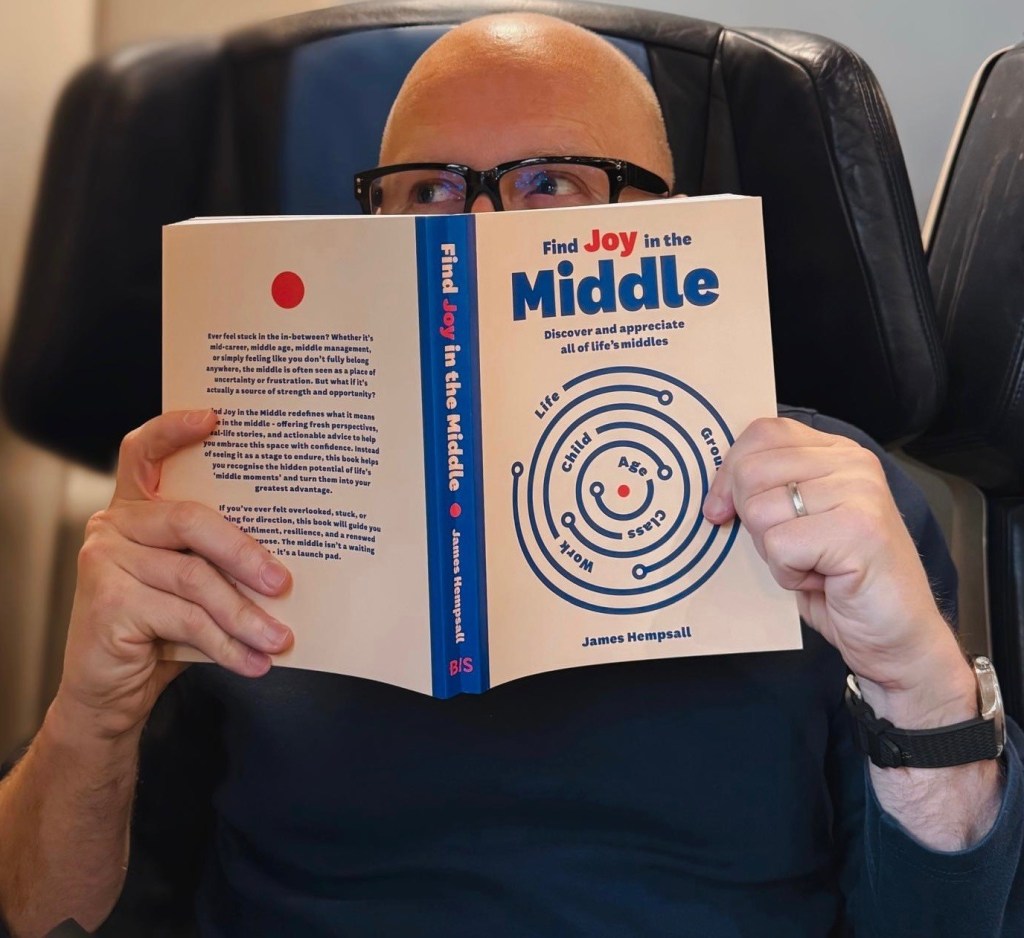
It’s been a year since my first book, Find Joy in the Middle hit the bookshelves.  When I look back, I see a year that sat squarely in the middle, not just chronologically, but emotionally, socially, and culturally.  It was a year that invited us to pause, to take stock, and to recognise the quiet power of being in‑between. In many ways, it felt like the world was catching up with what I’ve been saying for years: that the middle isn’t a place of stagnation, but a place of movement, momentum, and meaning.

For those of us in middle age, it was a year of reframing. I sensed a shift away from the tired old clichés of crisis and decline. Instead, people were beginning to see midlife as a pivot point, a moment to re-evaluate what matters, to shed what no longer fits, and to step into a more honest version of themselves. The conversations I encountered were full of people renegotiating their work, their relationships, their ambitions, and their wellbeing. It was as if the world had collectively exhaled and said, “right, what now?”

The middle class, too, found itself under the spotlight. Not always comfortably. There was a growing awareness of how squeezed and stretched this group had become, not wealthy enough to feel secure, not struggling enough to be prioritised. Yet this discomfort brought clarity. It forced a reckoning with what fairness means, what opportunity should look like, and how society depends on the very people it so often overlooks. The middle, once again, proved itself essential.

Even middle children, my favourite metaphor for the overlooked middle, found new resonance. Families were talking more openly about identity, birth order, and the subtle dynamics that shape us. I heard from many who felt seen for the first time, who recognised that their adaptability, diplomacy, and resilience weren’t accidents, but strengths forged in the in‑between. The middle child became a symbol of what I’ve always believed: that being neither first nor last can be a superpower.

Workplaces, too, were redefined by their middles. Middle managers, often dismissed or misunderstood, were the glue holding hybrid and flexible work together. They were the translators, the stabilisers, the human connectors in a year when organisations were still figuring out what ‘normal’ meant. I saw so many step into their roles with renewed confidence, realising that leadership from the middle is leadership in its most human form.

And then there was the middle ground, that fragile, precious space between extremes. I sensed a growing fatigue with polarisation. People were tired of shouting matches and binary choices. Others have been grasping onto their pre-extinction burst, fearful of change, angry with it and all perceived injustices, and they took to the streets to protest, or to create harm. Those in the middle ground were craving nuance, balance, and the courage to say, “It’s more complicated than that.” The middle ground, long dismissed as indecisive or dull, began to look like the only place where real progress could happen.

So yes, it has been a middle year. Not in the sense of being average or forgettable, but in the sense of being transitional, reflective, and quietly transformative. It was a year that reminded us that the middle is where life actually happens, where we grow, where we adapt, where we find our footing. And if we’re willing to embrace it, the middle can be the most joyful place of all.

I invite you to wonder how ‘middle’ your next year may be, and to think how you will be the architect of it.

www.findjoyinthemiddle.com

Buy the book

BIS publishers

The ‘midlife crisis’ is dead.  The ‘end of midlife crisis’, well that’s another matter. 

I’ve written much about the difficulties we can experience when imagining our upcoming midlife, and the realities of when we are experiencing it.  I am not alone, so-called midlife crises are a familiar talking point, and a frequent object of ridicule. 

In the book, I have set out how best to navigate its approach and the precious time spent in midlife.  I’ve also said I reject the term crisis.  The truth is that these days, for most of us, this stage of life is much more vibrant, exciting, and joyful that it was for the generations of parents and grandparents who came before us.  It really can be a golden time.  A moment to grasp with both hands, and one to relish by making the most of it.  Helped, of course, by being ready and prepared for it, and by being equipped to make the most of it.  Being unwilling, unprepared and unable to enjoy your middle age is the imperfect recipe for a crisis.  Today though, I want to discuss something new I have noticed.

I have seen it happen around me, as friends and family have enjoyed their midlife, then find themselves towards the end of their midlife stage.  They have been busy enjoying the afternoon of life, filled with friends and family, travel, career and hobby swerves, and active retirements.  Good for them.  Then, along comes the gradual or sudden realisation that time is much more finite, and the body much more fragile to accommodate such pursuits.  This can be unsettling and upsetting.

I guess one of two things could be happening here.  Could it simply be a delay of the traditional midlife crisis?  Or is it a new phenomenon: the emergence of the ‘end of midlife crisis’?  Whatever it is, the emotional triggers and responses may be the same, or could they be different, I wonder?  One difference that occurs to me is that in midlife we are potentially more able to do something about our lives if they need a turnaround, adjustment, or a refresh – especially in modern times.  At the end of midlife however, which I have discussed being around 70-75, then the options are arguably fewer in terms of time and health.  Old age and the spectre of approaching death are much more real.  As US actor, Doris Day said: The really frightening thing about the middle age is the knowledge that you’ll grow out of it.  She hit the nail right on the head there, and that is absolutely confronting.  

Photo by Andrea Piacquadio on Pexels.com

From lockdown to now: Five years of looking back and moving forward.

Our worlds changed on 23 March 2020.  We were united by a sense of uncertainty, feelings of anxiety, and of confusion around what was to come.  We gathered eyes and mouths agape, in front of TV screens as we were told to stay at home.  The outside world fell silent, roads and skies emptied, non-essential shops closed, workplaces ceased operations with some being asked to work at home or be ‘furloughed’ (a new word for most of us), and keyworkers kept our essential services going. 

Home was a reassuring sanctuary, if you were lucky, surrounded by loving family members.  A time to pause, reflect, look after our basic needs for safety and nourishment.  For many it was a trap that intensified disadvantage, deepened dysfunctional relationships, and a exacerbated their lack of opportunity.  For our youngest children, their worlds became so much smaller.  Some benefitted, some did not.  As lockdown(s) continued, we predicted families would feel the effects in terms of parent relationship pressures, domestic abuse, economic burdens, and children’s development would be compromised or delayed.  It gives none of us any pleasure to say we were right.  

In early years, we started to hear from keyworker parents who needed our support so they could go to work, we delivered for them.  Parents not able to use our services started to appreciate in new ways the work we do, and the shared partnership we have in supporting their children’s development and learning.  Providers, like all businesses, were juggling with the new realities, the economics, and the need for short- to long-term planning, and supporting their own workforce.  Local authorities were contacting us for help in navigating the complexities of Government guidance, financial packages, and the processes needed for business change, so the best possible support could be offered to the whole sector.  We were only too pleased to do what we could, it was something core to our mission.

Like many others, online meetings were something of a grey area for us.  But we soon got to grips with the technology (after many clumsy attempts).  We started to connect as a team to make sense of what was happening on a day-to-day basis.  We began meeting with individual local authority early years leads, for mutual support, sense checking, and information sharing.  This is a time we look back on with great fondness and friendship.  We were in it together.  These exchanges formed the basis of our national support programme ‘Finding Your Way Through’ a structured strategy framework, and a set of actions, approaches and resources we developed and freely gave to the sector.  Then came the idea to offer a weekly/fortnightly online session for local authority leads for peer support, wellbeing, and information sharing.  We called them Coffee Breaks, essentially because we were asking everyone to stop, put the kettle on, and come together with the community for an hour of mutual support, understanding, and collaboration.  What a moment that was, a movement began, and Coffee Breaks became that national space for both unstructured and focused discussion, problem solving, resource sharing, and a safe space for emotional safety.  Five years on, and they continue, for all the same objectives, and they are a pleasure for us to facilitate and provide for our colleagues. 

The lessons learned, from lockdown to the present day are many.  It has become clearer for many who have a stake in our sector that we play an essential role in supporting parents in caring for their children, building their development and joy for learning, and their economic opportunities.  Early years is an essential cog in a large machine that delivers for families across multiple (not single or artificially allocated) outcomes.  Without it, and the impacts are clear.  We have been identifying the increases in children’s developmental delays, speech and language, and SEND and have been adapting approaches to best help their recovery.  However, we know these will continue for many, and risk affecting their school-lives and beyond. 

The past five years have also reminded us of the power of togetherness, our unswerving commitment to the sector, our empathy and affinity with parents and children, and not forgetting our resilience.  That said, there are fragilities that continue despite the ambitions, recognition, and increased spend in the sector.  The need for support, challenge, and community in the sector remains vital.  This needs to include all types of setting or school, group-based or home based, and reaching all practitioners to fully deliver our impacts confidently, healthily, and joyfully for better futures.    


Photo by Lisa from Pexels on Pexels.com