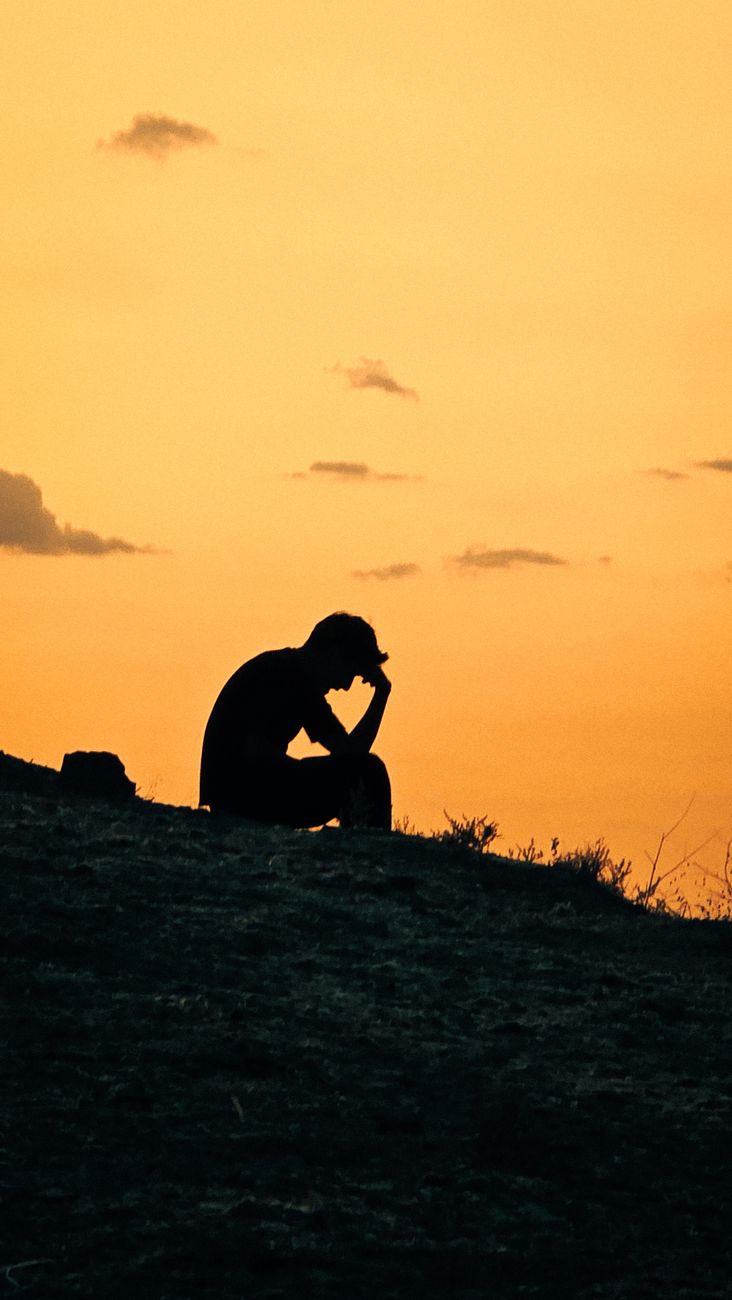
A recent study has found that people living in areas with weaker local news networks and fewer community connections experience higher levels of loneliness and isolation. Researchers suggest that when the institutions that help us feel part of a community disappear, many people lose not only information but also a sense of belonging and connection.
Yet while headlines increasingly focus on loneliness as a growing social challenge, perhaps the deeper question is this: What do we do when we find ourselves in the middle of it?
Not at the end of the difficult season. Not after life has been fixed. Not once the right relationship, role, opportunity or outcome arrives. But right in the middle.
For many of us, loneliness is not simply the absence of company. It is the feeling that life is somehow suspended. We are waiting for something to change. Waiting for certainty. Waiting for the next chapter. Waiting to feel like ourselves again.
We can be surrounded by people and still feel disconnected. We can be successful and still feel unseen. We can be busy and still feel empty. Modern culture is remarkably good at celebrating arrivals. We celebrate promotions, graduations, engagements, retirements and achievements. We tell stories about destinations. We admire people who have reached the summit. What we rarely talk about is the climb.
We spend a significant proportion of our lives in what I call “the middle”. The middle of a career transition. The middle of grief. The middle of recovery. The middle of parenting. The middle of uncertainty about the future. The middle of a challenge that seems to have no obvious resolution.
The middle is uncomfortable and confusing to many because it has not yet revealed its ending. And yet it is in these very places that joy often does its most important work.
Many people assume joy is the reward that follows difficult circumstances. We tell ourselves that we will be joyful when the problem is solved, when the diagnosis improves, when the relationship heals, when the finances recover or when life becomes what we expected it to be. But joy does not work that way.
Happiness is often dependent on circumstances. Joy is deeper. Joy can coexist with uncertainty. It can live alongside disappointment. It can emerge in places where we least expect to find it. That distinction matters.
If we wait for perfect conditions before allowing ourselves to experience joy, we may spend years postponing it. We become focused on the destination and blind to what is available along the journey.
The growing loneliness described by researchers is a reminder that human beings need more than productivity, consumption and achievement. We need connection. We need meaning. We need community. We need to know that our lives are part of something bigger than ourselves. Perhaps that starts with paying attention.
Joy is often quieter than we expect. It may be found in an unexpected conversation. A walk on an autumn morning. A moment of laughter in the midst of stress. A message from an old friend. A chance to help someone else. A reminder that even difficult seasons contain gifts if we are willing to notice them. These moments rarely make headlines.
But they are often the moments that sustain us. The irony is that the middle places of life can become some of our greatest teachers. They reveal what truly matters. They strip away illusions of control. They invite us to slow down. They encourage us to invest in relationships rather than simply achievements. And they teach us that joy is not something we discover after the storm has passed. It is something we learn to recognise while the rain is still falling.
As society wrestles with rising loneliness and disconnection, perhaps the answer is not only better systems, stronger communities and renewed local institutions, important as those things undoubtedly are. Perhaps the answer also lies in recovering an ancient truth: that life is not lived solely in the destinations. It is lived in the spaces between them.
Most of us are not standing at the beginning of our story or at the end. We are somewhere in the middle. The invitation is not to wait until circumstances become ideal. The invitation is to look more carefully at today. To notice the people around us. To rediscover gratitude. To embrace connection. And to remember that joy is not reserved for those who have arrived.
Sometimes it is found precisely where we least expect it: in the middle.