Are we all Northern now?

I can still remember the day Margaret Thatcher stood at the Conservative Party Conference and declared, “We are a grandmother now.” It was one of those political moments that became bigger than the words themselves. It spoke to an age, a set of values and a particular view of Britain. Whether you agreed with it or not, it captured a mood and the moment.

Forty years on, another phrase has been rattling around in my head. Andy Burnham has not actually said it, but as I watch the early days of his premiership, I find myself wondering whether the message coming from Downing Street is something like: we’re all Northern now. That thought makes me smile.

As someone who is a northerner to some and a southerner to others, having grown up in the Midlands and been educated in a comprehensive school, I have spent most of my life inhabiting a place somewhere between the two. The Midlands has always been a geographical and cultural borderland. We understand the north and the south because we are neither entirely one nor the other. We borrow a bit from both. We are comfortable in the middle.  That might have been an advantage sometimes, but not always.

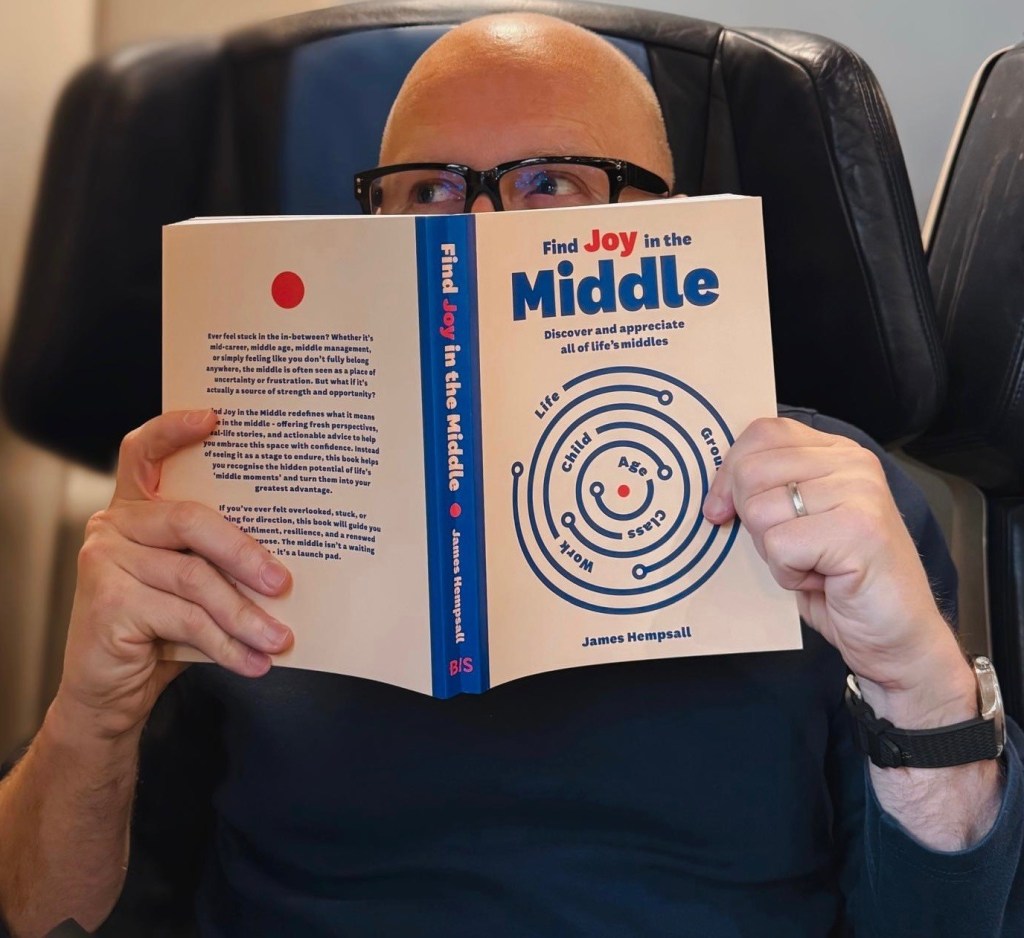
Regular readers will know that the idea of the middle has occupied much of my thinking over recent years. It became the central theme of my book, Find Joy in the Middle. The book is not really about geography. It is about recognising that life is often lived in the spaces between extremes. Between success and failure. Between youth and old age. Between certainty and doubt. Between arrival and aspiration. The middle, I argued, is not something to endure. It is somewhere to embrace.  Perhaps that is why I find this moment politically fascinating.  After all, the fifth of my main chapters was about the ‘middle ground’ and politics appeared throughout some of the others.

For decades, British politics seemed dominated by a southern gravitational pull. Power, influence, media attention, investment and ambition were drawn towards London and the South East. Even when the north voted the government in, it had a distinct metropolitan and elitist bent.  Regional identities survived, of course, but often as colourful footnotes rather than defining features of national life.  Think Blair and Prescott. 

Burnham represents something different. His political story, whilst formed in Westminster, was built in a city region. His reputation was built through his advocacy for Greater Manchester and through a belief that power works best when it is closer to people and places. We all know that of course.  As Prime Minister, he has already signalled an intention to continue that devolutionary journey.

What interests me most is not whether more government departments move north or whether Treasury spending patterns change. Important as those things are, there is another shift taking place.  The cultural centre of gravity appears to be moving too.  I have noticed it in myself.

Lately, I find myself dusting off my flatter vowels and leaning more readily into some of the rustic vernacular that has always been there. Not that I ever deliberately concealed it. But like many people who have navigated professional environments over several decades, I became adept at smoothing the rough edges. Softening certain words. Modifying an accent here and there. Adapting to the expectations of national institutions that often felt culturally southern.

Now, for the first time in a while, I sense a subtle reversal. The things that once felt like disadvantages increasingly look like advantages.  Regional accents sound less like obstacles and more like authenticity.  Local identity feels less like something that needs explaining and more like something worth celebrating. Being rooted somewhere is becoming fashionable again.

Perhaps age has something to do with it. One of the freedoms that comes with getting older is caring a little less about other people’s assumptions. But I suspect it is bigger than that. The country itself seems to be reconsidering what leadership looks and sounds like.  For those of us working in the world of children, families, education and early years, that matters.

Because some of the most important innovations in public service have emerged not from the centre but from places. They emerge when local leaders understand local communities, when solutions are designed with people rather than for them and when power is distributed rather than concentrated. In that sense, “we’re all Northern now” is not really about the North at all.  It is about valuing place.  It is about challenging the assumption that wisdom only resides in central institutions.  It is about recognising that thriving communities do not need to be identical to be successful.  And perhaps it is also about becoming more comfortable with who we are.

One of the central messages of Find Joy in the Middle is that fulfilment often comes when we stop striving to become someone else and start appreciating where we actually stand. The same may be true for nations as well as individuals.  Britain has spent many years searching for grand ideological answers. Maybe what we need is a little more confidence in our towns, our cities, our regions and our communities. Maybe we need to trust the wisdom that exists outside the centre.  As a Midlander, I am not about to start claiming full northern status. I know better than that. There are people in Yorkshire who would never permit it.

I admit I am enjoying this moment.  I am enjoying hearing different voices at the centre of national debate.  I am enjoying the growing confidence of places that have often felt overlooked.  And I am enjoying the possibility that the characteristics once dismissed as provincial may turn out to be exactly what modern Britain needs.  If that means flattening my vowels a little more and allowing the occasional piece of rustic Midlands vernacular to slip into conversation, then so be it.  After all, perhaps the middle has finally become the centre.
Photo by Alexandre Loureiro on Pexels.com

The disappearing middle ground?

The shocking death of Ann Widdecombe, former MP, government minister and Strictly Come Dancing alumnus, has prompted a great deal of reflection. As I watched the news unfold, I found myself thinking back to the first time our paths crossed in the mid-1990s, when she was Childcare Minister and I was beginning to engage with government on issues affecting children and families. We didn’t agree, and had a little public battle, in front of my new boss as it happened – who I am sure started to wonder who she had recently recruited. 

Ann Widdecombe was many things: formidable, intelligent, uncompromising and deeply committed to her beliefs. Even those who disagreed with her would rarely accuse her of lacking conviction. Throughout her political career, she remained steadfast in views that were rooted in her faith and worldview, often attracting admiration from supporters and criticism from opponents in equal measure. There has been no shortage of people saying that in the media this week.

Many of Ann’s positions did not align with my own values, particularly where inclusion, diversity and the changing nature of modern society were concerned. There were times when her views felt rigid, and there were occasions when I felt they failed to recognise the experiences and realities of people whose lives differed from her own. Yet politics is not, or should not be, about surrounding ourselves only with people who think exactly as we do.

What strikes me most today is not so much the politics of Ann Widdecombe herself, but the nature of politics more broadly. We seem to be living through an era where disagreement increasingly becomes hostility, and where opponents are too often viewed as enemies rather than fellow citizens with different perspectives.  And it all plays out in the media.

Politics has always been robust. It should be. Ideas matter. Values matter. Outcomes matter. But somewhere along the way, we appear to have lost some of our tolerance for the messy middle ground where compromise, understanding and mutual respect can flourish.  These aren’t headline grabbing places. 

The circumstances surrounding Ann Widdecombe’s death have added another layer to that reflection. Police investigations continue, with authorities examining the events that led to her death and exploring possible motives. Regardless of where anyone stood politically, the loss of a public figure in such circumstances is profoundly unsettling. We feel we know them, whether they have connected with us on screen or in real life.

There is something almost surreal about the story. A prominent political figure, living alone in the English countryside, found dead in a quiet corner of Dartmoor. It has the atmosphere of a Middle England murder mystery, the kind of plot that might emerge from a Midsomer Murders script. But this is not fiction. It is a reminder that behind every political persona sits a real person, with family, friends, colleagues and a life that extends far beyond the headlines.  It reminds us there are other people out there who wish others harm, and some of them follow through with their hateful thoughts with actions not words.

In death, as in life, Ann Widdecombe remains a figure who provokes strong reactions. Some will remember her as a principled campaigner who stood firm in her beliefs. Others will remember the controversies, the arguments and the positions she took that now sit uncomfortably with contemporary values. Both assessments can be true.  The challenge for all of us is whether we can hold those truths together. Can we acknowledge someone’s contribution while disagreeing profoundly with their views? Can we debate fiercely without dehumanising? Can we rediscover the art of respectful disagreement?

As our politics becomes ever more polarised, these questions feel increasingly important.  Ann Widdecombe never occupied the middle ground. That was not her style. Some suggest she was more middle later in life than we thought, I am not too sure about that.  But perhaps her passing serves as a reminder of why the rest of us should value it more highly. The future of our democracy may depend on our ability to find it again.

Photo by cottonbro studio on Pexels.com

When the Major Oak falls: Reflections on loss, legacy, and the Nottinghamshire spirit.

There are moments in a lifetime when a piece of news lands not simply as information, but as something felt deeply, personally, almost ancestrally. The reported death of the Major Oak in Sherwood Forest is one of those moments.

For many, the Major Oak is a famous tree, ancient, storied, photographed endlessly. But for those of us born and raised in Nottinghamshire, it has always been something more. It is not just part of the landscape; it is part of our identity. For me, a Nottinghamshire lad whose family roots stretch back over 500 years of farm labourers in and around the forest, the Major Oak feels like kin. It has stood longer than any of us, watched over generations of people like my ancestors who worked the land, tended the soil, and built lives beneath its shadow.  As a child I stood there in awe of its majesty.

The idea that it may no longer stand is not simply the loss of a tree. It is the quiet closing of a chapter that spans centuries. 

The Major Oak has long been intertwined with the legend of Robin Hood, a figure who, whether real or mythic, has come to symbolise fairness, resistance to injustice, and the protection of the vulnerable. As a Nottinghamshire boy, those stories were never distant folklore. They were embedded in the place itself, in the woodland paths and the sense that history lingered just beneath the surface.

Like many, I grew up inspired by the spirit of Robin Hood, not the romantic outlaw alone, but what he represented: fairness, courage, and a challenge to inequality. Those values have shaped my own journey and commitment to social justice. And at the heart of those legends stood the Major Oak, reportedly a gathering place, a shelter, a symbol of resilience.

To lose it feels like losing part of the moral landscape that shaped us.

We are living through a time marked by endings. The passing of Queen Elizabeth II in September 2022 signalled the close of another Elizabethan age, one defined by continuity, duty, and a sense of enduring presence. For many of us, she was the only monarch we had ever known. Her death prompted reflection not just on her life, but on the nature of permanence itself.  Now, to hear of the potential loss of the Major Oak, another steadfast presence, another seemingly immovable constant, echoes that same quiet grief.  Although I am somewhat in denial, and I am hoping by some miracle leaves will appear next spring.

These are not comparable losses in scale or meaning. But emotionally, there is a shared thread: the realisation that what we once thought would always be there, may not be.  That what was once young and vital, is older and in demise.

The Major Oak stood for hundreds of years, through kings and queens, through wars and reformations, through the slow and steady evolution of the countryside and the communities within it. It endured as a witness, a silent custodian of history. And now, like so many things we once assumed timeless, it reminds us that even the strongest roots do not guarantee permanence.

Loss has a way of asking something of us. It asks us to remember, but also to respond.  As someone with deep ties to this land, through both heritage and work, I feel a responsibility to carry forward what the Major Oak represented. Not the tree itself, but its meaning. Its symbolism. Its endurance.  If the Major Oak is gone, then the question becomes: what do we plant in its place? Not just physically, but culturally and socially.  Do we continue to stand for fairness in the way Robin Hood’s legend inspired?  Do we preserve and protect our natural heritage for future generations?  Do we honour the quiet labour of those who came before us, people like my ancestors, whose lives were intertwined with these woods?  The answers to all those questions will define whether this loss becomes an end, or a turning point.

While the Major Oak may no longer stand, its roots, both literal and metaphorical, remain. The land remembers. The forest continues. And so do we.  Nottinghamshire has always been shaped by resilience. From its agricultural past to its industrial heritage and into its modern communities, it is a place that adapts, endures, and rebuilds.  In many ways, that is the true legacy of the Major Oak. Not simply that it stood for so long, but that it became a symbol around which people could gather, find meaning, and draw inspiration.  That legacy does not vanish with the tree.

Perhaps what we feel today is not just grief, but a call to stewardship. A reminder that history is not something we inherit passively, it is something we actively sustain.  The Major Oak inspired stories of justice, belonging, and standing up for what is right. Those stories shaped people like me. And now, it is up to us to ensure they continue to shape those who come after.  Because while trees may fall, the values they come to represent can endure, if we choose to carry them forward.

In the end, the loss of the Major Oak is deeply personal, profoundly local, and quietly universal. It reminds us that even the oldest and strongest among us are not immune to time. But it also reminds us that legacy is not measured only in years or in size, it is measured in impact.  And by that measure, the Major Oak will stand forever.

Photo by Lucas George Wendt on Pexels.com

Can we please stop saying “we work in silos”?


There’s a moment in almost every meeting about children’s services where someone leans forward and says, with a kind of weary authority, “the problem is, we all work in silos.” Everyone nods. It sounds right. It feels truthful. And then, more often than not, we move on.

I’ve heard it so many times now that I find myself getting impatient with it. Not because it’s completely wrong, but because it’s become a stopping point rather than a starting point. It’s the sort of phrase that sounds like insight but often functions as an excuse. It’s a cop out.

Of course, services can feel fragmented. Of course, people are under pressure, operating in different ecosystems, with different targets, languages, acronyms, and accountabilities. None of that is in dispute. But “silos” has become a convenient shorthand that appears to let all of us off the hook. It wraps up a complicated set of choices and behaviours into something that feels structural, inevitable and therefore nobody’s particular responsibility. We work in silos, it is someone else’s fault, and we can’t do anything about it.

The truth is, silos don’t just exist out there somewhere, imposed on us by fate or organisational charts. They are created, and recreated, in small, everyday ways. They show up when we don’t pick up the phone because things are busy. When we stick closely to our remit because it feels risky not to. When we attend a meeting, agree broadly that things should be more joined up, and then go back to doing things exactly as we did before.

None of that is malicious. Most of the time it’s understandable. People are stretched, and systems are complicated. But it does mean that when we say “we work in silos,” what we’re often describing is something we are also participating in. Something we are reinforcing.

There’s something else that bothers me about the phrase, too. It’s completely detached from how children, young people, and families experience their lives. A child doesn’t wake up in the morning thinking about which part of their life belongs to which service. They don’t separate out their mental health from their education, or their safety from their relationships, or their housing from their wellbeing. It all comes as one whole, complicated, human experience.

Yet we design support in neat compartments and then act surprised when it doesn’t join up properly. Calling that silos almost disguises the deeper issue, which is that we’ve built systems around organisations rather than around people. What’s more frustrating is that the phrase carries a kind of shrug with it. It can sound like we’re saying, “this is just how it is.” And if that’s the case, then it’s hard to see where the energy for change comes from. You can’t shift something that feels inevitable.

I’d rather we were a bit more direct with ourselves. Instead of saying we work in silos, we might admit that we don’t always prioritise working together in the way we should. That we sometimes make information too hard to share. That our processes get in the way. That we haven’t invested enough time in building relationships across teams and organisations.

Those are more uncomfortable things to say, but they have an advantage: they point to things we can actually do something about.

Because for all the talk of structures and systems, collaboration is still, at heart, about people. It’s about whether we know each other, trust each other, and feel able to pick up the phone without worrying about whether this is “our bit” or “their bit.” It’s about whether leaders model that behaviour or simply talk about it. It’s about whether we measure success in terms of shared outcomes, or retreat back into what we can individually control. None of that is fixed. None of it is beyond our influence.

Language matters more than we sometimes think. The words we reach for shape how we understand a problem, and what we believe is possible. Silos has become one of those words that closes things down rather than opens them up. It names the issue in a way that feels tidy, but leaves everything else untouched. So perhaps it’s time we retired it. I really don’t want to think that three years into delivering the Best Start in Life strategy that we will still be trolling out this hackneyed get-out. Do you?

Not because the underlying challenges aren’t real, they are, but because repeating the same phrase over and over again isn’t getting us any further forward. Children, young people, families and I must say our workforce don’t need us to keep describing the fragmentation of the system. They need us to behave differently within it. That might sound simple, but it’s not easy. It requires intention, curiosity and, at times, a willingness to step slightly outside of what feels safe or familiar. It asks more of us than a well-worn phrase ever will.

If we’re serious about improving how services work together, then that’s the work. Not naming the silos. Dismantling them, piece by piece, through what we choose to do next.

Photo by Muharrem Alper on Pexels.com

What type of year has it been for you? One year of Find Joy in the Middle.

It’s been a year since my first book, Find Joy in the Middle hit the bookshelves.  When I look back, I see a year that sat squarely in the middle, not just chronologically, but emotionally, socially, and culturally.  It was a year that invited us to pause, to take stock, and to recognise the quiet power of being in‑between. In many ways, it felt like the world was catching up with what I’ve been saying for years: that the middle isn’t a place of stagnation, but a place of movement, momentum, and meaning.

For those of us in middle age, it was a year of reframing. I sensed a shift away from the tired old clichés of crisis and decline. Instead, people were beginning to see midlife as a pivot point, a moment to re-evaluate what matters, to shed what no longer fits, and to step into a more honest version of themselves. The conversations I encountered were full of people renegotiating their work, their relationships, their ambitions, and their wellbeing. It was as if the world had collectively exhaled and said, “right, what now?”

The middle class, too, found itself under the spotlight. Not always comfortably. There was a growing awareness of how squeezed and stretched this group had become, not wealthy enough to feel secure, not struggling enough to be prioritised. Yet this discomfort brought clarity. It forced a reckoning with what fairness means, what opportunity should look like, and how society depends on the very people it so often overlooks. The middle, once again, proved itself essential.

Even middle children, my favourite metaphor for the overlooked middle, found new resonance. Families were talking more openly about identity, birth order, and the subtle dynamics that shape us. I heard from many who felt seen for the first time, who recognised that their adaptability, diplomacy, and resilience weren’t accidents, but strengths forged in the in‑between. The middle child became a symbol of what I’ve always believed: that being neither first nor last can be a superpower.

Workplaces, too, were redefined by their middles. Middle managers, often dismissed or misunderstood, were the glue holding hybrid and flexible work together. They were the translators, the stabilisers, the human connectors in a year when organisations were still figuring out what ‘normal’ meant. I saw so many step into their roles with renewed confidence, realising that leadership from the middle is leadership in its most human form.

And then there was the middle ground, that fragile, precious space between extremes. I sensed a growing fatigue with polarisation. People were tired of shouting matches and binary choices. Others have been grasping onto their pre-extinction burst, fearful of change, angry with it and all perceived injustices, and they took to the streets to protest, or to create harm. Those in the middle ground were craving nuance, balance, and the courage to say, “It’s more complicated than that.” The middle ground, long dismissed as indecisive or dull, began to look like the only place where real progress could happen.

So yes, it has been a middle year. Not in the sense of being average or forgettable, but in the sense of being transitional, reflective, and quietly transformative. It was a year that reminded us that the middle is where life actually happens, where we grow, where we adapt, where we find our footing. And if we’re willing to embrace it, the middle can be the most joyful place of all.

I invite you to wonder how ‘middle’ your next year may be, and to think how you will be the architect of it.

www.findjoyinthemiddle.com

Buy the book

BIS publishers