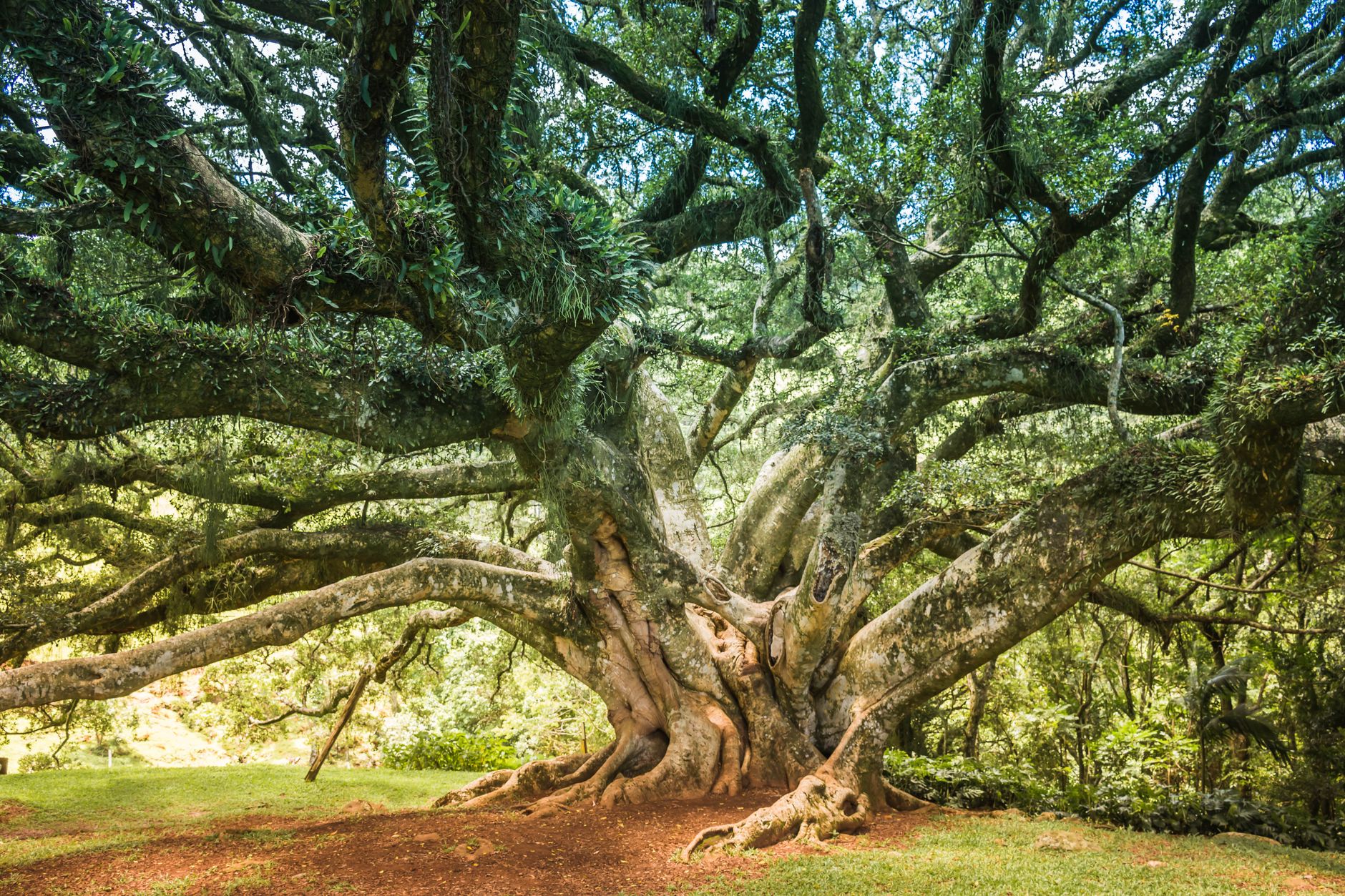
There are moments in a lifetime when a piece of news lands not simply as information, but as something felt deeply, personally, almost ancestrally. The reported death of the Major Oak in Sherwood Forest is one of those moments.
For many, the Major Oak is a famous tree, ancient, storied, photographed endlessly. But for those of us born and raised in Nottinghamshire, it has always been something more. It is not just part of the landscape; it is part of our identity. For me, a Nottinghamshire lad whose family roots stretch back over 500 years of farm labourers in and around the forest, the Major Oak feels like kin. It has stood longer than any of us, watched over generations of people like my ancestors who worked the land, tended the soil, and built lives beneath its shadow. As a child I stood there in awe of its majesty.
The idea that it may no longer stand is not simply the loss of a tree. It is the quiet closing of a chapter that spans centuries.
The Major Oak has long been intertwined with the legend of Robin Hood, a figure who, whether real or mythic, has come to symbolise fairness, resistance to injustice, and the protection of the vulnerable. As a Nottinghamshire boy, those stories were never distant folklore. They were embedded in the place itself, in the woodland paths and the sense that history lingered just beneath the surface.
Like many, I grew up inspired by the spirit of Robin Hood, not the romantic outlaw alone, but what he represented: fairness, courage, and a challenge to inequality. Those values have shaped my own journey and commitment to social justice. And at the heart of those legends stood the Major Oak, reportedly a gathering place, a shelter, a symbol of resilience.
To lose it feels like losing part of the moral landscape that shaped us.
We are living through a time marked by endings. The passing of Queen Elizabeth II in September 2022 signalled the close of another Elizabethan age, one defined by continuity, duty, and a sense of enduring presence. For many of us, she was the only monarch we had ever known. Her death prompted reflection not just on her life, but on the nature of permanence itself. Now, to hear of the potential loss of the Major Oak, another steadfast presence, another seemingly immovable constant, echoes that same quiet grief. Although I am somewhat in denial, and I am hoping by some miracle leaves will appear next spring.
These are not comparable losses in scale or meaning. But emotionally, there is a shared thread: the realisation that what we once thought would always be there, may not be. That what was once young and vital, is older and in demise.
The Major Oak stood for hundreds of years, through kings and queens, through wars and reformations, through the slow and steady evolution of the countryside and the communities within it. It endured as a witness, a silent custodian of history. And now, like so many things we once assumed timeless, it reminds us that even the strongest roots do not guarantee permanence.
Loss has a way of asking something of us. It asks us to remember, but also to respond. As someone with deep ties to this land, through both heritage and work, I feel a responsibility to carry forward what the Major Oak represented. Not the tree itself, but its meaning. Its symbolism. Its endurance. If the Major Oak is gone, then the question becomes: what do we plant in its place? Not just physically, but culturally and socially. Do we continue to stand for fairness in the way Robin Hood’s legend inspired? Do we preserve and protect our natural heritage for future generations? Do we honour the quiet labour of those who came before us, people like my ancestors, whose lives were intertwined with these woods? The answers to all those questions will define whether this loss becomes an end, or a turning point.
While the Major Oak may no longer stand, its roots, both literal and metaphorical, remain. The land remembers. The forest continues. And so do we. Nottinghamshire has always been shaped by resilience. From its agricultural past to its industrial heritage and into its modern communities, it is a place that adapts, endures, and rebuilds. In many ways, that is the true legacy of the Major Oak. Not simply that it stood for so long, but that it became a symbol around which people could gather, find meaning, and draw inspiration. That legacy does not vanish with the tree.
Perhaps what we feel today is not just grief, but a call to stewardship. A reminder that history is not something we inherit passively, it is something we actively sustain. The Major Oak inspired stories of justice, belonging, and standing up for what is right. Those stories shaped people like me. And now, it is up to us to ensure they continue to shape those who come after. Because while trees may fall, the values they come to represent can endure, if we choose to carry them forward.
In the end, the loss of the Major Oak is deeply personal, profoundly local, and quietly universal. It reminds us that even the oldest and strongest among us are not immune to time. But it also reminds us that legacy is not measured only in years or in size, it is measured in impact. And by that measure, the Major Oak will stand forever.