Blog

Dolly Parton and the courage to remain yourself

Since the news of Dolly Parton’s death, there has been an extraordinary outpouring of grief, affection and gratitude. People have shared memories of concerts, stories of kindness, favourite songs and reflections on the impact she had on their lives. Much of that is entirely understandable. She was one of those rare figures who seemed to transcend the boundaries of her profession. She was not simply a singer, songwriter, actor or philanthropist. She became a presence in people’s lives, someone whose warmth, humour and humanity felt remarkably accessible despite her global fame. Yet as I have read the many tributes, I have found myself returning to a particular aspect of her life that feels especially relevant today: authenticity.

Authenticity is a word that is overused and often misunderstood. It has become a fashionable label attached to personal brands and carefully curated public identities. What made Dolly different was that her authenticity never seemed manufactured. From the beginning of her career, she faced pressures that are familiar to many people who rise beyond the circumstances into which they were born. There is often an expectation that success requires a degree of assimilation; that acceptance is earned by softening the edges of who we are, adopting the tastes and behaviours of more privileged groups, and quietly distancing ourselves from the people and places that formed us. Dolly Parton consistently refused that bargain.

She became one of the most successful entertainers in the world without ever pretending to be anything other than a working-class woman from rural Tennessee. She did not lose her accent. She did not hide the culture that shaped her. She did not abandon the stories, values and experiences that lay at the heart of her songwriting. If anything, she became more determined to celebrate them. At a time when some commentators viewed her appearance as excessive or unsophisticated, she embraced it with humour and confidence. The wigs, the make-up, the sequins and the rhinestones were not signs of insecurity. They were expressions of freedom. She understood perfectly well how others saw her and chose, regardless, to be the woman she wanted to be.

What strikes me most is that this authenticity was rooted in gratitude rather than rebellion. Throughout her life, she spoke about her parents with deep affection and respect. Her upbringing was not something she overcame. It was something she honoured. Again and again, she returned to stories of family, poverty, faith, resilience and love. Songs such as Coat of Many Colors captured not only the hardship of her childhood but also the richness she experienced within it. Her mother and father were not peripheral characters in the story of Dolly Parton. They were central to it. The values they instilled in her remained visible long after fame and fortune had transformed every practical aspect of her life.

That connection to her roots was reflected not only in her storytelling but also in the way she understood success itself. In a culture that often measures achievement through wealth, status and influence, Dolly seemed to recognise that success carries responsibilities as well as rewards. Her creation of the Imagination Library, which has distributed hundreds of millions of books to children, stands as one of the most significant acts of philanthropy by any public figure of our time. There is something deeply fitting about the fact that a woman whose life was transformed by stories chose to invest so heavily in helping children discover stories of their own. While her songs brought joy to millions, the books she placed into children’s hands may ultimately shape generations.

When people ask what Dolly Parton’s legacy will be, they will naturally point to the music. They will talk about Jolene, I Will Always Love You, 9 to 5 and the extraordinary catalogue she leaves behind. Others will highlight her business achievements, her philanthropy or her cultural impact. All of those matter. Yet I wonder whether her greatest legacy is simpler and more profound than any individual accomplishment. Dolly Parton showed that it is possible to become extraordinarily successful without becoming detached from who you are. She demonstrated that ambition does not require the rejection of our origins and that personal growth does not have to involve abandoning the people, communities and values that formed us.

As I reflect on her life, I find myself thinking about the themes explored in Find Joy in the Middle. One of the central ideas in the book is that fulfilment is rarely found in the extremes. We are often encouraged to believe that happiness lies on the other side of achievement, recognition or the next milestone. We tell ourselves that life will become meaningful when we reach a particular destination. Yet joy is more often discovered in the middle: in our relationships, our sense of belonging, our gratitude for what has shaped us and our ability to contribute to the lives of others.

Dolly Parton’s life seems to embody that truth. Despite unparalleled success, she never appeared consumed by the need to become someone else. She remained connected to family, place and community. She found meaning not only in professional achievement but also in generosity, service and storytelling. She held together things that our culture often treats as opposites: glamour and humility, ambition and kindness, confidence and gratitude. Rather than choosing one side or the other, she found a way of inhabiting the middle space between them.

Perhaps that is why so many people feel such affection as they remember her. Beyond the songs and beyond the celebrity was a woman who appeared comfortable in her own skin. In an age of endless performance, comparison and reinvention, that may be one of the most powerful examples anyone can offer. Dolly Parton reminds us that there is dignity in our origins, strength in authenticity and wisdom in remaining connected to the people who helped make us who we are.

Her legacy is not simply that she entertained millions, gave away millions of books or built an extraordinary career. It is that she showed us another way to live. A way rooted in gratitude rather than status, generosity rather than self-promotion, and authenticity rather than approval. In the language of Find Joy in the Middle, she teaches us that joy is not found in becoming somebody else. It is found in becoming more fully ourselves.
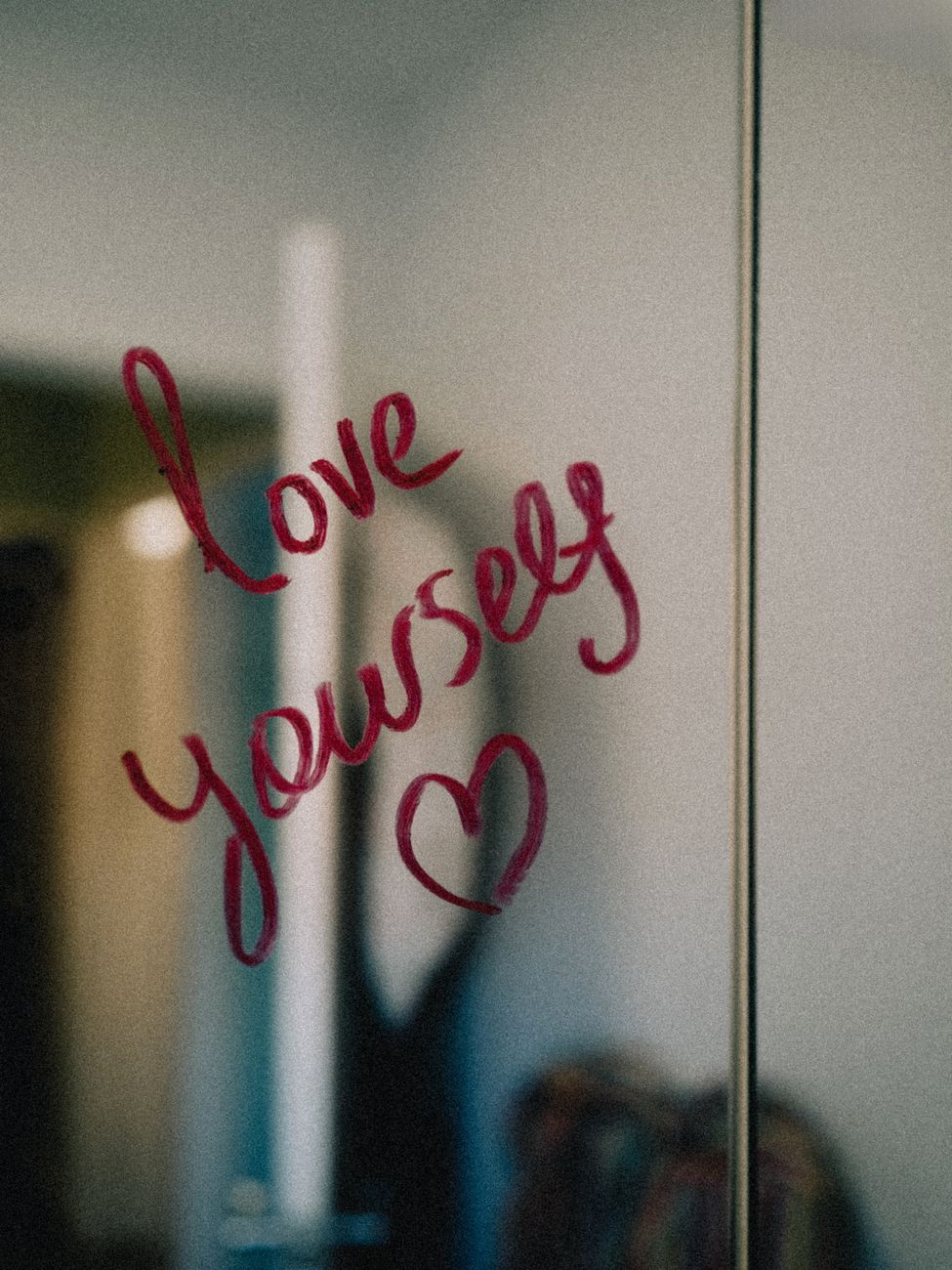

Photo by Lisa Fotios on Pexels.com

Is 50 the magic number when it comes to being middle aged?

There are some mornings when time seems to fold in on itself. This morning, driving into work, I found myself looking out across fields washed in golden hues, the stubble and grasses scorched by the hot summer of 2026. The landscape had that late-summer look: beautiful, brittle, abundant and exhausted all at once. A bookmark to the bounty of autumn.  It was impossible not to think of another legendary summer, 50 years before, the summer of 1976, which I remember vividly from childhood.

I remember the heat, the talk of drought, the cracked earth, the long light, the particular feeling that childhood summers could go on forever. Of course, they do not. Children grow. Parents age. Lives gather complexity. Work, relationships, loss, love, responsibility and reinvention arrive one after another, often without waiting to be invited. And then, one day, you are driving through a summer landscape half a century later and realise that the child who stood at the beginning of one hot summer is now moving steadily through the middle seasons of life.

That is the question I return to in my book Find Joy in the Middle: what exactly do we mean by middle age? Is 50 the magic number? Is it the moment when we officially cross some invisible border between youth and age, ambition and acceptance, becoming and being? I am not sure life works quite so neatly. But I do think 50 matters. It has a symbolism, a heft, a kind of cultural gravity. It is far enough from the beginning to have perspective, and far enough from the end, we hope, to have possibility.

In the book, I posit that middle age is not a narrow corridor squeezed between youthful adulthood and old age. Instead, I suggest it is a generous, expansive period, running from around 50 to 75. That may sound surprising at first, but it feels increasingly true to me. We are living longer, working differently, parenting and caring across wider spans, changing direction later, finding new purpose after old milestones have passed. The middle is not a pause before decline. It can be a season in its own right.

Perhaps that is why the seasons offer such a useful metaphor. Childhood is spring, not because it is always innocent or easy, but because it carries the force of beginnings. Everything is ahead. The world is green with possibility. The summer of early adulthood brings heat, growth, risk, fullness and sometimes drought too. Then comes the middle season, the long turning into autumn, when the light changes. The colours deepen. The harvest matters. We begin to understand what has taken root and what has not. We notice what we have grown, what we have neglected, what we might yet plant.

There is a certain poignancy in standing, or driving, between those two hot summers: 1976 and 2026. One belongs to memory, to the child I was. The other belongs to now, to the adult I have become. Fifty years sit between them, not simply as a measurement of age, but as evidence of a life lived. The fields this morning were not green and new. They were golden, weathered, marked by heat. Yet they were also beautiful. Perhaps that is the point.

Middle age asks us to stop measuring ourselves only by beginnings. It asks us to value ripeness, resilience and depth. It asks us to look honestly at the scorching years as well as the golden ones, and to see that both have shaped us. It is not the end of summer, nor yet winter. It is the time when the light becomes more interesting.

So, is 50 the magic number? Maybe not magic in the fairy-tale sense. No bell rings. No gate opens. No certificate arrives declaring us middle aged. We don’t receive a letter from the Monarch congratulating us on our middling achievement.  But 50 may be a threshold of attention. It may be the age when we begin to notice the view differently, to connect the child we were with the person we are still becoming. It may be the point at which we realise the middle is not something to endure, deny or rush through. It is something to inhabit.

And if we can inhabit it fully, perhaps we can find what I am really searching for in Find Joy in the Middle: not a desperate attempt to stay young, nor a premature surrender to getting old, but a richer, wiser, more generous way of living in the season we are actually in. The fields this morning reminded me that golden does not mean over. Sometimes it means ready.

Photo by Jan van der Wolf on Pexels.com

When did childhood become a project?

I sometimes wonder when childhood stopped being a journey and became a project.  A project to be managed, measured, optimised and improved. A project with targets, milestones and outcomes.

The thought struck me recently while watching young families navigate the summer holidays. Children’s calendars can be as crowded as those of senior executives: swimming lessons on Monday, football on Tuesday, coding club on Wednesday, music tuition on Thursday and (another) birthday party on Saturday. Alongside it all sits the invisible administration of childhood, with developmental assessments, school readiness indicators, attendance monitoring, online tracking apps and endless conversations about attainment. Many children today are busier than ever before, yet I am not convinced they are any freer.  And as we start another school year, things will only get busier.

Of course, every generation worries about the next, and it is easy to romanticise the past. The childhood of my generation was hardly perfect. We grew up with less awareness of safeguarding, fewer protections and often lower expectations. Many children who struggled were simply overlooked. Yet there was also something else: time. Time to be bored, time to wander, time to make up games that had no educational purpose whatsoever. There was time to climb trees, build dens, ride bicycles and spend entire afternoons seemingly achieving absolutely nothing.  We did though, that was called play. 

Increasingly, childhood seems to be viewed through the lens of future adulthood. We ask not whether an activity brings joy, wonder or connection, but whether it develops resilience, improves literacy, enhances social skills or contributes in some way to a future success that may be years away. Even play frequently needs justification. We have become uncomfortable with experiences that are valuable simply because they are experiences.

As adults, our intentions are usually good. We want children to succeed. We want them to be happy. We want them to have opportunities that we may not have had ourselves. Yet somewhere along the way, childhood risks becoming a preparation for life rather than a stage of life in its own right.

I am reminded of how often we ask young children what they want to be when they grow up. It sounds like an innocent question, but it carries an important assumption. Imagine asking adults the equivalent question: what do you want to be in twenty years’ time? Most of us would struggle to answer. Children, meanwhile, absorb a powerful message that who they are now matters less than who they might become later. The destination starts to eclipse the journey.

Perhaps this reflects a broader cultural shift. Adults increasingly live in a world dominated by targets, performance indicators, productivity measures and endless self-improvement. We count our steps, monitor our sleep, track our finances and optimise our calendars. Why would childhood escape the same forces? The danger is that children begin to experience themselves as projects too: a collection of strengths and weaknesses to be developed, a set of data points moving towards predetermined outcomes, a work in progress rather than a person.

Yet some of the most important parts of childhood cannot be measured. Curiosity cannot be easily quantified. Wonder resists assessment. Friendship cannot be reduced to a score and kindness rarely appears in a league table. The memories that shape us most profoundly often emerge from moments that looked entirely unproductive at the time: an afternoon spent fishing with a grandparent, hours lost reading under the duvet, a conversation while walking home from school or the freedom to invent a game, change the rules and abandon it twenty minutes later. These experiences do not always produce immediate outcomes. They produce something more valuable: a sense of self.

Perhaps that is what childhood is really for. Not simply preparing children for the future, but allowing them to inhabit the present. Not relentlessly shaping them into successful adults, but enabling them to experience what it means to be a child.

I am not arguing for fewer opportunities, lower aspirations or diminished expectations. Children deserve all of those things. But perhaps they also deserve something increasingly rare: space. Space to dream, space to fail and space to explore who they are without every moment being assessed for its developmental value.

Because childhood is not a project to complete. It is a season of life to experience. And I sometimes wonder whether, in our determination to give children the very best start, we have forgotten to let them simply start.

When violence becomes the language of childhood.

I was travelling on a train recently when I found myself sitting close to a young boy, perhaps five years old. For about 30 minutes he talked almost continuously, not about school, friends, football, dinosaurs, superheroes or adventuring in the woods, but about destroying things.

He described blowing things up, exploding buildings, wrecking vehicles, smashing and killing. There was no context, no story, no apparent game, just a stream of imagined destruction that seemed to fascinate him. His parents barely responded and other passengers hardly noticed, but I couldn’t stop thinking about it.

Today, the Children’s Commissioner has published a report examining children referred to the Prevent programme. One of its most striking findings is that around seven in 10 children referred do not fit traditional definitions of extremist ideology. Instead, many display a worrying fixation with violence, weapons, mass casualty attacks and harmful online content. The report argues that our systems struggle to respond to these children because they do not fit neatly into existing categories of radicalisation.

As I read the report, my mind returned to that little boy on the train, not because I believe he was a clear and present danger, he was five years old, but because I found myself wondering when it was that violence became such a normal language of childhood.

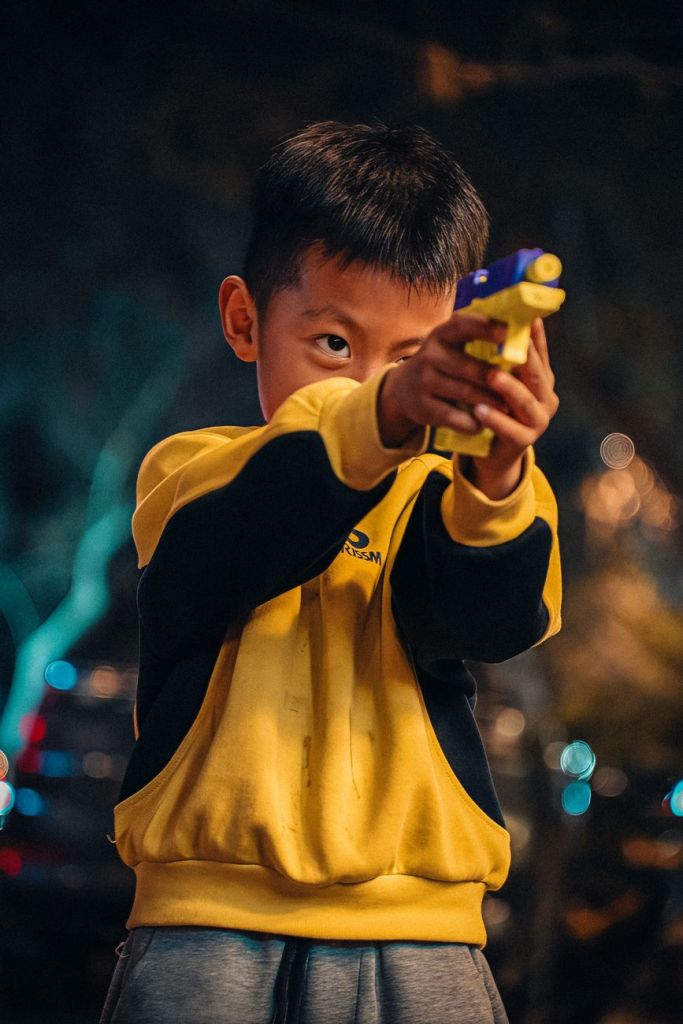
Of course, this is not entirely new. I grew up watching cowboys and Indians films. We played war games. Toy guns appeared every Christmas. Many of us pointed plastic revolvers at our friends before we were old enough to understand what a real gun could do.

It would be easy, and wrong, to pretend that previous generations were somehow innocent. Children have always explored power, risk and conflict through play. Stories have always contained villains. Boys in particular have often been encouraged to test boundaries through rough-and-tumble play, competition and confrontation.

Yet something feels different. The violence of my childhood was usually embedded within a story. However simplistic and problematic those narratives may have been, there was at least a framework.

Today’s children inhabit a digital world where violence is often detached from meaning. Online platforms can serve up an endless stream of fights, humiliation, cruelty, real-world killings, extreme pornography and videos designed purely to shock. The Children’s Commissioner describes children becoming “fixated on violence” after exposure to harmful online content. Violence is no longer a scene in a film; it is content, and content never ends. That should force us to ask difficult questions about the messages children receive.

Too often, boys are still encouraged to destroy while girls are encouraged to create. A boy knocking down a tower of bricks is laughed at; a girl building one is praised. Boys are given weapons while girls are given crafts. Boys are expected to conquer while girls are expected to nurture.  These are caricatures, of course, and modern parenting and education is more nuanced than this. Yet the underlying messages remain surprisingly powerful. We continue to socialise boys towards domination, aggression and risk, even as we express concern about male violence later in life.

Then we seem surprised when some boys become fascinated by power expressed through destruction. The uncomfortable truth is that violence is not a fringe interest in our culture; it sits at the centre of much of our entertainment, media and public discourse.  We celebrate military victories. We cheer cinematic revenge. We consume true-crime documentaries at extraordinary rates. We replay footage of attacks and atrocities across rolling news channels. We talk constantly about conflict, threat and enemies.  The blame does not solely lie at the feet of social media.

Children are not separate from this culture; they absorb it. The Children’s Commissioner’s report should not simply prompt a discussion about Prevent. It should prompt a discussion about childhood itself.

What stories are children hearing? What images are they seeing? What behaviours are being rewarded? What alternatives are we offering?  Because if we want children to create, collaborate, empathise and care, we have to build a culture that values those things as highly as it values competition, conquest and destruction.

The little boy on the train was not the problem. He may simply have been reflecting the world around him. That is what children do. They absorb our values, our anxieties, our obsessions and our dreams. They hold a mirror up to the culture we have created.

And perhaps that is the most uncomfortable question raised by today’s report: not simply what is happening to children, but what are children are learning from us?

It’s so funny, how we don’t call anymore.

It was my birthday recently.  There were cards on the window sill, thoughtful texts arriving throughout the day, WhatsApp messages from friends I haven’t seen for years, LinkedIn notifications from professional contacts and the familiar stream of digital kindness that reminds us we are remembered. I was genuinely grateful for every one of them.

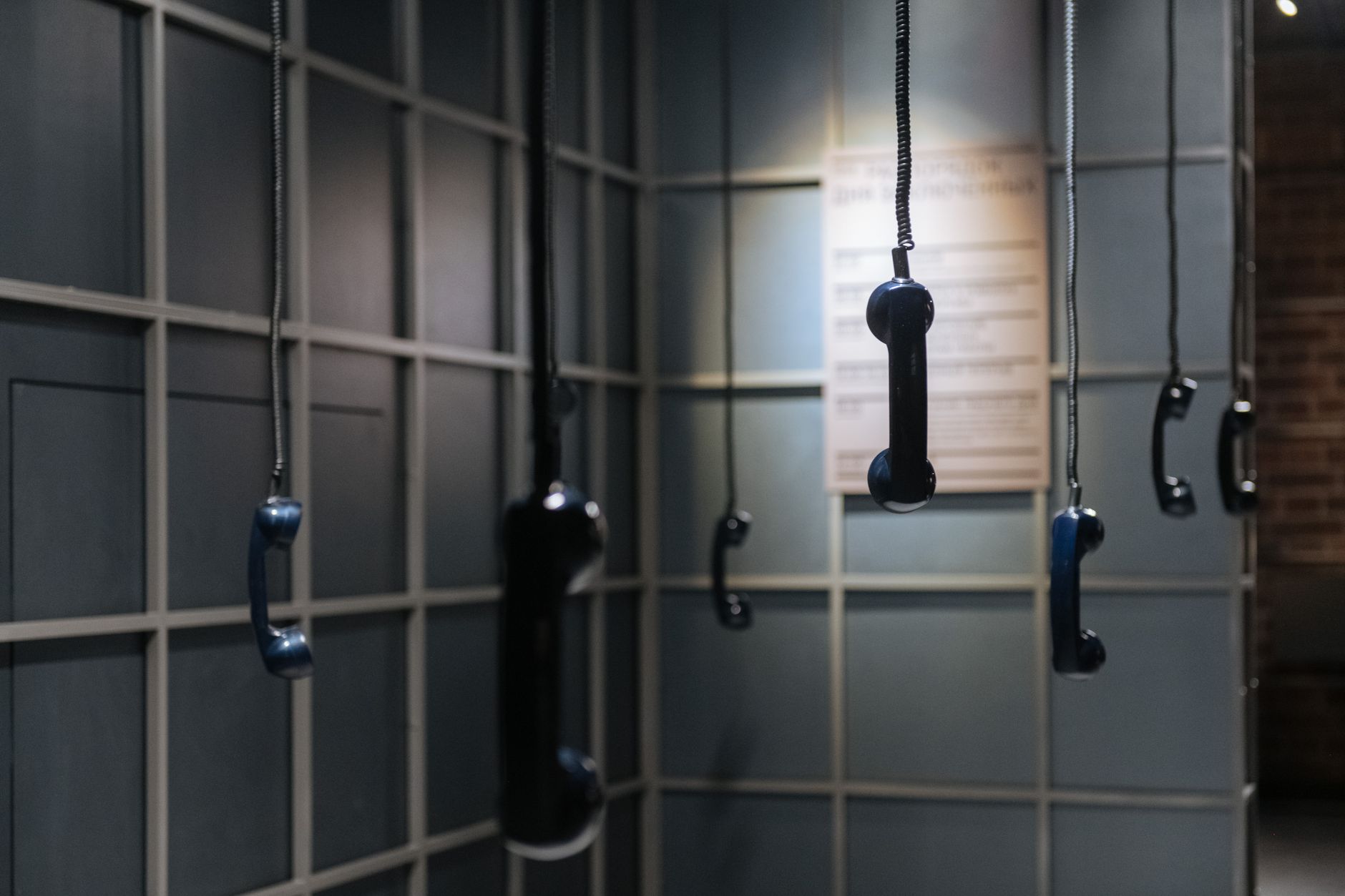
Yet among all those messages, there was just one telephone call.  Something that caused me to paraphrase Cliff Richard.

This isn’t a complaint. I didn’t feel unloved or overlooked. Quite the opposite. The messages were warm, generous and heartfelt. But the imbalance struck me as an observation worth pondering.

Once upon a time, birthdays involved sitting near the telephone, as it would ring continuously. The call itself was never simply about saying “Happy Birthday”. It was the opening line of a much longer conversation. The birthday greeting soon drifted into other territory. How are things really? Have you heard from so-and-so lately? What happened with that project you were worried about? How are the children? Before long, twenty or thirty minutes had passed. Sometimes longer. The conversation wandered and meandered, discovering things neither person had intended to discuss. There was no agenda and no objective other than human connection. The unexpected happened.

Today, the message arrives instead. A quick “Happy Birthday, James”, perhaps accompanied by an emoji or a thumbs-up, and the exchange is complete. The sentiment is still sincere and the affection is still real, but the experience feels different. Less expansive. More transactional. A thoughtful gesture, certainly, but often a completed task rather than the beginning of a conversation.

Perhaps the greatest irony is that we have never been more connected to our phones. We carry them everywhere, rarely letting them out of our sight. We sleep beside them, check them before getting out of bed and glance at them hundreds of times every day. Yet we seem increasingly reluctant to use them for the very purpose they were originally designed for: talking to another human being.

I notice this phenomenon everywhere. People frequently send a message asking whether they can call. I’ve often wondered what response they are expecting. Increasingly, asking permission to make a phone call has become a social ritual, almost an acknowledgement that an unsolicited conversation feels intrusive in a way it never used to.

I see it in the workplace too. Some younger colleagues visibly tense when the office phone rings. The ringing itself appears to create anxiety. Who could it be? What do they want? Why didn’t they send a message first? To many people, a ringing telephone is no longer an invitation but an interruption, a risk rather than an opportunity.

Then there are the callers who politely ask whether I can talk after I have answered the phone – another ritual I feel. I always find myself smiling at that moment. Well, yes, that’s why I chose to pick up, I have that sort of agency. Yet the question reveals something about the way our culture has changed. We have become accustomed to scheduling and managing communication so carefully that even a spontaneous conversation can feel unusual.

This is not intended as criticism. Every generation develops its own communication norms. Text messaging solves genuine problems. It is efficient, convenient, fast-paced, and respectful of people’s time. It allows us to respond when we are ready rather than forcing an immediate interaction. For busy lives, that flexibility matters.

But I do wonder what we lose when conversation becomes increasingly filtered, managed and controlled. A text message delivers information, but a phone call reveals mood. A WhatsApp message conveys words, while a conversation communicates hesitation, laughter, uncertainty, excitement and emotion. We hear the pause before somebody answers. We notice when their voice sounds tired. We recognise enthusiasm that would never fit inside an emoji. We discover things we didn’t know to ask.

Perhaps this is one reason why loneliness continues to feature so prominently in public conversations despite our endless digital connectedness. We have become remarkably effective at communication, but have we weakened conversation? The distinction matters. Communication is the exchange of information. Conversation is the exchange of humanity.

In Find Joy in the Middle, I explore the importance of living in the spaces between life’s milestones. The middle is where relationships deepen, where understanding grows and where meaning often emerges unexpectedly. It struck me on my birthday that phone conversations inhabit a similar kind of middle. A text message takes us directly to the destination, whereas a conversation allows us to wander through the landscape. Often it is in that wandering that joy is found.

I don’t know whether the decline of voice calls is a temporary cultural shift or a permanent change in how we relate to one another. Perhaps future generations will find our nostalgia for telephone conversations as quaint as handwritten letters. Maybe we can ask AI bots to talk to our friends whilst we are busy doing something (I don’t know what) that’s a better use of our time.  But I do know this: the one person who called me on my birthday didn’t simply wish me a happy birthday. We talked, laughed and caught up. We discovered things neither of us knew when the call began. Long after many of the messages had disappeared beneath newer notifications, that conversation stayed with me.

Maybe that’s what all this means.

Not that messaging is wrong. Not that technology has failed us. Not that we should abandon convenience for nostalgia. Rather, that amidst all the pings, alerts, notifications and unread messages, there remains something uniquely powerful about hearing another human voice unexpectedly reach across the distance and ask, “How are you?”

And perhaps, every now and then, that question deserves more than a text.

Photo by Anton Belitskiy on Pexels.com