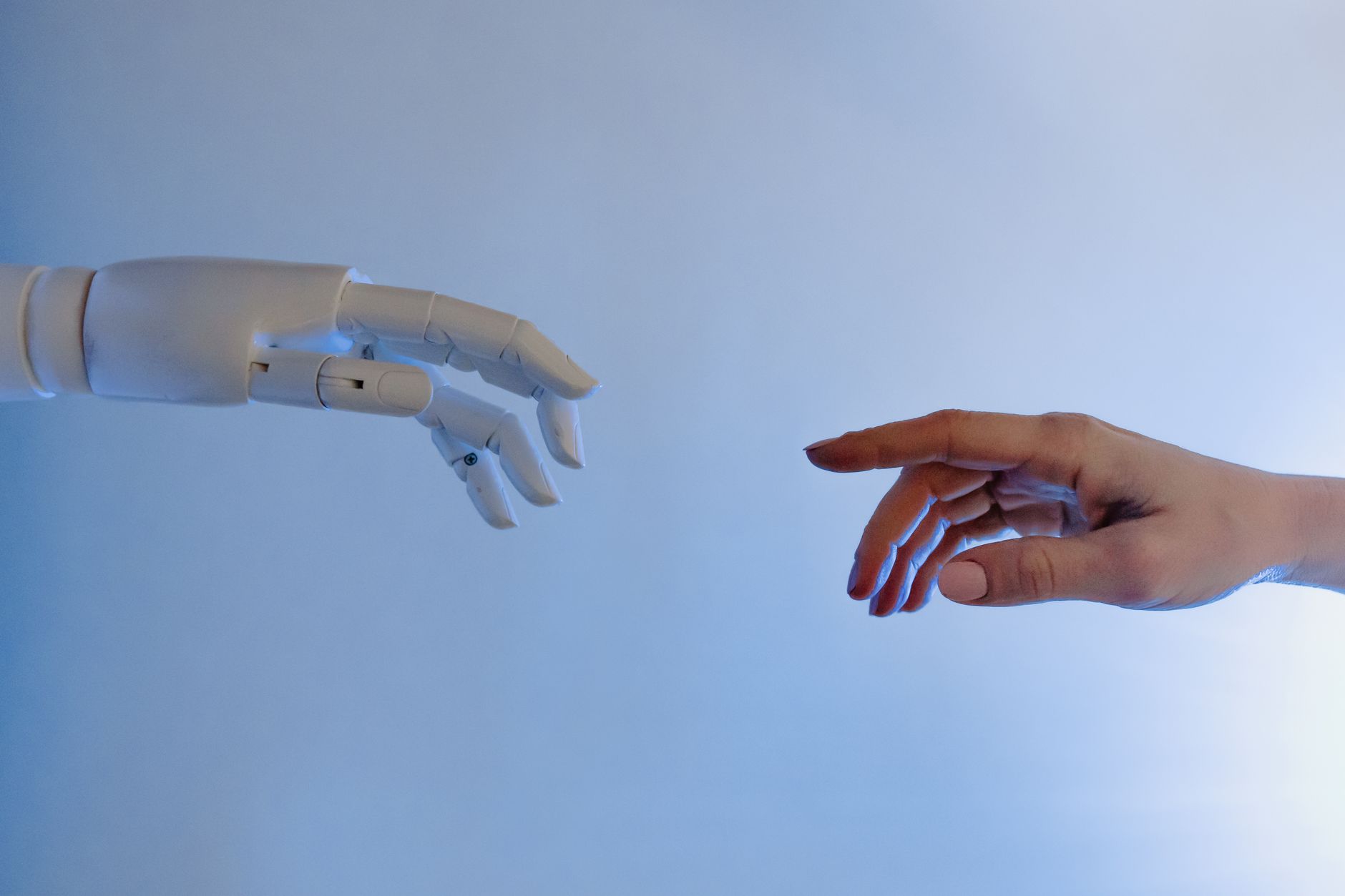
I have noticed something happening to the way I work. Not gradually, either. Quite quickly. AI is changing the rhythm of my working life.
There is plenty being written about artificial intelligence and productivity. Most of it concentrates on how much time AI can save, which tasks it can automate, and which jobs it might eventually replace. I understand all of that, but it isn’t quite what I am experiencing. For me, the more interesting change is not simply that I am doing things faster. It is that I am beginning to work differently. I am open to that.
My working life has always involved ideas. Writing, business planning, strategy, problem solving, presentations, bids, reports, conversations and trying to make sense of complicated situations. Much of that work starts with something fairly unformed. A thought. A problem. A page of notes. A conversation. A brief. Sometimes just a feeling that there is something interesting here if only I can get hold of it. What AI has become remarkably good at is taking that first brief at extraordinary speed.
I can throw something at it that is incomplete, untidy and still forming in my own mind, and almost immediately there is something back that I can respond to. Not necessarily the answer. Often not even the version I want. But something to push against. And that distinction has become important to me.
I don’t think I am outsourcing my thinking. If anything, I sometimes feel as though I am doing more thinking because I am spending less time on the mechanics of getting to the point where the interesting thinking can begin. This is a hugely important point.
I can say, “No, that’s not what I mean.” I can challenge it. Edit it. Ask it to look again. Tell it that a paragraph doesn’t sound like me, that an argument isn’t strong enough, or that it has missed the point. It responds to editorial direction incredibly quickly. That creates a fascinating relationship between human judgement and machine speed. It doesn’t complain that my feedback is harsh. It doesn’t say “it’s not what you said, it’s the way that you said it”.
It is particularly noticeable in my writing. The blank page has changed. Instead of spending ages trying to produce the perfect opening paragraph before I can move on, I can get thoughts moving quickly. Then the work becomes about shaping, sharpening, questioning and bringing more of myself into it. In some ways, that feels closer to being an editor of my own thinking.
The same thing is happening in my business planning. Give AI a mass of information and it can begin to organise it, identify patterns, strip away repetition and help expose the question underneath the questions. I can move from there is a lot going on here to this is what actually matters remarkably quickly.
That is probably the biggest benefit I am noticing. It cuts through the noise.
My working world, like everyone else’s, contains a lot of noise. Emails. Meetings. Documents. Ideas. Data. Opportunities. Problems. Things somebody mentioned three weeks ago. Things that suddenly become urgent. Things that feel urgent but really aren’t important at all.
AI is increasingly helping me streamline that noise and get to the quick of something. What is the important point? What decision am I actually trying to make? What am I missing? What can be discarded? What deserves more thought? I love to ask it in Outlook about what needs my time, my priorities, and what can be left alone.
And when that works well, I feel extraordinarily focused. Almost laser focused. Colleagues may find that thought quite terrifying. But there is a paradox here. Because although AI is speeding parts of my work up, I don’t think it is making my whole working life continuously faster. I am slowing down, and I have more time to lead, to listen, to be available, to support, to innovate.
There are periods of intense activity where an enormous amount happens very quickly. An idea becomes an outline, the outline becomes a draft, the draft gets challenged, rewritten, analysed and developed. Something that might previously have occupied a morning can move forward in a remarkably concentrated burst. And then I stop. I think. I walk away from it. I let the ideas settle. I make a cup of tea. I chat.
That reflective space is becoming more important, not less. Because when the machinery of producing, sorting and analysing accelerates, the scarce commodity becomes something different. It becomes judgement.
Just because I can generate something quickly doesn’t mean I should immediately use it. Just because an analysis appears coherent doesn’t mean I shouldn’t question it. And just because another 10 ideas are available doesn’t mean I need another 10 ideas. The human part of the process is increasingly about knowing what matters. That feels significant.
For years, many of us have confused being busy with being productive. We fill the working day. We move from email to meeting to document to conversation and feel reassured by the sheer quantity of activity. Technology has often made that worse. It has allowed more things to reach us, more quickly, in more places. I wonder whether AI, used thoughtfully, might allow us to reverse some of that. I hope it does, and more importantly, I hope it lasts, and I don’t repeat the mistakes we have made before – by that I mean using tech to be faster. Why shouldn’t AI take the strain, whilst we retain the humanity and responsibility? I think that takes some bravery.
Perhaps the opportunity isn’t to use the time we save to cram even more into the day. Perhaps it is to create a different pattern: intensity followed by reflection; acceleration followed by pause; production followed by judgement. I find that idea rather exciting.
It connects with something I have been thinking about for a long time through Find Joy in the Middle. The middle is not passive space. It is often where we interpret things, connect them, make choices and work out what they mean. AI can accelerate the journey towards that middle, but it cannot decide for me what matters when I get there. That remains my job.
And perhaps that is where I am arriving in my own relationship with AI. I am less interested in asking, What can AI do for me? I am becoming much more interested in asking, What does AI allow me to spend more of myself doing? At the moment, the answer seems to be thinking. Editing. Judging. Connecting. Imagining. Deciding. And occasionally, doing absolutely nothing with an idea for a while.
That may sound strange when we are talking about a technology celebrated principally for its speed. But perhaps the greatest gift of something that can work incredibly quickly is not that it allows us to work quickly all the time. Perhaps it is that we don’t have to.