Blog

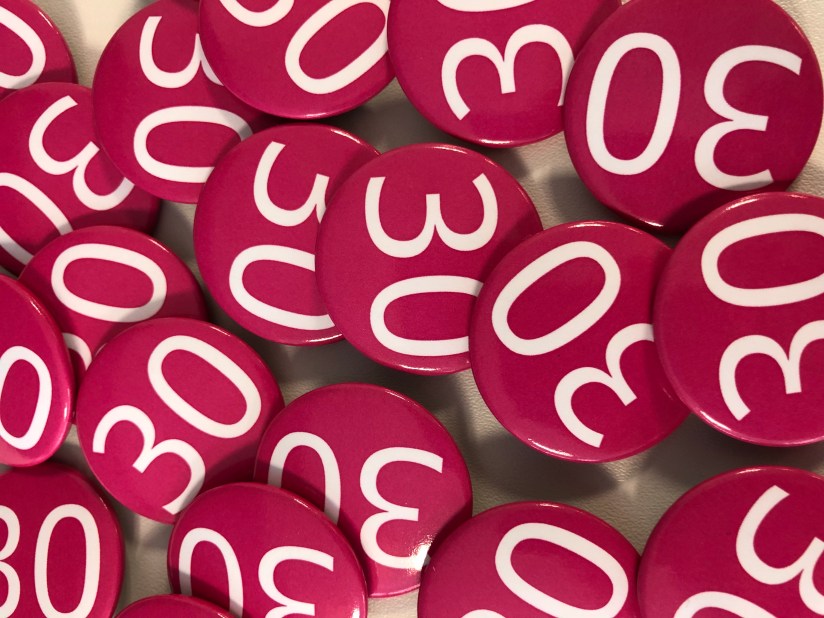
The 30 million word gap

img_0088

You may have noticed a flurry of press stories, Government announcements and strategies, and a new raft of buzz words and jargon appearing in the early years and childcare landscape.  If, like me, this has sparked an interest, great!  Because, social mobility is at the core of the difference we all aim to make for the children and families we work with.

The founding principle of social mobility is the unfairness that exists in a lack of equality of opportunity for all.  And that where you start out in life remains the single biggest predictor of where you finish.  Social mobility aims to stir up our passion and organising and focusing our attention and actions to give everyone an equal chance so their hard work and talent can be realised into opportunity and to break cycles of disadvantage, exclusion, and discrimination.

That is why I love the job I do.  To offer such chances to bust barriers to participation, to improve confidence and self-esteem, and to open up the doors of learning, education and employment to those so often left outside.  Words are key.  They inspire, challenge, build self-esteem, and encourage.  Unfortunately the reverse is also true.  As a psychotherapist working with adults, I know first-hand they are one of (if not the greatest) tools of oppression and distress.

In December 2017, the Department for Education (DfE) launched Unlocking Talent, Fulfilling Potential: a plan for improving social mobility through education.  In the plan are four ambitions:

Ambition 1 – is to close the word gap in the early years.

Ambition 2 – is to close the attainment gap in school while continuing to raise standards for all.

Ambition 3 – is high quality post-16 education choices for all young people.

Ambition 4 – Everyone achieving their full potential in rewarding careers.

Clearly, we have a role that links to all four ambitions, as early years practitioners, and as employers.  But it is closing the word gap I would like to focus on.  The term 30 million word gap (often shortened to word gap) has been traced to a 2003 article by Betty Hart and Todd R. Risley entitled “The Early Catastrophe: The 30 Million Word Gap by Age 3”.  Where we were told the astonishing finding that disadvantaged children can hear up to 30 million less words than their more advantaged peers.  The DfE’s plan says that “Good early years education is the cornerstone of social mobility”.  We welcome this recognition, and accept the vital support we offer to prepare children for the challenges ahead in school.  Our job through delivery of early years entitlements from two-years-old is a powerful and crucial one – ensuring gaps do not emerge or become larger before then.  It seems we all have a pivotal role in enhancing our settings to become even richer in their language use, and that language is wholly positive and reaffirming, and we do whatever we can for this approach to be taken into the child’s household so this language deficit is tackled head on.

A version of this blog was first published in Teach Early Years Magazine.

The positives gained from saying no

img_4338

Last time I wrote about democratic leadership and decision-making, which is a really important skill in any leaders’ tool-box.  Some of you have pointed out the importance of leaders also being able to make a decision themselves and in isolation; on behalf of the team or organisation.  I agree, it is another essential task of the leader, and something we can help children to achieve as well.

The ability to decide is key.  On many occasions, not all, this boils down to a simple ‘yes’ or ‘no’.  It occurs to me it is much easier to say yes than it is to say no.  Admit it, how many times have you said yes because it is easier than saying no?  Only to instantly regret you hadn’t the courage to go with your instinct and say no?  We can all find ourselves in these situations regularly, I’m thinking of the times when I’ve agreed to do a difficult task for someone (when I was already feeling stretched and overwhelmed), or I was covering a challenging meeting or conversation – rather than supporting others to do it themselves.

Some of us clearly need to learn how to say ‘no’, and discover the positive benefits it provides.  Instead of it being anxiety provoking and difficult; saying no can be empowering for us and our colleagues.  Saying ‘no’ can unlock the door to all our personal and professional health and well-being.  It is the ultimate in an open and honest communication.

It isn’t always easy though.  We can feel pressure to say yes, especially if asked by an expert negotiator or sales person.  And if our self-esteem is low, or we need to improve our assertiveness it’s especially difficult.  And in early years we are all very aware of the principle of doing no harm to others, so saying yes can feel like we are doing a good thing.  We worry if people will be upset or even dislike us for our refusal.  And all of this is affected by our feelings towards the people involved; it’s easier to say no to people we don’t like; we are more likely to say yes to those we do.

It’s such a personal process.  No one else knows us better than ourselves, so we need to be in control of our boundaries so we don’t become a victim to making the wrong decision.  We risk raising our stress levels and exhaustion; but in terms of our management skills – we are compromising our own time management and delegation skills.  What are your colleagues learning about you, themselves and about work itself if you don’t say no?  I’ve worked in too many situations when I have seen an improper emphasis on a ‘yes-culture’, and this damages people – it teaches them that to survive or to have value you should say yes all of the time.  That is unsustainable.

By saying no, we are providing good role modelling, and a vital demonstration of personal and professional capability for our colleagues and children alike – who will all benefit from learning this vital skill from you – the expert in open and honest decision-making!

A version of this blog is based on an article first published in Teach Early Years Magazine.

Are you a shade or spotlight lover?

img_0891It is easy to believe leaders must be attention-loving creatures these days.  Just look around us; they grace our TV screens, lead the countries of the world, and bombard us with a constant stream of social media posts sharing minute-by-minute commentaries.  Their success is measured by the number of social media followers they attract, and their relevance by the number of likes their postings achieve.

All types of the media are essential elements of any modern business’s marketing tool-kit; as are opportunities to represent a business in person at events, meetings and conferences.  A figure-head is a powerful thing, but it is one of the many organisational functions that can be shared.  Looking back at some of my old bosses, I can see how the limelight was their main concern, over and above the health and wellbeing of the organisation, and the individuals in it.  And it was something they didn’t offer to share, leaving others in the shade.

By being exposed to such behaviours, we are at risk of repeating them and falling into poor leadership traps.  By making positive choices, and taking progressive action we can achieve great leadership within the modern workplace.  I was struck recently by the concept of humble leadership, which seems at odds with this personality-fuelled world.  Humble leadership reminds us we can lead in a different space; one that occupies the wings rather than centre-stage.  The modest, unassuming boss inhabits a place of humility, modesty and inward and outward focus.  This can be viewed by some as weak leadership, but they need to know that external communications is a key element of the leader; it is one slice of their cake, not the whole gateaux.  And it’s a confection that can be shared across teams.

Humble bosses pay good attention to supporting their colleagues, they are quietly confident in the knowledge they can lead effectively, and support teamwork by inspiring their colleagues and coaching them through challenges and areas of development.  This supports not only their own growth and development, but that of everyone around them.  A humble style supports leaders to impart their knowledge and skills, and open up the motivation, willingness, and interest of the team to listen carefully to what is being shared.  One of the most important jobs a leader is to play a part in growing the next generation of leaders, and making way when the time is right.

It reminds me of one of my favourite principles in leadership and management; that leaders have to do a lot of taking on their journeys to the top, and when they get there, they need to stop talking and start listening.  Because great leaders must all have awareness of their own learning needs and are enthusiastic self-improvers; that is definitely something worth sharing, and supporting team members to shine themselves.

This piece was first published in Teach Early Years Magazine.

Be a self-caring leader

As a psychotherapist I place great attention on my self-care. This is something strongly encouraged by the counselling profession.  It makes sense; caring for others can take its toll and have profound effects. It is also important one is fit and sufficiently healthy to support clients.  It is the same in early years leadership.  We are charged with looking after children and their parents and families; and of course we hold a key responsibility for the health and safety of staff and volunteer teams we are privileged to lead.  This is a demanding set of tasks, which requires us to be the best we can be.

Often leaders have no-one who looks out for them in the same way line-managers support a team member.  Our needs can seem like the least priority – at the end of a long list of other things to do, which means we can be at risk of not healthily managing our working hours or priorities.  It also risks our work: life balance, and our physical and emotional health at work and at home.  As senior workers, our bodies also change, and we must change our behaviours across all areas to ensure we care for ourselves differently.

I encourage everyone to have self-care plans, like personal business plans.  They should set out goals and actions to achieve self-care. Just like a business plan, it doesn’t need to be a 24-page document sat on a shelf.  A self-care plan can be a set of actions on the fridge door; they needn’t cost a lot – whatever works for you.  And it’s something to return to throughout the year; unlike New Years’ resolutions we make at one of the most difficult times of the year, and then don’t adhere to.

First start with a personal stocktake.  

  • Who and where is your support at work and at home?
  • What are your working and non-working hours looking like?
  • How are you really spending all your time? If you’re not sure, try a diary log for a few days, these can be quite revealing.
  • What are your preferred working patterns?  Are you better in the morning, or the afternoon, what gives you satisfaction at different times of the day?
  • Are there things you are continually not achieving, is this a problem?
  • What is your diet, weight and fitness feeling like?

Then ask questions about the changes you need to make.  

  • Are there different things you can do?
  • Are you getting enough support at home and at work?
  • Should you be working more, or less?
  • Could someone else do those things you aren’t managing?  Or how could you change to ensure you do?
  • Is your time managed in ways that are supporting who you want to be?
  • Should you be planning more time for yourself, personally or professionally?

Then set out your ideas and plans. 

  • Who can mentor you, or offer informed support?
  • How can you restructure your time?
  • What do you need to do more or less of?
  • What do you want to learn?
  • How can you improve your diet or eating habits?
  • How is exercise built into your day, your week, month, or year?
  • What can you do to regularly stop, relax and completely switch off?

I guess, some of you will be reading this list and thinking it all sounds ‘well-and-good’, and asking ‘when do I get the time to do such thinking?’  If that’s you, then there really is a need to stop and to be realistic.  Set short, medium and long term actions.  Choose some that are easy, some moderately difficult one, and some that are more challenging.  It’s your plan; own it, and make it work.

This blog is based on an article first published in Teach Early Years Magazine.

img_5405

What is your workplace word gap?

img_0882

At Hempsall’s over recent months we have been doing a lot more work that focuses on children’s speech, language and communication (SLC).  We’ve held seminars on closing the word gap, and we have started coordinating Derby’s Opportunity Area funded TALK Derby programme www.talkderby.org.uk for example.  And whilst we’re busy working out ways to support practitioners, parents, professionals with children’s learning and development through SLC, it got me thinking about using such techniques in the workplace.  With the goal of supporting everyone’s development, learning and relationships.  Surely, the more we integrate practise, the more we build-in better behaviours in all our work.

The phrase ‘word gap’ stemmed from iconic research in the US (Hart and Risley 1995).  They found disadvantaged children heard a massive 30 million words fewer than their more advantaged peers.  A shocking finding, and something supported by a raft of other research since.  And it wasn’t just about quantity either, the quality was also important.  SLC deficits are now proven to be powerful forces; holding back children’s life chances.  Could it be the same in the workplace I wonder?  Well I certainly believe information is power, and communication is the most potent tool of the leader.  Surely there are lessons that can be transferred from our childcare practice to the workplace.

Top of the list for me is ‘shared and sustained thinking’: which has been defined as “an episode in which two or more individuals ‘work together’… to solve a problem” that sounds just like teamwork doesn’t it?  Importantly, “both parties must contribute to the thinking and it must develop and extend” (Siraj-Blatchford et al 2002).  The leader therefore needs to ensure this actually happens and is not a shallow and tokenistic occurrence.

Next, we talk a lot, don’t we, of supporting children to move away from devices and reducing screen time.  I don’t believe this amazing mind-blowing technology we all benefit from in ways past generations could only dream of is always a bad thing.  That said, we all need to think as adults about how attached we are to our ‘phones, PCs and tablets, and how we hide behind them and email.  Because we can miss real opportunities for meaningful interpersonal dialogue and relationships.  Think, should I ‘talk’ about this instead in person or on the telephone?  Even if you receive an email, would your response be better by verbal and in person?  We need to take more time and slow down so we improve the quality and quantity of words we share.  And that is coming from someone who is the master of the briefest of brief emails – I must confess.  We can all try harder, me included.

Finally, I’ve written a lot about questioning and listening techniques in this column, and these are as relevant in this context as in any other.  What’s best here is ensuring we use open-ended questions, and employ proper listening and that this is encouraged across the whole team, at all times.  And one last thought is we must ensure we match up our most experienced staff members to our least experienced or newest ones, so we can share the modelling of the very best practise for the next generation of managers.

This piece first appeared in Teach Early Years Magazine.