Blog

To crèche or not to crèche?

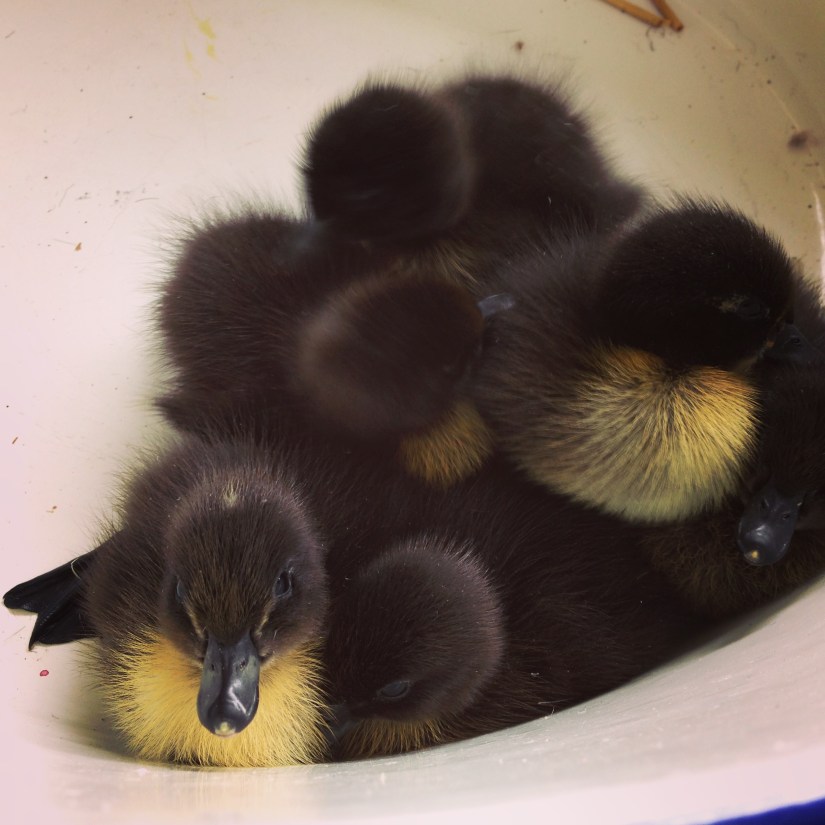
Ducklings

I think there needs to be a fresh look at crèche services to support all our aims and desired outcomes. As an ex crèche worker, I believe this ‘Cinderella’ service needs a renaissance and a new recognition.

We’re all familiar with the financial conditions children’s centres and wider services have been operating within for the past 10 years. If I had a pound for every time someone tells me crèches are expensive or not value for money, I’d have enough money to fund all whole load of them. Seriously, I don’t need reminding funds are tight and services are under pressure to demonstrate the difference they are making. But I think a lot of us are missing a trick unless we look at crèche services through a profoundly different lens.

The main problem is they are seen as a supporting offer, linked to other services. Offering children a quality childcare environment whilst their parents are engaged in other activities. Often that can be criticised as a parent-is-priority activity. This is a great shame. Because we are all wanting to support parents with their opportunities.  Parents’ and children’s needs can both be met at the same time.  They are not mutually exclusive.

Crèches offer so much. They provide children with often their first quality childcare experience, being apart from their parent(s) outside of their extended families, with qualified childcare workers, and socialising with a small group of other children. All useful experiences for children if we are thinking ahead to a time when they may be accessing their early years entitlements at two-, three-, or four-years-old, for 15 or 30 hours, or more a week. They are starting their own childcare and early learning journeys right here, right now. In turn preparing and equipping them for school and beyond.

And for early identifier roles, crèches offer new opportunities to work with children and families should there be a need that could be better met earlier and efficiently. And in doing so open the doors to local services and support on offer for SEND, health, learning and safeguarding.

One problem is they’re not always linked very well to other services. The biggest barrier, and it is wholly understandable, is parents should remain on site. That said, it does restrict what parents can do when their children are in crèche. It doesn’t help a parent who needs to visit another agency (for whatever reason) for the benefit of themselves, their families or their child or their younger or older siblings, or attend a job interview, short-distance travel such as to another children’s centre to access different services or meet other parents, or training related to their goals. Surely there should be a better way.

I have been disappointed to observe the frequent setting up of crèches, only for them to be cancelled due to low demand.  Parent groups, support and training do need to cluster together so crèches can be more sustainable and places are filled. And places should be prioritised. One such priority must be that places are available for parents on pathways to employment, and prepares them and their children take full benefit from their early years entitlements. Other activities are important, but some are more important than others if we are focused on long-term outcomes.

Indeed, crèches should be also viewed as a key parental empowerment offer. Especially, but not exclusively, for women. Like for their children, crèches provide first time experiences to be apart, building trust in other professionals, and starting new relationships and role models for them. This early relationship between parent and professional can open up a whole world of opportunity for parenting support, and their own learning and employment, such outcomes should be measured, celebrated and evidenced.

Crèches do fill a gap that often the local childcare market cannot always fill. Childcare providers are under a great deal of pressures and cannot readily offer short term, temporary or highly flexible childcare in these ways. They would if they could. But the barriers that prevent this need to be examined, I am wondering what more can be done to alleviate these blocks?

I remember the time, in the 1990s, when crèches were justified because of a total lack of local and suitable childcare. The childcare market has continued to mature over the past 25 years, and offers a range of funded and paid for services. However, there remains a gap that crèches should and could address for the greatest benefit of children and parents alike, and meet all our statutory duties. But it needs a fresh pair of eyes, a new confidence, and recognition of the outcomes achieved, as well as a joining up of resources. Crèches are and should be considered to be a vital service in their own right.  We should crèche, but in new ways.

This blog was first published in Children’s Centre Leader www.chcentreleader.com
 

Does lockdown give me any clues for my retirement? Hopefully.

With enforced lockdown, social distancing and self-isolation we’ve been spending a whole lot more time together at home, and doing less work. I’ve learned a lot through this period of five or six weeks. I’ve come to terms with enjoying the benefits of lockdown, and reconciled my feelings of guilt associated with being okay, so far. I have made some efforts to support those less fortunate nearby. I have truly appreciated the time to connect more regularly with friends and family, and with work colleagues to some extent; sharing our experiences of this extraordinary time. Time has also been sent being creative and prudent in the kitchen, tending the little garden we have, tidying and cleaning, and reaching the hidden depths of the freezer and the back of the larder cupboard. Working from home, has been an option I have been fortunate enough to use. That is not without its many challenges, but things could be an awful lot worse. This time has made me value and realise the value of living a little simpler, going back-to-basics, of daily and weekly structure, listening to and responding to emotions and feelings, and being prepared for such eventualities – however unexpected they are.

Inevitably, it seems, lockdown has made me think about retirement.  Rather, how this experience compares and how my response to the current conditions informs me how I may approach my retirement when it happens.  Well I don’t think or hope retirement is or should be anything like this.  For one thing I am continuing to work, not a full week, but most of it.  And I have the promise of returning to work in whatever way and whenever that approaches anything like what it used to be.  

Being restricted to home through the pandemic is a basic stripping of control and power. And it occurs to me there are all sorts of circumstances that can achieve that, such as disability, physical or mental health, or unemployment.  Retirement, hopefully, will not have such profound effects, although I acknowledge there are changes to physical health and finances.  

But the lockdown is hugely limiting.  In terms of basic needs, some foods are unavailable and shops are out of bounds. No longer can one linger through the stores and gain the emotional benefit of shopping.  Instead, it is a lonely, logistical and almost surgical endeavour.  An activity with a list, an agreed route through the store, one-way systems, staying two-metres apart, masks and gloves, interacting with staff through screens and limited social contact.  Personal care has been taken away in the form of barbers, hairdressers or physical therapists.  The world is reduced to four walls and hopefully a garden.  Through social, or I prefer the term physical distance, lockdown has robbed us of bodily and visual connections like hugs and eye contact.  The signs we are part of a bigger community and relevant to the people around us.  Routines and structure are really important, but the minutes still tick by slowly.  Days can feel like they are all the same.  Whenever it feels like ground-hog day, it is a sign that things aren’t going well.  Sleep can be interrupted and relaxation can be difficult to achieve.  All of this is made worse by the miserable news announcements, thousands of deaths, and endless speculation around what may happen next, and no end in sight. 

There will be an end to all this, and we will take the positives from it. As long as we all acknowledge how challenging things are, feel free to enjoy the better aspects, and help each other with our emotional responses. And hopefully we will use the opportunity to grow and develop and be ready for the next challenge, whether that is retirement or not.

This much I’ve learned from lockdown

It’s been five or six weeks now since I have been mostly working at home. To be honest I have lost count.

I have worked at home before, about 20 years ago for about three years. Although then, I was out and about frequently delivering work and meeting up with people at work and socially. Things are different this time. It is lockdown. The outdoor world is scarier and more dangerous place. This isn’t a choice.

When I reflect on my past experiences, I remember the flexibility, the efficiencies gained by not commuting, and the work-life balance benefits.  Those were the good things, easier to recall.  But with deeper thought, I also remember the blurred boundaries, the many compromises, the loneliness and the real lack of tangible, practical and emotional support at work.  This time around, in a time of crisis, requires careful consideration.

It is okay to enjoy the benefits of lockdown.  Even with a partner at home, I have noticed how much more connected I am with colleagues and friends on the ‘phone, talking not emailing or texting.  It is also normal to hold feelings of guilt if we are feeling okay, and are fit and well.  Such feelings seem to well up after each daily briefing.  Survivor guilt (also called survivor syndrome or disorder) is a mental condition when a person survives a traumatic event when others did not.  Something first recorded in the 1960s when therapists were working with holocaust survivors.  These feelings should be acknowledged and support us to better enjoy the positives.

Working from home is tough. Now, being asked to stay-in for weeks and maybe months is hardly difficult on a scale of what my grandparents were asked to do in WWII. But this is a multi-faceted challenge. One that includes health risks, financial uncertainty, emergency planning, logistical difficulties, leadership and management asks, and all sorts of changing personal and professional responsibilities. We are being asked to stay at home during the day, evenings and weekends. Over and above the practical considerations, the emotional and relational impact is huge, and there is anxiety and pressure, and at times stress on top. Yet, it is a privileged position not everyone can enjoy, we have exposed many inequalities. Not all of us can continue to work, or work at home, or exercise choices that fully meet the needs of ourselves or our families. That said, I’ve become fed up with people’s common perception of working from home. Although over time I think this has changed and matured. It is much more challenging than people seem to understand. Let me put on record right now the realities of home-working for many. First, it is not an opportunity to binge on a Netflix boxset. And it isn’t an opportunity for friends and neighbours to pop round for a coffee, all the time. Thankfully our social distance and isolation rules help this time. But I remember having to tell people in clear times that being at home was the same as being at work. Then we have the issue of who else is at home. That could be your children and young people, your dog, your parents, or your partner. Or maybe you are at home alone. And what are their priorities and needs? Home-schooling, childcare, walks, health care, feeding, the list is exhaustive. How are we supposed to fit work in? These all make a big difference, you could be competing for space, IT, the ‘phone line, WIFI bandwidth, or feeling intense sense of loneliness. Working at home could be happening in a corner of a busy kitchen, on the floor in the bedroom, or outside in the shed. Available workspace is a basic need. Working from home breaks so many rules or compromises our personal and professional boundaries. Video calls are a huge issue in themselves, revealing one’s home to colleagues and clients. Not being able to work, and being furloughed for an uncertain and unknown and extended period is equally as tough.

We need to go back to basics.  At the most challenging times, it is natural to want to tend to our own basic needs.  To ground ourselves.  Now is a time to press control-alt-delete, to reboot, and to set out our aims and ambitions through however long this takes us to recover from.  

It is important to have structure.  At home, like work, we have a strategy and a plan.  We have set out the things we want to achieve during this period of change and difficulty.  Underneath that is a long list of things to do.  And then each day has the jobs list, we tick it off.  That helps us to celebrate what we have done and remember what we have done (which can be a struggle a day or so later).  And this works on good days.  Days when we can be busy and happy to be. 

Emotions and feelings are real and we should listen to them.  On down days it’s important to be flexible and focus on self-care, riding with and naming the emotions.  Accepting them and acknowledging we have time for them in our busy, and increasingly less eventful lives.  Already I have started to struggle to differentiate daily routines.  I often forget what day it is.  Those at home are always sure themselves either.  Clearly, I need more structure so as to avoid a feeling of living through ‘a month of Sundays’.  

It pays to be prepared for a rainy day. I have always advocated a policy of being prepared. By that I mean having enough food and resources at home to last a couple of weeks or more: food in the freezer, fridge and store cupboard; and useful things like drinking water, matches, batteries, and medication; a full tank of petrol; and plenty of things to do. It’s the same at work, building up a reserve for a rainy day. I never really wanted to have to use these prepared stocks, this was more theory than practice. But now we are in real time. My well-made plans are being tested. Reserves are being used. Government is asking us, no requiring us to stay in, only leaving the house for essential supplies, daily exercise or to work in essential roles. Normal routines are massively disrupted.

It makes we wonder what clues this is giving me for my retirement.

Like the summer of ‘76

The effects of the coronavirus on children’s well-being needs careful attention and considered behaviours from all of us. We need to support children with safety and trust. As adults, workers or parents we should offer good simple information, by being honest, being available and present, and answering their questions.

I remember watching the news as a child. I was aware of it, thanks to John Craven and the BBC children’s news programme Newsround, I had a reasonable grasp of current affairs. The image of Phan Thi Kim Phuc, known as the napalm girl, was well-known to me. A stark illustration of the horrors of the Vietnam war. But that was happening thousands of miles away to people that seemed very different to the world around me. My world was comparatively safe and happy. Whatever the worst life brought, we as a family were not at war, nor in pain.

The summer of 1976 still enjoys legendary status. It was a very hot and very long summer. There were water shortages caused by the drought, stand pipes were in the street. We had to leave a country park because of a grass fire. On our family holiday in Cornwall we got badly sunburnt shoulders. My brother’s toy machine gun, left in the car whilst we were at the beach, melted in the heat. We returned to the car and had to wait quite a while, in our short trousers, for the vinyl car seats to cool down before we could get in. Suddenly it felt like dangerous things could happen. And they did.

As a psychotherapist I am hugely aware of how early experiences, trauma and key events shape a person and manifest in phobias, mental health and choices on adulthood. What may seem at first like a fun extended school holiday for children off school or pre-school, the current situation can instead be an unsettling period. Routines have been disrupted. Whole families are staying in at home. Parents could be working at home. Money could be tight. Childcare arrangements have changed. Extended family members are unreachable. Normal hobbies and activities are out of bounds. People are wearing masks in the street. The supermarket shelves are closed, other shops and restaurants are closed. There is an increased emphasis on hand-washing. Life is very different. And we don’t know how long for. The effects on a child’s emotional and mental health could be long felt.

The news media is very different too. My access to the news was limited to a 15 minute bulletin Monday to Friday, if I remembered. Miss it and there was no play back, no iPlayer, no video recording, no internet. I worry about the huge amount of news information supplied to children on a loop by the TV, mis-information on social media, and on the web. What is also concerning is how children are accessing the information directly on their devices, and sharing it between each other in every way.

All of us, adults, workers and parents need to continue to take time to help children make healthy sense of what is happening. There’s no blueprint for these conditions. We haven’t experienced them in recent modern life. There are some important principles to follow:

  • Children’s thoughts and feelings need to be acknowledged. Take time to show you can see or hear how children are feeling.
  • It is okay to discuss emotions, fears and questions. And we should be committed to providing answers. Gone are the days when such things were feared or brushed under the carpet.
  • It is really important to focus on controlling what can be controlled, this is a great way to reduce anxiety or that out of control feeling.
  • As adults, we also need to manage how we deal with our responses, our fears around money, food, health and friends and family. We need to be aware of how children may be absorbing these as they observe our every move and monitor every word or at least the tone of what we are saying or doing.

I commend Norway’s prime minister Erna Solberg for holding a press conference specifically for children last week. For half an hour she and her team answered questions submitted by children. She told them it was normal to be scared and that everything would be okay. This is not only amazing leadership and confidence, it is a preventative action. It is early intervention in practice, supporting children with their emotional wellbeing. It is something the UK government should do. Because we will experience the significant ripple effects of this pandemic for months and years to come. My eight year old self knows that to be true.

This blog was published by http://www.cypnow.co.uk 27/03/20

Working 5 to 9

“Tumble out of bed and stumble to the kitchen, pour myself a cup of ambition, and yawn and stretch and try to come to life”.  Said a very wise woman, Dolly Parton.  She also observed, in the same iconic work in 1980 “what a way to make a livin’, barely gettin’ by, it’s all takin’ and no givin’”.  That was Dolly’s commentary on the 9 to 5 life.  Bound to office hours and faced with the challenges and tribulations of workplace politics and the pressures of a demanding boss whose modus operandum was born of the dark ages of sexism, misbehaviour and dysfunction.

Cut to 2020 and workplace misbehaviour remains a hot topic in new and different ways.  Stories, allegations and court cases around sexual misconduct in the TV and movie industries have generated the #metoo movement and a lively public debate.  We are concerned with what acceptable behaviour was in the past and what suitable behaviour is now and for future generations.

This month I have been particularly fascinated by incidents on the Six Nations rugby field and a high-profile political storm.  Both professional arenas and highly paid roles.  And how disappointing they appear to think themselves above the law or culturally different to such a degree unique rules apply.  Such examples test our values and the law at every turn.  At the core of the problem though is professional or rather unprofessional behaviours.

I saw a professional rugby player punching a rival deliberately in the face, and another squeezing an opposing player’s genitals as part of tactical play.  Shocking stuff.  What’s more it promoted media commentators to decry or applaud them.  Clearly some parts of the media have learned nothing from the #metoo campaign.

Assault is assault and sexual assault is sexual assault – wherever and whenever it happens. Bad behaviour is just that and must never be justified by defences based upon what used to happen, culture, custom or practice. It surely cannot be acceptable for us and our children to witness on broadcast television.  And how can it be acceptable from professional people in their place of work, whether it be a field of play or an open plan office.  Or indeed a political or a civil service office. There have been accusations about bullying, demanding and unreasonable leadership at the top of government.  And the defence from their colleagues has rested on how impressed we should be if someone works day and night on their job, beyond 9 to 5, adding an extra 5 to 9 shift.  This does not impress me, all it does is worry me greatly and I wonder what on earth is happening at home or in their lives then, now and next.  And I really do not subscribe to the idea of somehow finding fault in anyone around who doesn’t match up to such unreasonable and unbalanced choices and behaviours.

We expect a great deal from our leaders political and sporting, and two of those things are role modelling and safety.  We hope that leaders will show us the way to work professionally and respectfully in ways that support wellbeing, balance and health and safety. The consequences are real if this does not happen.  We all must learn from past experiences and commit to breaking bad behaviour patterns and valuing professionalism at all time and in all places.