Blog

What can we borrow from new trends in retail?

We are all considering the changes to our work and personal lives prompted by COVID-19.  Lots of businesses and customer behaviours have shifted.  We all should watch and consider these and respond to them in the short- to long-terms.  The important questions are, how many of the changes will stay around forever and which ones will revert to the old ways? 

Timing is everything.  The most successful businesses will be the ones that are nimble and quick to spot a need and meet it.  These considerations are key to all our forward planning and require us all to keep a weather eye on the external environment and to read trends now and trends next.  We need to confidently embrace our powers of estimation and prediction to inform good risk taking and business innovation. 

Of course, the developments in early years and childcare have occupied us all since March 2020.  The changes to actual use, types and sizes and locations of setting, hours needed, and patterns affecting eligibility for two-year-old funding and for 30 hours.  Recently, I have also been looking at retail trends, and part of me was thinking how these may be reflected in the early years and childcare world.  What are the similarities and what can we in early years and childcare learn from them?  It might seem tenuous, but read on…

There’s been an increase in online shopping.  Some say use of such technology has leaped forward as much as 10 years.  As a result, people expect much more of your website and online presence.  Clearly you cannot deliver or use childcare online, but you can certainly find it, pre-select and connect with it.  People are travelling around less than before and are focused on the tasks at hand when they are out and about.  So online is hugely important in how we reach, inform, connect and communicate with families.  Make sure all your content is where it should be, so people can find you, for example national websites and local FIS directories.  You need a constantly updated website that functions perfectly on mobile phones. We all need a new online strategy.

People want to support local businesses.  In times of crisis or trauma there is an enhanced need for a sense of togetherness.  Think ‘blitz-spirit’.  Customers are seeking out real people, running local, independently owned businesses – this could be you.  The relationships are becoming more discerning and interpersonal, searching for personalised customer service, and the social aspect of shopping and using.  There are opportunities here for childminders and smaller local settings, and the larger and even chain settings need to reconsider their local credentials.  Get your local message across. 

Instead of slow delivery services, people are liking the idea of curb side pickups.  The link here is more tenuous, but there is one.  We have all seen how drop-offs and picks-ups have been rethought for safety reasons at the nursery gate or childminder’s doorstep.  These new interactions are about convenience, new routines and parental preferences.  Let’s prioritise responsiveness, flexibility and change. And balance these new arrangements with other ideas to support other ways to engage and welcome.

Retail is growing its local delivery offer.  This trend is about real people providing the real personalised and flexible services, not relying upon generic solutions or delivery service providers.  For early years and childcare this is an opportunity to build on our strength of real interpersonal connections and to individualise delivery.  If you are the business owner and you are usually in the office, now is the time to be visible, to connect and to be more present.  For other team members this is an invitation to be authentic people. 

The fifth and final trend is virtual experiences.  We have all entered a much bigger online world that we had before.  Here, we should embrace the functionality of technology to hold meetings and training, manage initial enquiries, have discussions, offer setting show-arounds, and provide setting inductions and tours.  Social media needs to be current, accurate and regularly updated and can promote all the messages described in this blog.   

None of these ideas seem too farfetched to me.  And we should all look beyond the obvious changes and listen to the values and feelings that demonstrate the need for all of us to offer real connections and social value to our work now and in a sustainable future. 
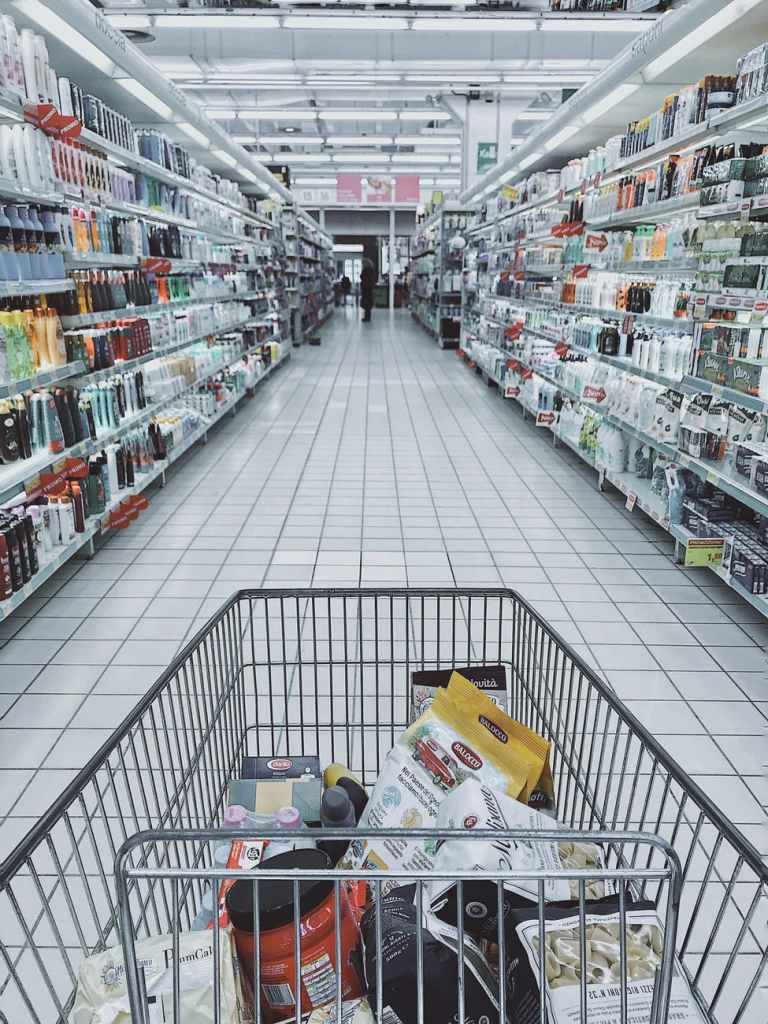
Photo by Oleg Magni on Pexels.com

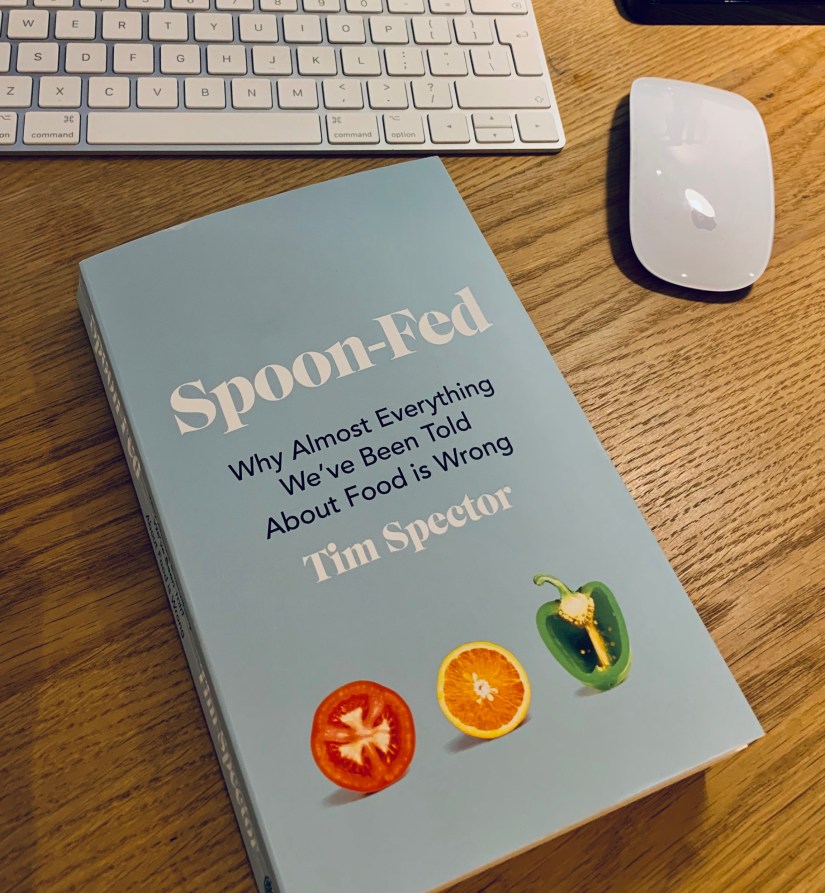
This week I read ‘Spoon-Fed: Why almost everything we’ve been told about food is wrong’ by Tim Spector.

I’ve always loved food and been interested in it. And I relish a conspiracy theory, so this book seemed like the perfect combination to me. A critical look at what we’ve been told, and an open determination to debunk food myths, whilst setting out an informed food direction. I was hoping for some affirmation or new ideas. I got both. These were my personal take-aways (pun intended):

  1. Food is big business and controlled by a group of global Goliaths who fund science, PR and sophisticated marketing that seeks to manipulate the way we view food, buy it and eat it. They generate, pounce on and exploit our interest in food choices and needs.
  2. Don’t swallow the science. Food research tends to be biased and looks at things in artificial isolation. The results are most often small percentage changes, benefits or risks. I mean, doubling a risk of something when the risk is only 1 in 100,000 isn’t enough for me. Risk needs a huge side-dish of perspective.
  3. Enjoy real food and take pleasure from it, it is an investment in self. Detach from the notions of it causing death or early mortality, illness or self-harm. “If we start to believe food will make us ill, the chances are it will”.
  4. Consume food, coffee and alcohol in moderation. Move away from any sense of guilt, shame or indulgence, and retune to focus on investment and self care instead.
  5. Focus on yourself as an individual and what food does to your body. Set your own rules and regime based upon listening to yourself. Develop your sense of food-self, respecting your metabolism and mental health. Connect your emotional wellbeing and mood with your gut feelings. Literally.
  6. Adopt a Goldilocks principle – not too much, not too little, just the right amount. The Goldilocks principle is that something that falls within certain margins, it does not reach extremes. That way we can enjoy the ‘yes’ and some of the ‘no’ foods in balance.
  7. Include in your diet things like natural unsweetened yoghurt, butter (not low-fat spread), good eggs, oily fish, grass fed meat, game and wild meats, mushrooms, sugar not sweetener, beans and pulses, and natural probiotics. And salt, as long as it is consciously consumed – it improves taste, and a tasteless life is a wasted life, I say.
  8. Don’t let ultra-processed food producers determine how much you eat and do your calorie counting for you. Convenience food is inconvenient to health and wellbeing. It buys you time in the short-term but costs so much more in other ways. There’s a huge difference in the range from unprocessed foods through to ultra-processed foods. The latter being the one to avoid. Ultra-processed foods have labels and labels lie or at least bend the truth and mislead us, they skew the message and use percentages that are not clear to most of us.
  9. Calorie counting is an imperfect and inaccurate science and must only be used as a rough guide. It is better to focus on conscious consumption. With proposals for restaurants to publish calorie totals in government thinking, Spector says they systematically underestimate them – making an imperfect science even less reliable, I think.
  10. Breakfast is as important as any meal. And any meal can be skipped occasionally. It won’t hurt. Fasting is something thought to be beneficial. It’s okay to feel hungry once in a while. But skipping a meal should never be justification for bingeing at the next mealtime – this isn’t about offsetting. Just like exercising is not a license to run straight over to the vending machine afterwards.
  11. Don’t take vitamins or supplements unless you are not well and been advised to. I had started to wonder if I was developing IBS last year. Then I stopped taking daily vitamins. Problem solved. So I agree with this idea. And 15 minutes in the sun will be sufficient to top up vitamin D – which isn’t a vitamin, I discovered, it’s a steroid hormone. “Let food be thy medicine and medicine be they food” said Hippocrates.
  12. Avoid the superfood trap. Other cheaper or local alternatives exist, for example, strawberries are a good alternative to goji berries. Again, eat consciously and in moderation.
  13. Think about the ‘buy local’ benefits and disadvantages. I learned local isn’t always the best option when considering environmental impact. For example, tomatoes grown in the natural heat and sunshine of Spain and imported, are said to be better than ones grown in heated polytunnels in England. There is a moral obligation also to the developed world’s continued and fair trade with developing countries.
  14. Water. Who knew that water would be such a confusing and tricky subject? I concluded filtered tap water to be the most ethical. And bottled spring and mineral water, locally produced and sourced to be a good alternative – or treat even. Preferably in a reused glass bottle, avoiding single-use plastic as much as possible.
  15. ‘-Isms’. It seems to me that lots of energy is focused on puritanical and quasi-religious approaches to food and diet. We don’t need to put ourselves into rigidly defined boxes. Be a flexitarian not a follower of rigid rules or definitions.
  16. Fish isn’t as good as we think it is. Some is unsustainable, other is intensively farmed. Again, don’t listen to all those corporate messages linking it to longevity and cognitive functioning. Best keep it, like good quality meat, as more of a weekly treat. Be open to trying a wide variety, move away from the standard cod, salmon and bass. And derive similar nutritional benefits through seeds, nuts and algae instead.
  17. The information about chemical use made me want to grow more of my own food. And whilst I acknowledge intensive farming is seemingly necessary to feed our huge global population, and that organic is a privilege of those who can access it, I want to make more organic choices in my diet.
  18. Overall, Spector has confirmed my resolve to make good quality choices with variety and diversity. To eat good simple meals cooked from scratch, using natural seasonal ingredients, and embracing more fruit and vegetables. Controlling portion size is important. As is knowing where my food is from. Making better friends with my freezer. And always understanding what my food is and how it is made.

Ready, steady, wait!

For all of us, there is a key question.  Should we opt for pleasure now or delay it?  I think these concepts have been under attack from the ‘now’ culture, the ‘get famous quick’ society, and recent social restrictions.  The notion of delaying gratification (DG) is one that some use to set us apart.  Advocates promote resisting temptation of an immediate reward in preference for having it later. They link it to positive outcomes, like academic success, physical and psychological health, and social skills.  You can find tools and guides to develop your delayed gratification online.  Sociologists have studied it and associated it with lower-status class position. This invites higher class members of society to attribute status to their skills in it, and judge others who don’t follow such principles.  However, most things related to class are increasingly fluid and blurred they are becoming a less reliable measure.  

Some say ‘why wait?’.  We are informed by all sorts of adages, things like ‘you only live once’.  And the trappings of modern life certainly facilitate a fast-paced lifestyle.  Things like the car, the jet plane, the television, the internet and multiple and instant access TV streaming channels, and food delivery apps have all been step-changes in upping the tempo of gratification.  You want something, you can have it now.  We don’t have to wait for anything anymore.  The technological facilitation of instant gratification has waged war on any sense of delayed gratification.  It is a high-tech industrial class and lifestyle revolution. 

No longer do we schedule a 7.30pm sofa slot to watch our favourite soap.  A few clicks and it is playing live whenever and wherever we want.  At breakfast time, on the bus, you choose.  You don’t have to wait until next week to watch the next episode.  Watch it now.  In fact, download and gorge on the whole series if you wish.  You no longer have to go to a restaurant for food, it can come to you via bike courier within 20 minutes.  Our tolerance for delay, our ability to be patient, to put in effort to gain rewards are all qualities being systematically eroded.  And with discouragements and requirements put in place not to socialise beyond set guidance then some of these conveniences are becoming preferences. 

This all goes a long way to diminishing any sense of purposefully and diligently working hard and with purpose to an identified goal.  Want to lose weight, pop a magic pill, work with a PT, drink weight-loss coffee, have a gastric band even.  The trouble is all these things require significant effort. 

For some time, I have really been pondering if subconsciously society had been bingeing through over our consumerism in stuff and food because it knew on one level that harder times were ahead.  Or were we indulging to block out the effects and pain of austerity?  Little did I realise the forces of such limits would manifest so soon and so profoundly with the COVID-19 pandemic of 2020.  The question is, are these the harder times that were coming, or will things get even worse?

The id, as Freud would put it, our basic selves, is driven by the ‘pleasure principle’ that seeks out pleasure so we avoid the pain.  The pain people are trying to avoid, I think, is this cumulative sense of our demise, personally, as a community, a culture, a nation, a global species. 

We are given constant messages about the challenges experienced in the natural world; habit destruction, species extinction, and human population explosion and migration. 

We have come to understand our young people are so anxious that their mental health difficulties and anxiety levels are through the roof.  Those that have gone through university have left saddled with huge and artificial debt.  The concept of money damaged to such an extent it seems unreal, false and contrived.  There is a disconnect between what is earned and what is needed to live or to buy somewhere to live.

So why wouldn’t everyone reach out for pleasure?  Right now.  Pleasure is an escape from reality, it is a diversion, and escape.  It’s so dreamy.  And young people are so tech savvy, and they are the key market for tech companies.  So, the cycle is unbreakable, it is titanium strength.  Its resultant whirlpool of activity has a grip on our future generation.

It doesn’t really help any sense of long-term planning for one’s middle or advanced age.  Its quite childlike.  It seems to me more and more generations are held in a pre-adult state, a permanent teenager world, where life doesn’t start until… 50?, 60? later?  We are all telling ourselves we are young.  When we are young, we only operate through the pleasure principle and expect immediate fulfilment.  Then it’s all about basic needs, milk, food and comfort.  Later it is still about basic needs, it still includes food and drink, with the addition of sex and procreation.  But as time marches on, we learn that we must often wait for gratification.  And that hurts.  Especially if one gets to middle age and one still feels unsatisfied on whatever level, we haven’t resolved our experiences in our early years, or we have yet to embrace adulthood and our age and stage of life. 

The trouble with patience at this key life moment is there is a super sense of one’s time running out.  Of it being a more finite entity.  And it hurts if we have yet to learn that somethings, goals or desires may never be fulfilled.  This can fuel questionable behaviour and purchasing choices – the sports car and the leather jacket being classic examples.  People in what can be called the ‘middle age’ start devoting more time to pondering key questions about pleasure and pain, career achievements, and the purpose and extent of life. 

How long can we and must we wait, and for what?  Does anyone have a quick answer please?

The dread of the Sunday night before the start of school.

This week schools have started going back.  After a six-month break for some, the return to school must feel remarkably daunting.  Especially in a COVID-19 context with all sorts of concerns and anxieties about health and safety, risk and the suggestion of opportunities lost and the need to catch up on learning.  

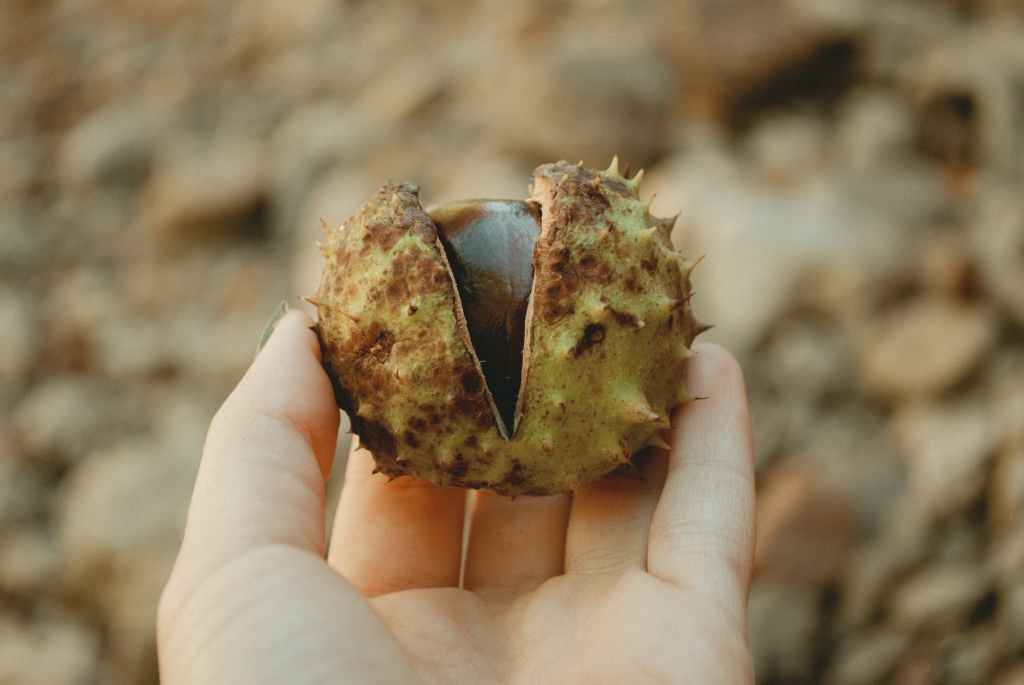
The beginning of every September is a time when I remember and reflect upon my own school days. They certainly were not the ‘best days of my life’ as the legend promises.  Instead, they were times of dread.  That Sunday night – before the first day of term – was one of the worst.  In a moment, the six-week holidays were gone.  I had looked forward to the summer for so long, but now the obvious signs of its end were there – conkers swelling, nights drawing in and becoming colder, and a new school uniform to grow into (a rarely did achieve my mother’s over ambitious growth estimates!).  my hands were not usually seen by others until at least March the following year. 

Last Sunday night was that day for many children, for the rest it is most probably this Sunday night.  My thoughts go out to all those children having that experience, they will be immersed in their own thoughts and feelings.  Some will be looking forward to it, eager to reconnect with the school routine and their friends.  Others, like me, will not relish the thought at all. 

Some forty years later, the beginning of the school year still reminds me of these feelings.  Last year it compelled me to write some of my thoughts down and share them.  Promoted in part by DfE releasing their updated guidance on keeping children safe in education: https://www.gov.uk/government/publications/keeping-children-safe-in-education–2 This went part of the way to supporting schools and their workforces to do what is necessary to identify and address need.  This year, I return to the same theme and can only imagine how a six-month break and COVID-19 has affected this generation now and will later on. 

A six-week summer holiday can feel like a lifetime to a child, it did for me.  They were times of adventure, outside exploration, inside relaxing, lie-ins and sofa time, and choosing to spend time on hobbies and interests.  I recall long hot days and very rainy days, walking across fields, watching far too much television (Why Don’t You, Laurel and Hardy, and Tarzan or cowboy movies), drawing and painting, cycling anywhere and everywhere, and being extremely bored to boot.  

Like every weekend, and other holidays, and no matter how long they often felt, the long-summer break was a temporary escape.  They were times away from the torment of not fitting-in, living on the margins of what was going on in school, feeling invisible and unvalued, bullying at the hands of other children, and the omissive harm caused by teachers who were not present to meet my basic and higher needs.  This is why such guidance is so essential, and it should be used effectively to ensure our current and future children are protected from the visible and invisible factors that affect their learning experiences and their journeys into adulthood. 

This year there will be so much need, much of it visible and identifiable, most likely at least an equal amount hidden and unspoken.  And the added challenge will be the sheer amount of anxiety and emotional needs swirling around schools affecting all children, their families and the school workforce.  No one should prioritise anything else above these important and basic needs.  Actually, they are more than needs. they are rights.  And certainly no one (children, parents or teachers) should be distracted by any sense of needing to catch up on time lost.  If they do, it will be this time that is lost, not the time gone by through this spring and summer. 


Photo by Izabella Bedu0151 on Pexels.com

Watching me watching you! Peer observation

We are all used to the notion that managers observe and supervise their staff.  They tell them what to do, or even tell them off!  But an open approach that involves the whole team in peer-observing and positively feeding-back can be a powerful force for team development, individual continuous professional development, and safety.

That said, peer-observation can be a cause of professional anxiety – if not handled properly, especially when the comfort of established and entrenched structures are challenged in the workplace.  Personally, I have often initiated 360 degree appraisals to offer me valuable challenge and support to inform my continuous development.  This is when the people I supervise complete a formal process that offers me their observations on how I work and what I could work on.

In the workplace, we receive such information constantly from our users, customers, colleagues and supervisors, quality inspectors, auditors and others. Sometimes this is obvious and clear, at other times one has to have sufficient awareness to notice. In peer observation training, we look at the need for it, the process, developing observation and interpretation skills, and practice how to feedback to support improvement in future practice.

Peer observation is a recognised assessment process, in context it should look at the quality of interactions between workers and service users.  Its aim is to work towards the best outcomes and service standards, and should have the sharing of skills and knowledge at its core.  True learning whilst you work.

We all have so much to share, yet often we can feel held back by hierarchy, permissions or power struggles, and the different levels and lengths of each other’s experiences.   In teams that are dysfunctional this leads to serious scenarios, where junior or new staff feel unable to ‘blow the whistle’ on dangerous and concerning behaviours. We need open lines of communication.

On the positive side, peer observation supports team work, and should be part of the evaluation and continuous improvement process – therefore feeding into leadership and management, practice and good inspection outcomes.  It needs some time invested, yet with practice it can become an integral part of your day-to-day work.

Giving good feedback is key and is such an amazing skill to have in your toolbox.  It should be given at a convenient time to meet, allow the observee to reflect and describe their experiences, use reflections to structure the feedback, and state all the positives, as well as agreeing an action plan together for future actions.

Those businesses that have been on training, tell me they have seen benefits in identifying and developing new skills, personal development across their teams, renewed thirsts for training and gaining qualifications, a boosting of reflective practice skills, deeper team respect and dialogues about achieving best practice, and an increase in confidence brought about by receiving regular positive feedback.  We’ve also seen team members who thought they would never manage teams stepping up into new roles and using their new found confidence. I say, give it some serious thought!

anonymous person with binoculars looking through stacked books
Photo by Andrea Piacquadio on Pexels.com