Blog

Bigger isn’t always better

So many people in business seem focused on growth.  There appears to be no end of people wanting to tell us how to be bigger.  But why?  Instead, we should all be more interested in being better, more effective and positively impactful.  We need to meet our stated aims and moral missions, whilst sustaining ourselves at the same time.  Bigger isn’t always better.

I remember what happened to local council early years teams between the mid 90’s and the mid 2000’s.  I would visit council’s and be lucky to find an early years officer at all.  In one area, I remember they had one-and-a-half.  They were great, knew everyone, did everything, and what they didn’t know about early years and childcare wasn’t worth knowing.  Fast forward to 2005, and the same council had over 90 people working in early years and childcare, plus contracted organisations.  And I found it the most frustrating thing.  They were not great, they didn’t even know each other, could only do their specialist roles, and they needed teaching more than a thing or two.  This was a good example of the Ringelmann Effect (1913); the tendency for individual members of a group to become increasingly less productive as the size of their group increases.  Ringelmann found as more people are added to a group, it often becomes increasingly inefficient.  It is a useful counter-argument to those who believe big is better.

Recent times have caused us all to have real concerns about our businesses and to rethink them – across all sectors.  In early years and childcare, we are in the frontline of anticipating and meeting children and families’ massively changing needs, whilst grappling with the realities of finance and business.  The fallout of the COVID-19 crisis will create a different world for so many of us for years to come.  And these extraordinary conditions will require us to an even sharper focus on the characteristics of our businesses, including their size.  This could result in growth, but a consequence could be us becoming smaller.

It’s a cliché, I know, but I love the phrase: turnover is vanity, profit is sanity, cash is reality.  After 20 years in business, I believe this is useful, with some justification.  Being in the private sector (I have worked in the charity, voluntary and public sector before) I am well-used to the unfair accusation of being exclusively motivated by profit.  I am not.  This of course is not only a simplistic view; it does not acknowledge we all have business missions and morals.  However, anyone in business should appreciate the peace of mind and opportunities that money in the bank, generated by profit, offers the business.  The ability to build profits or reserves has been significantly under pressure for the past 10 years after the financial crisis and through austerity.  Just as we were perhaps imagining the possibility of things getting better, COVID-19 has changed and will change everything.

Perhaps we might all have to get used to smaller businesses and turnovers.  Which means many of us will need to learn to let go, release the vanity and pride attached to scale, and make some difficult and realistic decisions.  But the real value of our work is our moral mission and the difference we can make.  And there are some advantages to being smaller as Ringelmann found.

img_0882

Counting your time in and out of work

img_3231

Even before COVID-19, there’s been a lot of discussion about reducing hours at work.  Typically, the talk is about working four days instead of five days a week, all for the same pay.  Sounds like an unbelievably tempting offer doesn’t it?   Lockdown has also forced to us to rethink being present at work, travel to work, technology and our work-life balance so we can meet our personal and professional responsibilities.

The problem is much of this chat and change all seems very focused on an office-based working environment where you might not need to be sitting at your desk all day, every day.  It doesn’t readily work for those in many other roles, such as retail, hospitals, and schools.  In a whole range of roles, people cannot simply decide to reduce working hours, because people rely upon them to be there, to support them, and to deliver services.

But the idea of working differently has always interested me.  I’ve been thinking about the hours we spend working, getting ready for work, travelling to work, thinking about work, and talking about it – outside those hours we actually do it or are paid for it.  It made we wonder what changes can help us work more closely to the hours we are paid for.  Now, through the lockdown, the use of technology has forced me to seriously consider that like never before.

I meet a lot of people who are contracted for around 37 hours each week. Yet they work many more hours than that.  This usually happens by arriving early in the morning, missing breaks and lunchtimes, doing extra tasks (like work shopping or laundry), staying late, bringing work home, or working weekends.  It is a familiar scene – and a life that I have lived myself.  Some professions are expected to do all of this without complaint.  We do this because we are committed and we care.

There is a total of 168 hours for us to spend each week.  We should be aiming for a minimum of eight hours sleep a night, which comes to 56 hours and leaves us with 112 awake hours.  We should expect and enjoy a weekend to rest and spend time with family and friends.  That uses up another 32.  And so to live and to work in the week we only have around 80 hours left.  If we work full-time, then that is almost half our time.  It starts to feel really important we use the rest of our time carefully.

And this is why. It is so easy to spend our free time doing work related things on top of the paid time, and that extra time we might already be spending on work.  I am thinking about things like travel to work time.  How much is that for you?  ACAS reported the 2011 census found the average commute to work time was 54 minutes (www.acas.gov.uk 2015).  That is a staggering nine hours a week.  If you travel less than the average then you are already doing better than most to manage your time.

But I wonder about hidden time we are spending when we are thinking or talking about work when we should be living instead.  And how much time do we spend preparing ourselves for work too, doing things like getting work clothes ready, preparing our personal presentation, organising our lunches, and being physically and mentally healthy for work?  It is starting to feel like we spend up to double our working time on work related activities.  A time deficit of 25 hours plus in our working weeks could be a familiar story.  So rethinking work hours shouldn’t be just about a four-day week instead of a five day one, it should be about making sure we work the hours we need to, valuing our time differently, and perhaps prioritising a healthy balance.  Thank goodness for holidays that’s what I say – as long as we switch off from work of course.

To crèche or not to crèche?

Ducklings

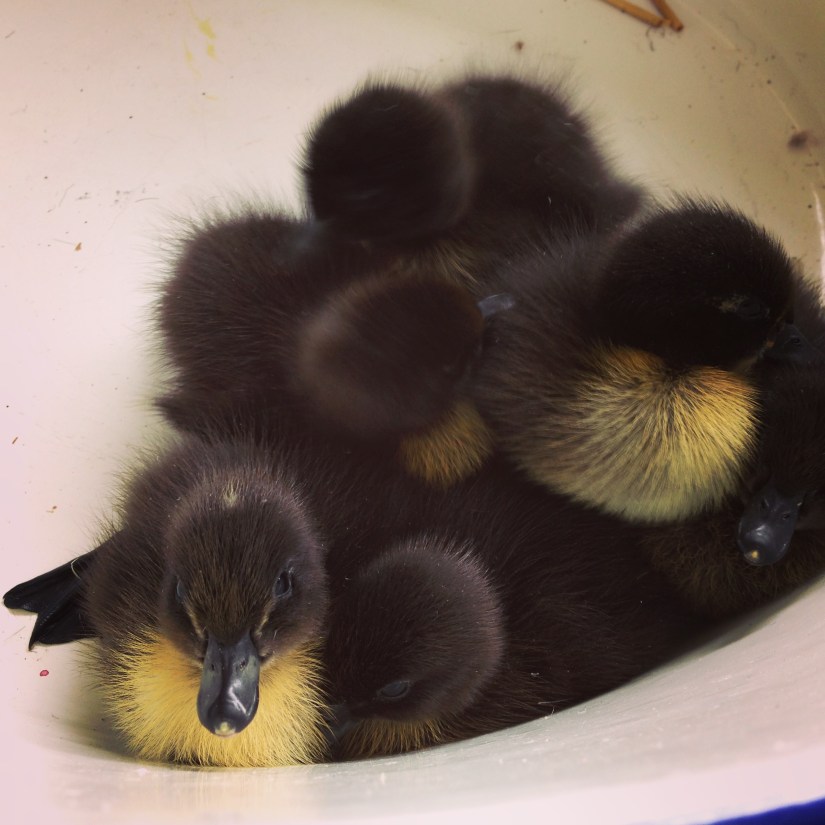
I think there needs to be a fresh look at crèche services to support all our aims and desired outcomes. As an ex crèche worker, I believe this ‘Cinderella’ service needs a renaissance and a new recognition.

We’re all familiar with the financial conditions children’s centres and wider services have been operating within for the past 10 years. If I had a pound for every time someone tells me crèches are expensive or not value for money, I’d have enough money to fund all whole load of them. Seriously, I don’t need reminding funds are tight and services are under pressure to demonstrate the difference they are making. But I think a lot of us are missing a trick unless we look at crèche services through a profoundly different lens.

The main problem is they are seen as a supporting offer, linked to other services. Offering children a quality childcare environment whilst their parents are engaged in other activities. Often that can be criticised as a parent-is-priority activity. This is a great shame. Because we are all wanting to support parents with their opportunities.  Parents’ and children’s needs can both be met at the same time.  They are not mutually exclusive.

Crèches offer so much. They provide children with often their first quality childcare experience, being apart from their parent(s) outside of their extended families, with qualified childcare workers, and socialising with a small group of other children. All useful experiences for children if we are thinking ahead to a time when they may be accessing their early years entitlements at two-, three-, or four-years-old, for 15 or 30 hours, or more a week. They are starting their own childcare and early learning journeys right here, right now. In turn preparing and equipping them for school and beyond.

And for early identifier roles, crèches offer new opportunities to work with children and families should there be a need that could be better met earlier and efficiently. And in doing so open the doors to local services and support on offer for SEND, health, learning and safeguarding.

One problem is they’re not always linked very well to other services. The biggest barrier, and it is wholly understandable, is parents should remain on site. That said, it does restrict what parents can do when their children are in crèche. It doesn’t help a parent who needs to visit another agency (for whatever reason) for the benefit of themselves, their families or their child or their younger or older siblings, or attend a job interview, short-distance travel such as to another children’s centre to access different services or meet other parents, or training related to their goals. Surely there should be a better way.

I have been disappointed to observe the frequent setting up of crèches, only for them to be cancelled due to low demand.  Parent groups, support and training do need to cluster together so crèches can be more sustainable and places are filled. And places should be prioritised. One such priority must be that places are available for parents on pathways to employment, and prepares them and their children take full benefit from their early years entitlements. Other activities are important, but some are more important than others if we are focused on long-term outcomes.

Indeed, crèches should be also viewed as a key parental empowerment offer. Especially, but not exclusively, for women. Like for their children, crèches provide first time experiences to be apart, building trust in other professionals, and starting new relationships and role models for them. This early relationship between parent and professional can open up a whole world of opportunity for parenting support, and their own learning and employment, such outcomes should be measured, celebrated and evidenced.

Crèches do fill a gap that often the local childcare market cannot always fill. Childcare providers are under a great deal of pressures and cannot readily offer short term, temporary or highly flexible childcare in these ways. They would if they could. But the barriers that prevent this need to be examined, I am wondering what more can be done to alleviate these blocks?

I remember the time, in the 1990s, when crèches were justified because of a total lack of local and suitable childcare. The childcare market has continued to mature over the past 25 years, and offers a range of funded and paid for services. However, there remains a gap that crèches should and could address for the greatest benefit of children and parents alike, and meet all our statutory duties. But it needs a fresh pair of eyes, a new confidence, and recognition of the outcomes achieved, as well as a joining up of resources. Crèches are and should be considered to be a vital service in their own right.  We should crèche, but in new ways.

This blog was first published in Children’s Centre Leader www.chcentreleader.com


Does lockdown give me any clues for my retirement? Hopefully.

With enforced lockdown, social distancing and self-isolation we’ve been spending a whole lot more time together at home, and doing less work. I’ve learned a lot through this period of five or six weeks. I’ve come to terms with enjoying the benefits of lockdown, and reconciled my feelings of guilt associated with being okay, so far. I have made some efforts to support those less fortunate nearby. I have truly appreciated the time to connect more regularly with friends and family, and with work colleagues to some extent; sharing our experiences of this extraordinary time. Time has also been sent being creative and prudent in the kitchen, tending the little garden we have, tidying and cleaning, and reaching the hidden depths of the freezer and the back of the larder cupboard. Working from home, has been an option I have been fortunate enough to use. That is not without its many challenges, but things could be an awful lot worse. This time has made me value and realise the value of living a little simpler, going back-to-basics, of daily and weekly structure, listening to and responding to emotions and feelings, and being prepared for such eventualities – however unexpected they are.

Inevitably, it seems, lockdown has made me think about retirement.  Rather, how this experience compares and how my response to the current conditions informs me how I may approach my retirement when it happens.  Well I don’t think or hope retirement is or should be anything like this.  For one thing I am continuing to work, not a full week, but most of it.  And I have the promise of returning to work in whatever way and whenever that approaches anything like what it used to be.  

Being restricted to home through the pandemic is a basic stripping of control and power. And it occurs to me there are all sorts of circumstances that can achieve that, such as disability, physical or mental health, or unemployment.  Retirement, hopefully, will not have such profound effects, although I acknowledge there are changes to physical health and finances.  

But the lockdown is hugely limiting.  In terms of basic needs, some foods are unavailable and shops are out of bounds. No longer can one linger through the stores and gain the emotional benefit of shopping.  Instead, it is a lonely, logistical and almost surgical endeavour.  An activity with a list, an agreed route through the store, one-way systems, staying two-metres apart, masks and gloves, interacting with staff through screens and limited social contact.  Personal care has been taken away in the form of barbers, hairdressers or physical therapists.  The world is reduced to four walls and hopefully a garden.  Through social, or I prefer the term physical distance, lockdown has robbed us of bodily and visual connections like hugs and eye contact.  The signs we are part of a bigger community and relevant to the people around us.  Routines and structure are really important, but the minutes still tick by slowly.  Days can feel like they are all the same.  Whenever it feels like ground-hog day, it is a sign that things aren’t going well.  Sleep can be interrupted and relaxation can be difficult to achieve.  All of this is made worse by the miserable news announcements, thousands of deaths, and endless speculation around what may happen next, and no end in sight. 

There will be an end to all this, and we will take the positives from it. As long as we all acknowledge how challenging things are, feel free to enjoy the better aspects, and help each other with our emotional responses. And hopefully we will use the opportunity to grow and develop and be ready for the next challenge, whether that is retirement or not.

This much I’ve learned from lockdown

It’s been five or six weeks now since I have been mostly working at home. To be honest I have lost count.

I have worked at home before, about 20 years ago for about three years. Although then, I was out and about frequently delivering work and meeting up with people at work and socially. Things are different this time. It is lockdown. The outdoor world is scarier and more dangerous place. This isn’t a choice.

When I reflect on my past experiences, I remember the flexibility, the efficiencies gained by not commuting, and the work-life balance benefits.  Those were the good things, easier to recall.  But with deeper thought, I also remember the blurred boundaries, the many compromises, the loneliness and the real lack of tangible, practical and emotional support at work.  This time around, in a time of crisis, requires careful consideration.

It is okay to enjoy the benefits of lockdown.  Even with a partner at home, I have noticed how much more connected I am with colleagues and friends on the ‘phone, talking not emailing or texting.  It is also normal to hold feelings of guilt if we are feeling okay, and are fit and well.  Such feelings seem to well up after each daily briefing.  Survivor guilt (also called survivor syndrome or disorder) is a mental condition when a person survives a traumatic event when others did not.  Something first recorded in the 1960s when therapists were working with holocaust survivors.  These feelings should be acknowledged and support us to better enjoy the positives.

Working from home is tough. Now, being asked to stay-in for weeks and maybe months is hardly difficult on a scale of what my grandparents were asked to do in WWII. But this is a multi-faceted challenge. One that includes health risks, financial uncertainty, emergency planning, logistical difficulties, leadership and management asks, and all sorts of changing personal and professional responsibilities. We are being asked to stay at home during the day, evenings and weekends. Over and above the practical considerations, the emotional and relational impact is huge, and there is anxiety and pressure, and at times stress on top. Yet, it is a privileged position not everyone can enjoy, we have exposed many inequalities. Not all of us can continue to work, or work at home, or exercise choices that fully meet the needs of ourselves or our families. That said, I’ve become fed up with people’s common perception of working from home. Although over time I think this has changed and matured. It is much more challenging than people seem to understand. Let me put on record right now the realities of home-working for many. First, it is not an opportunity to binge on a Netflix boxset. And it isn’t an opportunity for friends and neighbours to pop round for a coffee, all the time. Thankfully our social distance and isolation rules help this time. But I remember having to tell people in clear times that being at home was the same as being at work. Then we have the issue of who else is at home. That could be your children and young people, your dog, your parents, or your partner. Or maybe you are at home alone. And what are their priorities and needs? Home-schooling, childcare, walks, health care, feeding, the list is exhaustive. How are we supposed to fit work in? These all make a big difference, you could be competing for space, IT, the ‘phone line, WIFI bandwidth, or feeling intense sense of loneliness. Working at home could be happening in a corner of a busy kitchen, on the floor in the bedroom, or outside in the shed. Available workspace is a basic need. Working from home breaks so many rules or compromises our personal and professional boundaries. Video calls are a huge issue in themselves, revealing one’s home to colleagues and clients. Not being able to work, and being furloughed for an uncertain and unknown and extended period is equally as tough.

We need to go back to basics.  At the most challenging times, it is natural to want to tend to our own basic needs.  To ground ourselves.  Now is a time to press control-alt-delete, to reboot, and to set out our aims and ambitions through however long this takes us to recover from.  

It is important to have structure.  At home, like work, we have a strategy and a plan.  We have set out the things we want to achieve during this period of change and difficulty.  Underneath that is a long list of things to do.  And then each day has the jobs list, we tick it off.  That helps us to celebrate what we have done and remember what we have done (which can be a struggle a day or so later).  And this works on good days.  Days when we can be busy and happy to be. 

Emotions and feelings are real and we should listen to them.  On down days it’s important to be flexible and focus on self-care, riding with and naming the emotions.  Accepting them and acknowledging we have time for them in our busy, and increasingly less eventful lives.  Already I have started to struggle to differentiate daily routines.  I often forget what day it is.  Those at home are always sure themselves either.  Clearly, I need more structure so as to avoid a feeling of living through ‘a month of Sundays’.  

It pays to be prepared for a rainy day. I have always advocated a policy of being prepared. By that I mean having enough food and resources at home to last a couple of weeks or more: food in the freezer, fridge and store cupboard; and useful things like drinking water, matches, batteries, and medication; a full tank of petrol; and plenty of things to do. It’s the same at work, building up a reserve for a rainy day. I never really wanted to have to use these prepared stocks, this was more theory than practice. But now we are in real time. My well-made plans are being tested. Reserves are being used. Government is asking us, no requiring us to stay in, only leaving the house for essential supplies, daily exercise or to work in essential roles. Normal routines are massively disrupted.

It makes we wonder what clues this is giving me for my retirement.