Blog

Working from home: the lockdown survival guide?

I’ve worked at home before.  But that was when I was able to go out and work in the field, delivering training or consultancy.  I could travel in the car or on the train and meet up with friends, colleagues, and new people, in familiar and different places.  It was quite the adventure so early in my career.  There was more of a balance then, and the arrangements suited my working style.  And don’t forget I could have a real social life too.  But I didn’t get everything right.  I struggled with boundaries sometimes, it was hard to switch off on occasion, and often work became too much.  No one was there to notice, and management didn’t seem to care much about my work and working arrangements as long as things got done.  As long as I said yes to what they wanted.  Then one day I learned how to say no, with a little help from a mentor.

Then I started the business at home.  That was different again.  Things were fast, exciting and affirming.  The business took off rapidly and was based around my dining room table.  The inevitable compromises seemed much more worth it then.  And we didn’t know for how long these temporary arrangements would last.  It turned out the dining room, of a small two-bed terrace, was the business hub for nine months – for three of us.  Then we expanded to convert the second bedroom into an office.  With three proper desks and two computers.  By then there were about five of us, so if you stood up, you lost your place.  Fortunately, many of us were out and about delivering externally. It was about another six months before we moved to a proper office and work left the house for almost 20 years.

Skip two decades and then, coronavirus happened.  Lockdown meant working from home, not going anywhere else to deliver, and existing on screen for meetings, seminars and training.  It has been a different scenario from start to finish.  Now, I’m fortunate I have my home office.  I realise that.  I value that.  So many have had to struggle in shared spaces, kitchen worktops and spare bedrooms (I know how that feels).  My study is not somewhere I do lots of work in.  Its more of a bolthole, filled with my things, and somewhere to retreat to watch boxsets, read, think, or sulk.  On the occasions work needs doing, then that’s where I go.  I’ve learned that boundaries offered by dedicated space afford such opportunities.  So, with lockdown, I did have somewhere to go to, a space that I cherished and could compartmentalise work into.

In the early days, work was slower.  I, like everyone else was trying to get my head around what might be happening, and there was a unique and unparalleled chance to slow down and rest, and ponder on what could follow.  Shorter days were possible, I was fortunate I know, and this allowed for some greater investment in self and the household.  As a keen multi-tasker I always enjoy being at my desk and listening to the washing machine or the dishwasher whirring away, or receiving deliveries.  It makes me feel more productive.  And breaks from work could be spent pottering in the garden, cooking, or completing other life-focused tasks.  Breaks, it is commonly said are crucial to work-life balance and our health.  But they are much less often taken than they are spoken about.  And so, such distractions and other things to do are invaluable.

Then work gradually started to turn in the direction of something resembling typical patterns.  We are still a long way off normality, but at least things are starting to feel busy and familiar.  Like many others I became a star of the small screen.  Zoom, Teams, Skype, Facetime all bringing the outside world into my private space and requiring me to put my business face on.  Such an intrusion.  How rude.  And one that needs managing and fixed boundaries.  Read my other blogs on video conferencing.  I had to check my home office space and ensure it was ready to let people into.

One advantage is I can wear the same shirt for several conference calls.  At least I thought it was an advantage.  I fear it is more of a slippery slope.  It hangs on the study door, only to be worn when on screen.  It is taken off after, ready for the next time.  The disadvantage is it means there is less laundry to do.  Which in turn reduces my multi-tasking opportunities.  Which then means I spend more time on work.  Can you see where things are going?  Time for a rethink, now this way of working has become much more frequent.  It is at risk of compromising my working at home survival guide.

assorted clothes
Photo by Kai Pilger on Pexels.com


Tackle racism early in the early years

grayscale photo of man in sleeveless shirt
Photo by Ece AK on Pexels.com

I started working in early years and childcare 30 years ago.  It was 1990 and the Children Act (1989) was starting to be implemented.  It felt like an exciting time.  The beginning of some significant changes, an empowerment of children, and the assertion of a moral purpose in working with children.  The act was a response to the UN Convention on the Rights of the Child.

This was the beginning of my career, fresh out of university.  I was excited about how I could change the world, to make my difference to the children and families I was working with.  My fire had been ignited by some amazing equalities training when I worked at Leicester City Council.  Coupled with my own personal experiences of discrimination, I began to think there was a lifetime career in this.

The Children Act (1989) was a significant piece of legislation.  Not only did it shift from the outdated and historical notion of parental rights to one of parental responsibilities, it asserted children’s rights like never before.  And it set out for the first time a duty on early years and childcare providers to not only be non-discriminatory but to be anti-discriminatory.  Thanks to pioneers like Jane Lane, whom I was excited to meet and work alongside in the 1990s, albeit briefly.  She won’t remember me, but I remember her.  She left her mark on me.  She told me of the battles to ensure this important element was retained in the final legislation.  The shift from non- to anti- was an important distinction.  It gave us an ethical mission in working with children, including in childcare.

Having been discriminated against all my life up until that point, and since, taking this task on was something that really motivated me, a legal brief and mission to tackle prejudice.  It felt like the raft of 1970s equalities legislation had matured into a sensible assignment for the early years and childcare profession.  The sector was a very different place back then.  So much has changed.  Yet my biggest regret, and the thing I have learned in 30 years, is people and the system have short memories.  I have found the need for much of this work remains, yet is overlooked, it is waiting for someone to revisit it, reinvent it, and reclaim it for themselves.  Because they probably will.  Now, I do see some excellent practice and practitioners who inspire and nurture the children they work with, and promote diversity and tolerance.  I wonder though, how many practitioners these days truly realise a key aspect of their job is to promote anti-discrimination?  Has anyone told them?  Is it an obvious and prominent enough feature of the Early Years Foundation Stage (EYFS) or their Ofsted inspection?  Because let’s face it, the job hasn’t been done, by a long chalk.   I still find there is a huge need to win the argument for anti- behaviours.  Still, people lounge in the complacency of the non- space.  The forces of discrimination and racism are so powerful, persistent and endemic.  They are so damaging and far outnumber the scale of counteractions that we must insist on empowerful, constant and proactive interventions.  This cannot and should not be a neutral space.  Non- isn’t enough.

Numerous studies show babies notice difference in skin colour and hair textures between the ages of six months and a year. Why wouldn’t they?  They are wonderful things to celebrate.  Young children have small worlds and they are drinking in their unique observations and information from their immediate environment(s).  They are working out who they are and who the people around them connect together.  During this time, there is so much practitioners and parents can do to promote positivity.  Key here is good positive reinforcing body and verbal language and supporting curiosity and warm relationships. And where diversity does not exist, this needs to be included in the environment, in resources, imagery and the workforce.

Later around the age of two years, when children are speaking, this is when it is crucial that positive language and attitudes are reinforced, questions are answered, and thinking is supported to embrace difference, tolerance and respect.  Then as children get older and socialise more it’s vitally important that practitioners and parents counter the extensive forces of prejudice, stereotyping and discrimination.  It is ironic that when people feel a sense of inequality themselves, they often use the forces of hate and inequality to fight it.  This is the time for all earlier behaviours and interventions to continue, and to be extended through debate, challenge, discussion and engaging high quality social and historical learning.  A key principle is our anti- needs to be multi-faceted, relentless and constructive.  The job starts in the early years, no one should forget that.  In fact, they should take another long hard look at what more could and should be done.  Its not too late, but we could have achieved a great deal more in this past 30 years.


There’s a big part of me that doesn’t want things to go back to how they were.

Things have been different. They’ve been unexpected and unpredictable. Who knew that we’d be three months (and counting) without the usual routines, places to go, friends to visit, travel and holidays, and work activities to keep us out and about.  No matter how full the freezer, we were somewhat unprepared for several weeks spent at home, locked down with family, or alone.  I’ve written about what I’ve learned and what I hope for.  I’ve reflected on what it means for work as well.

It’s been okay for me. I’m one of the luckier ones. I’ve been able to stay at home, keep working, and enjoy the boltholes that have been my study at home, and my empty office – a short walk down the road.  Work has been important, we have been supporting local authorities, schools and nurseries to keep going, navigate the challenges closing, opening and reopening, and to think ahead to what might happen next. And so motivation has not been an issue.

I’ve now settled into the new routine.  And if I am honest, I’m a little disappointed or even fearful of things returning to anything like what it used to be.  There are signs of me being intolerant of things getting slightly busier. What’s going on?

City centre living is great.  The benefits are obvious.  There is easy access (within walking distance) to all that is going on, shops, cafes, restaurants, theatre, parks and all sorts of services, events and activities.  It is common to bump into friends, old and new.  There is a wonderful social community, like a village in a city.  I’m only five minutes from the train station so I can travel elsewhere.  These things contribute to a busy, modern lifestyle.  The downsides are the noise, the hustle and bustle, the distractions, a lack of green space and a distance from nature, the busyness that keeps one away from home, and perhaps some of the anti-social aspects of modern life.

Lockdown, stopped almost all of that.  An eerie quiet entered the city.  In the daytime, streets were empty of people, cars, buses and taxis.  Shops and cafes were closed, boarded-up even, and empty.  At night, every single noise woke me up, whereas before I could sleep through the worst drunken row in the road.   Walking around, on daily exercise or shopping for food, not only felt strange, it didn’t always feel that safe.  There wasn’t the comfort of others around, few familiar faces to chat to, and every task seemed functional, anxiety provoking, and unpleasurable.  And my work travel has stopped, I miss getting out and about, I miss London too.  But I value the time saved by not dashing around, travelling for four hours for a one-hour meeting.  Hopefully the future will allow for a better balance.

We have got used to the real advantages.  Driving around, if needed, has been a dream, even considering Leicester’s traffic-light overabundance.  The near empty roads, and easy (and free) parking.  Streets have been clear of rubbish, especially the detritus of fast food wrappers, and the plague that is chewing gum (thanks to diligent and hard work of the street cleaning team).  Like others, we have listened to the birdsong and noticed birds’ visits to the garden.  And we have got used to the new environment, routines and ways of living.  Gradually things have got busy, but very slowly.  The now busier roads are not only an inconvenience, they are annoying.  Journeys are getting slower and parking is trickier and no longer available or free.  And you only have to look in the gutter to realise the big fast food chains are open again.  That is a depressing sign of a return towards old bad habits.

To some extent I have been more social than before.  I’ve certainly been on the ‘phone to some people more than usual, I’ve seen others more frequently on screen.  And it has been a cheaper way that meeting up over drinks or food.  A real budget saving.  Staying in is the new going out.  And four years into living in this house I have definitely developed a better relationship with the bricks and mortar.  I’ve taken more care of the house and garden, valued it much more, and enjoyed being in it.  All these things contribute to me recognising what has been good in lockdown, and what I need to keep hold of in the future.  It will be another change management process to live through.

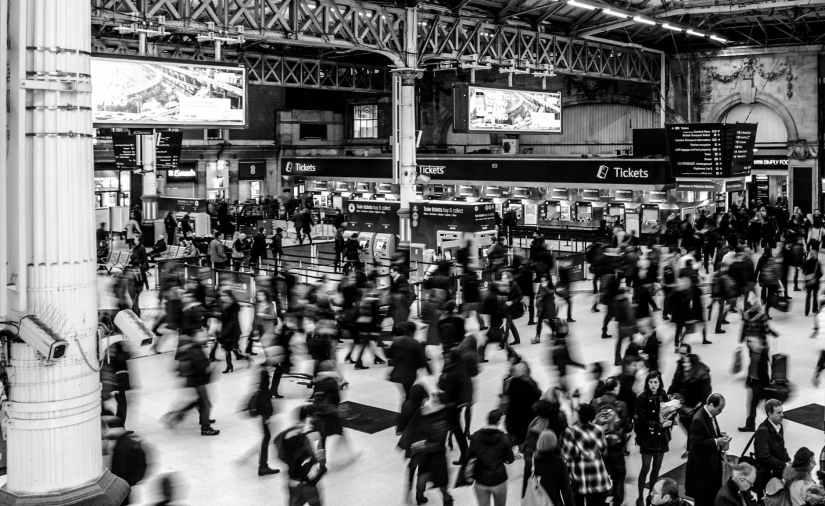
grayscale photography of people walking in train station
Photo by Skitterphoto on Pexels.com

Video conferencing: the pleasures and pitfalls

The pleasures and pitfalls of two months of video conferencing: It’s good, it’s bad. Anything could go wrong and will. It is confronting and very different.

Okay, its been two months of lockdown and I’ve been doing my best to keep work going. It’s been a non-stop carousel of staying at home, working at home, and going to an empty office, and returning back home again. A pattern that looks like it will continue for some time to come. Of course, I realise being able to retreat to the office is an opportunity not afforded to many. And a change of routine and business challenges is as bad as it has got so far. I do count my blessings.

Spending time in the office does feel like a luxury these days.  It provides a welcome change of scene, and an obvious way of separating work and home life.  Something that has been under pressure.  But I must admit at other times it felt sad, lonely, and frustrating. 

One salvation has been the time spent online in video calls. It genuinely is amazing to see colleagues, friends and clients on video. It is good for the soul, reminds me we are all in this together, and we can help each other with shared problems, ideas and plans. That said, I do miss the travelling, it gives me my thinking and creative time. I also crave the tangible human connection I have with real people, in real rooms, in real meetings.

I have written before about the advantages of this emerging technology and how it has yet to mature into what we need and deserve.  Here I continue with the theme, with a personal reflection on my experiences so far.

Last time, I feared this reliance on video conferencing was here to stay.  I felt reluctant about it.  Two months on and I realise and accept it is becoming the long-term norm.  This way of working is absolutely going to be a permanent feature of future working, training, meetings and communication.  So, let’s make it work, but first let’s be honest about it.  It is far from perfect, far from being the ideal solution, and whilst it has benefits it falls far short technologically, socially and professionally. 

I was feeling pretty chuffed with myself recently having gained a foundation in Zoom and Teams.  I had learned how to understand a conversation when in reality I had only heard every other word.  Finally, the tech was feeling like it was something I could use, rather than it being in control of me.  Then, can you believe it, a client asked to meet on Webex?  Now, I’m okay with change, I thrive on bespoke, I value individuality.  But could someone, somewhere decide what we should use and make sure everyone uses it, and can use it?  I’ve found trying to get more than four clients together on the same platform to be almost impossible.  Some can use Zoom, some can’t use Teams, others prefer Skype.  And this isn’t even consistent within the same organisation.  Consistency would help everyone.  

I’m usually the organiser of the call, often the chairperson, or the main presenter, and having to do all of that and manage the IT is a big challenge.  Well I think it is, for me, anyway.  The worst bit is logging on early, to make sure the tech is working that day.  On occasion finding it isn’t and having to deploy the back-up arrangements right at the last minute.  And then waiting, in fear-and-dread that no one else is going to be able to make the tech work, or they just aren’t going to attend.  Of course, they usually do.  I guess it’s just like that half an hour before your party when your anxiety starts telling you no one is coming, because they don’t like you! 

I admit I do like a well-run meeting.  I make no apologies for that.  One that has a clear aim and purpose, follows the rituals and routines of meetings, and starts and finishes on time.  So, the beginning of video meetings is a stretch and a challenge for me.  I have learned to allow for at least 10 minutes at the beginning to allow for tech, late arrivals, and un-chaired settling-in discussions before the meeting proper starts.  It also gives everyone time to scrutinise each other’s backgrounds and settings, and what they reveal.  Let’s be honest, we all do it.  The learning here is, everyone should be aware of what chosen environments tell others on the call. 

You will know I am a time enthusiast.  And so, we must use the saved time to do more.  But not more of the same.  I want us to do the things we have previously found difficult to achieve, or what we want and should be doing.  I am thinking of creative, team-focused, forward planning or innovative things, or simply tidy up!  This way we can be proactive and better meet our natural preferred working styles.

Or maybe, to spend the saved time at the hairdressers or barbers.  Because let’s face it, all this time I have spent looking at my image on screen has led to three conclusions.  I miss my barber, and I have put on lockdown weight!  Both things that need addressing in ways that lighting and a flattering camera angle cannot solve. I have also, like never before, been exposed to a mirror reflection of my own body language.  Something we don’t usually see, and this has led me to learn more about my behaviour cues and leaks, and has helped make some improvements. 

I have also learned that something that hasn’t happened before will undoubtedly happen and impact on the meeting. The list is endless: funny unexplained noises, loss of sound, loss of vision, fire alarms, beeping sounds, building work, door bells, deliveries, pets jumping up, children needing attention, and partners popping their heads around the door in various states of dress. I wonder what will happen on the next one?

Thinking again about our time

Lockdown has promoted us all to think differently about time.  This spring, we have been given an unparalleled opportunity to think differently about it.  Whether we have been at home, working at home, working at work, or working in different or changed circumstances.  Throughout this experience and afterwards, we will all have different relations with time.   Work has changed, and how we use time at work is the focus of this blog.

There are so many day-to-day expressions that relate to our time.  Before COVID-19, we had become used to people believing they ‘don’t have time these days’, or how there just ‘isn’t enough time’.  But one thing for sure is we all have it, and we have more control over it than we might think, even now.  It means we have to consciously manage it, and positively relate to it.

Time is particularly important if you are a leader.  As leaders, we have to manage our time, manage the time of others, sell time, give time, and make time for others.  And we have to do this better than most, because this time is precious indeed.

That said, it can be difficult in real time to always behave in ways that demonstrate to everyone that our time is their time.  When that report, spreadsheet or deadline is looming, or you have an important appointment you can be forgiven for struggling – we all do.

But if someone asks you for your time you should behave like it is the single most important of all your concerns.  Body language and well-chosen words go a long way to achieving this goal.  Initial listening and acknowledgement is seriously effective and if you need more time, agree a mutually convenient one.  This again will make people feel valued as you give them your time.

So what else have I learned about time management?  I think it is all about attitude and self-control. First, I am a great fan of the ‘do it now’ approach.  This is because the biggest mistake people make is to over- or under-estimate the amount of time a task needs.  Often a task can be done before you realise it, and sometimes for less time than it takes to write it down on your daily ‘to do’ list.  A bunch of small tasks completed can save a lot of time, and result in a raft of satisfying crossing out on your list.

The next tip is to set time-limits for tasks as we often decide consciously or unconsciously to spend more time on favourite jobs or people and less time on the least favourites.  This means we can fall into the trap of doing the same things well, and neglecting our other responsibilities.  If a task reappears on your ‘to do’ list more than three times in a row, ask yourself ‘what are you avoiding?’

img_3231Finally, focus on your own time.  What is your preferred working style?  At what point of the day or week are you at your best?  Me, I prefer to hit my desk first thing and plough through lots of tasks, so I can develop that feel-good factor from completing my list.  Remaining open to interruptions and supporting clients and colleagues of course!  That leaves the afternoon to be more social, give people more of my time, and to satisfy my creative side with writing or developing ideas.  It’s the time I blog.  Indeed, any distraction from other work is positively welcomed in the afternoons.  Time well spent.