Blog

Just because you can, doesn’t mean you should

For all of us, there is one key question. Do we opt for pleasure now, or delay it for later? The concept of waiting for gratification has been under attack for some time. The motor car, the jet plane, the television, the microwave oven, the internet and now multiple and instant access TV streaming channels, and food delivery apps have all been step-changes in upping the pace of it.

You want something? You can have it now. You don’t have to wait until 7.30pm to watch your favourite soap. A few clicks and it is playing live whenever and wherever you want. You don’t have to wait until next week to watch the next episode. Watch it now. In fact, download and gorge on the whole series in a single day if you want to. If you need information it is in your hand within seconds. You don’t have to go to a café or shop for food, it can come to you via bike courier within 20 minutes. Our tolerance for delay, our ability to be patient, to put in effort to gain rewards are all qualities being systematically eroded.

The ‘now’ culture, the ‘get famous quick’ society tells us to live in the moment, capture it on our ‘phone cameras and publish it for all to see. It asks why wait? This time tomorrow you could be globally trending. We subscribe to all sorts of adages, things like ‘you only live once’. Time, we are told is running out, insufficient even for all the things we are being told we want to do. The result is we make deliberate efforts to pack things into our days like an overstuffed suitcase.

The technological facilitation of instant gratification has waged war on any sense of delayed pleasure. It is a high-tech industrial lifestyle revolution. This goes a long way to diminishing any sense of purposefully and diligently working hard and with intent to an identified goal.

With lockdown, we have no choice but to wait. So many things are delayed. Where is the pleasure anymore? When will gratification occur? In Leicester, it feels like we are suspended in aspic. Stuck in time, patiently waiting for lockdown to be relaxed so we are like everywhere else in the world.

For some time I have been talking about how I thought society has been subconsciously preparing for harder times to come. We have been bingeing on stuff and food because we knew on one level different painful times were ahead. The id, as Freud would put it, our basic selves, is driven by the ‘pleasure principle’ that seeks out pleasure so we avoid the pain. And the pain people are trying to avoid is this cumulative sense of our demise, personally, as a community, a culture, a nation, a global species. We are given constant messages about the challenges experienced in the natural world; habit destruction, species extinction, and population migration (animal and human). Human population growth is so out of control we realise that one day the good times will end and rationing and restrictions of all resources will be put in place. Our young people are so anxious about it their mental health difficulties and anxiety levels are through the roof.

So humanity’s response, typically, has been ‘let’s feast now before famine follows’. Its like a bountiful summer and autumn before a hard winter ahead. We feel we shouldn’t delay gratification, because it simply might not be possible in the future. Whenever that is. And we all hold different constructs of what the future is. For some it feels like a distant concept, for others it is an all too brief prospect. Little did I realise the forces of such limits would manifest so soon and so profoundly with the COVID-19 pandemic of 2020.

So why wouldn’t everyone reach out for pleasure? Why feel guilty or judgemental about it? Pleasure is an escape from reality, it is a diversion, and getaway. It’s so dreamily tempting. Surely we all need that? The trouble is, it doesn’t really help any sense of long-term planning for the future. Its childlike, not ‘adultlike’. When we are young, we operate through the pleasure principle and expect immediate fulfilment. Then it’s all about basic needs, milk, food and comfort. We expect the breast, and protest when it is withdrawn (Klein). Later on in life it is still about our basic food and drink needs, with the addition of sex and the procreation urge. Something that has fed into a global population growth pandemic.

But as time marches on, we learn that we need to wait for gratification. It’s how we build resilience. And lockdown has forced our hand in direct and obvious contrast to our pre-pandemic lust for the instant and convenient. It has truly upped the ante. Much is said about the negative effects of the pandemic. There are potential benefits to reap. Many say delayed gratification is one of the most effective attributes of successful people and their jobs, lives, physical and mental health. But how long do we have to wait? Because we just weren’t used to waiting anymore. Until now.

8afa3b66-16ae-418b-b07b-f7c611bd4654

Give yourself the pep talk I’ve just given myself this morning.

Since March 2020, any sense of long-term strategy has flown out of the window.  It can sometimes feel like an achievement to survive the next hour, the whole day, or make it to Friday (should you still know what day it is).

Working from home, reduced teams, and socially distant office spaces all contribute to feelings of loneliness and isolation.  There are positives.  We have a plan, it is the right one, and it is working – slowly.  On the plus side new relationships have formed, or existing ones have become closer and stronger – even allowing for the medium of on-screen dialogue.   So, what have I reminded myself of today?

Have intent.  First, it is important to be steadfastly objective.  Define the goal or goals along the way.  Goal setting shouldn’t be done alone nor without talking and listening to those around you.  It is a process informed by horizon scanning, a good realistic look at what is possible, or not.  And be prepared to revisit goals and change them.  Make time to celebrate when goals are achieved before heading for the next one(s).

Own it.  In times of crisis and change, teams and organisations need leaders.  They need leaders who are objective, bring everyone with them, keep up their own motivation and that of others, and make the decisions people need, want and respect.  However hard, and emotional and difficult they are.  Now is the time to make decisions for the longer-term.  Whatever that may look like.  No one knows what will happen next of course, but you need to be fighting-fit for any scenario including the worst case one.

Connect.  You cannot do this alone, so you need to be bringing everyone with you.  Talk and listen with (not to) everyone in the team, those in the supplier chain, and customers.  Discuss and explore what is possible and what is not.  By doing that, your decisions will be better informed.  They might not always be the right ones, but they will be ones that you and everyone understands and has a committed stake in.  Here you gain support.  And keep communicating, keep sharing and talk about how things are going.  This will help identify things that need rethinking.

Keep it up.  Motivation that is.  Easier said than done.  Some days this will not be a problem at all.  On others you will feel like you are running on empty.  It helps I think to have your clear objectives, a team around you and to deploy your leadership behaviours.  Vision and goals allow you to look beyond daily challenges, but a realistic and achievable to do list for today is a great way of generating a sense of achievement.  That helps my motivation anyway.  Useful principles here are to focus on what is achievable and making sure you have a balance of what needs to be done, and what you like to do.

Decide.  Be able and prepared to make decisions quickly and now, and in the medium and longer terms.  Retain or grow the ability to change decisions based on evidence and your analysis.  Never decide on anything by evidence alone!  We need to examine, consider, and apply our business acumen to all decisions.  Be willing to take risks and be prepared for some of them to work.  And own them.  And be accountable to them to the team and to customers.  Keep talking, continue listening and your intent will benefit from it.  Then repeat.

Now to work.

img_5003

Video conferencing: Let’s nip these bad habits in the bud right now.

So, here we are, four months down the road. And we have all become stars of the small screen. Some willingly, some, including myself, more reluctantly. All of our time has been spent video conferencing, making and receiving video calls, and working from home umbilically attached to our laptops. Yes, there are benefits; there are pleasures and pitfalls. I have written about all of these. But today, I really want to share a plea that we stop our emerging bad habits right now before it is too late. I am mostly concerned about excessive screen time, doing too much in the time available, presenteeism, blurring boundaries and forgetting we are at work.

We are at risk of spending too much time on screen. Any parent will tell you the trials and tribulations associated with managing children and young people’s screen time. But seriously, there are a lot of adults at serious risk of overdoing it themselves now. We are driving or commuting less, having less (if any) face-to-face meetings, and we are spending fewer hours out and about using coffee house wifi. We aren’t moving around enough, we are sitting down too much and we are storing up all sorts of posture problems. Get up, move around, limit your screen time.

We are at serious risk of fitting too much into the time available. The result of which means we are simply going from one video to another, or instantly switching from appearing online to beavering away on our keyboards. The other day I chaired a complex 90-minute ideas exchange meeting, with multiple attendees. As soon as it ended I was straight onto my PC and without any pause whatsoever carried on with writing something else and ploughing through emails. Efficient yes, productive no doubt, but healthy? Certainly not. If that had been a face to face meeting I would at least have enjoyed the benefit of the time it took to relocate, leave the building, travel home or to another meeting or sit on the train in glorious rest and reflection.

We have a terrible emerging trend of presenteeism. Yes, attend the meetings. Be on time. Be present, don’t become distracted, commit to the moment and don’t multi-task. But please, choose what, when and how you participate consciously. Don’t let the fear of missing out drive your decisions, less is sometimes more. No it always is.

Our home and work boundaries are blurred. And blurred boundaries are always a slippery slope. It can be difficult to find a dedicated workspace at home, but at least have one for video calls. And leave your laptop there. Plug it in and have it on a surface. Don’t hold it, because that will only encourage you to carry it around with you. Don’t and I mean never carry it into the less public places in your home. I am talking bedrooms and bathrooms. Those are not workspaces and they run the risk of showing your colleagues or clients too much about your private life. Close the lid of your laptop when it isn’t in use. If it has one use the lens cover. Only this morning I was watching footage of a Spanish councillor whose four-hour meeting overran and he decided to take a shower, mistakenly in full view of his colleagues. And you have most probably seen the infamous video of the woman who took her laptop to the toilet. If you need to go to the loo, leave the meeting and go to the loo, don’t take the meeting with you. You wouldn’t take real people you were meeting to the loo with you. These are the symptoms of presenteeism.

When you are on a video call/conference you are at work! Put clothes on, even if people cannot see your bottom half. I watched a guy this morning get up at the end of the meeting, thinking it was over and everyone had gone. There he was in his pants. Scratching. His colleagues unscrupulously rushing to screen grab the image in a flagrant disregard of GDPR. Then there was the Irish MEP who was in his parliamentary meeting in his shirt and underpants throughout his meeting, unaware his camera angle had changed. Not the first, nor the last, politician to be found with his trousers down. The councillor offered to resign, drilling home the idea that serious consequences await, disciplinary action is possible for online behaviours. Bad online meeting habits are coming soon to a tribunal near you!

blank business composition computer
Photo by Pixabay on Pexels.com

This week I read ‘Do your own PR’ by Gardner, P. (2009). This is what I learned and what it made me think:

It is important to make time for PR. Often it isn’t urgent, PR doesn’t knock on your door or demand attention like other things and other people do. But it is essential, so it must be done. And do it now, don’t put it off. You will be surprised how little time it takes, you really will. And be persistent.

Don’t try it once, get lack-lustre results and then give up. This is the process of snowballing. Roll that PR snowball down that hill and watch when it becomes the size of the biggest snowman or woman! It could take hours (if you are really very lucky), or days, weeks, months or even years to have PR success. But the longer it takes the deeper and more credible your back catalogue and track record becomes.

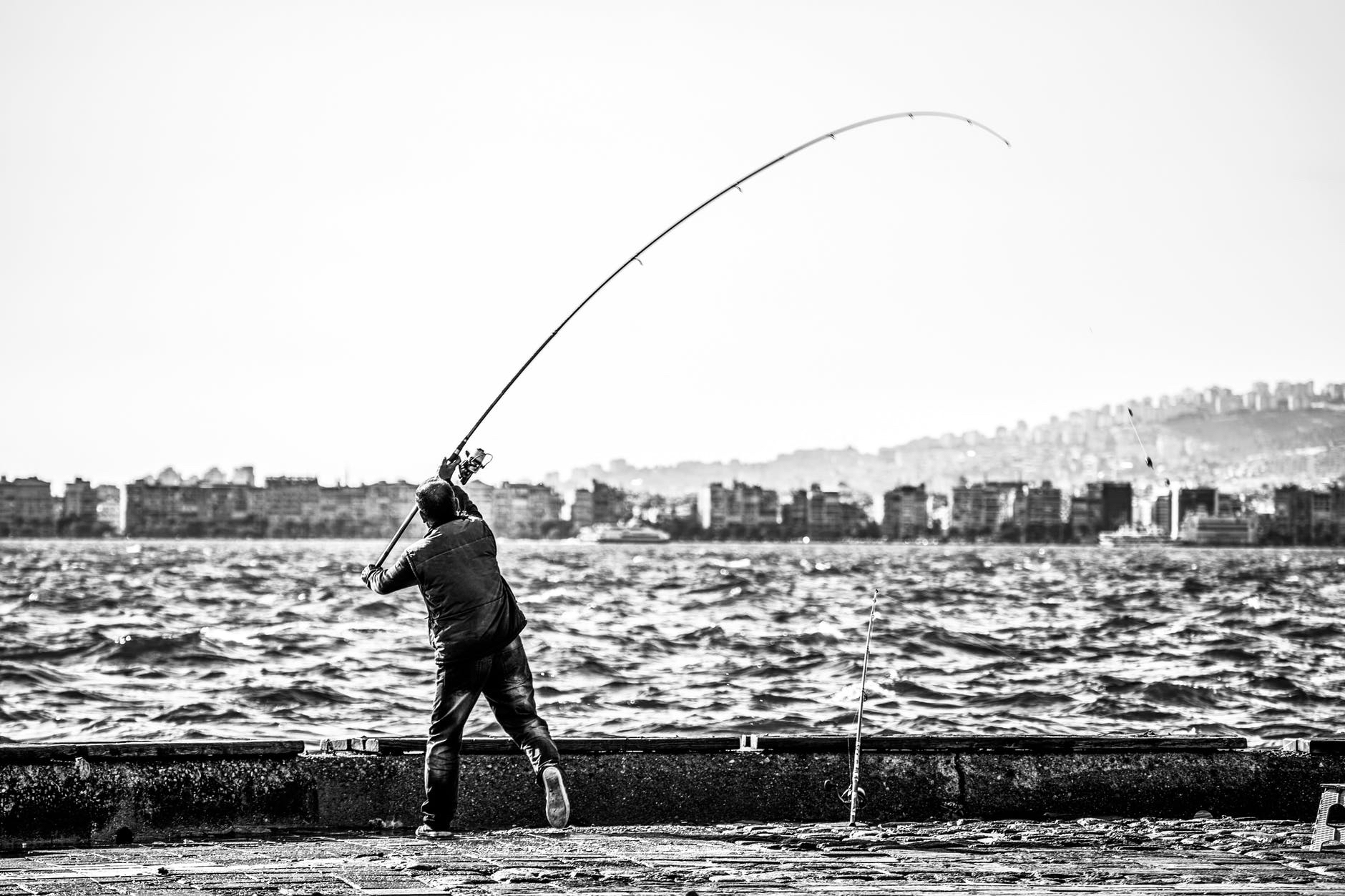
And whatever you do, maximise that input and investment by following it up. Don’t cast your line out into the still waters of the external environment, only to be too busy and distracted doing something else instead, missing the nibbles on your line. Be present. Land that catch.

And please focus on the key purpose of PR.  That is to communicate your message, your mission, your ‘ask’ of the world around you.  This is not an exercise in making you famous. 

Do your research. Read. Scan the media. All of it. Don’t be a snob and limited, look at everything. Talk to lots of different people and more importantly listen to them. Scan the horizon. Be on top of trends and stories. Read regularly, and keep abreast of the external messaging market and news stories. Learn to anticipate what the next news story will be. This will help you be prepared and be ready to comment when people need a statement from you. You can get in first by sending your comments before they have thought about it.

Be brave. One lesson I learned at ‘fundraising school’, is don’t be afraid of ‘no’. You will most likely be told no several times. And don’t accept the first rejection. Treat it as the initial response; your first bite at the maggot. And tug a little harder to see if you can generate more interest. Offer different ideas.

Make sure you focus on communicating your message to promote your work and its effects. Not you as the wannabe famous person behind it. That is shallow and everyone will notice what you are up to. It will put them off.

These days the lines between PR and marketing are blurred (p3). Getting our message across using the various modern platforms and social media mean we can use both aspects for the same outcome. Use your social media platforms of choice. What is the best match (or matches). Things like Twitter help keep people informed, sign people up to your cause, and make best use of the speed of news and thinking. You can also use it to ask market research questions, and develop a following of like-minded people.

Apply for and win awards.  I know.  Some are better than others.  But they have their place.  Ask any Oscar winner.

Write articles. You most likely won’t get paid for this, directly anyway. But treat it as thinking time, profile raising, and idea development investment or free advertising. Develop relationships with magazines. Populate your Twitter and LinkedIn profiles with posts. Link them altogether. Put something on one platform and then promote it on all the others. Comment on other people’s postings. Write letters to newspapers, submit to journals.

Blog, for yourself and use it to promote your business. This is best if you represent the business. Take the relatively unbridled opportunity to communicate your morals, ethics, values, and thought leadership, ideas. Get someone to check it before you upload it. Your commentary can be personal. But make sure you are following policy and aren’t falling into the common PR pitfalls. Comment on other blogs to drive people to your blog. Ask to guest blog on others’ blogs. This increases your reach and collects credibility. Get involved in video blogging or vlogging if you dare!

Write a book. Self-publish if no one else will. At the very least issue well-written and well timed press releases to the specialist sector, local and national press. There’s plenty of advice on press releases on the internet. And if that is too much, write and circulate your own newsletter. Not too often and make it worth reading. Not too self-congratulatory. Be informative. Lead thinking. Newsletters can also be useful for keeping track of previous, recent, current, possible and future customers. Your newsletter mailing list becomes your contacts database.

Make time for PR. And don’t fall into the trap of only doing it when things are slack, nor neglect it when things are busy. This is something to do all of the time. And you have to make it happen, because it won’t come a knocking!

Local lockdown in Leicester and what it could mean for you

Here in Leicester we feel under the national and international spotlight as we enjoy the accolade of being the first lockdown city.  The streets were teeming with press, cameras and reporters covering the news of non-essential shops closing again, schools preparing to close, bars and restaurants put on ice, and non-essential travel being prohibited.  It really does feel like we were yesterday’s news and are today’s chip paper.

But there’s aspects to this story that have not received sufficient focus in our view.  We have a warning to the school and early years community locally and across the country, for how long will this last, and who next and why?

Living and working in Leicester city centre we find ourselves in a new social experiment.  It feels like we are under not house but city-arrest.  We were all surprised to learn of an increased infection rate from Matt Hancock, the Health Secretary, in a daily briefing about two weeks ago.  Since then we were the focus of public, political and press speculation, and now the subject of direct action.

Early years and childcare started to reopen again from 1 June, attendance was steadily growing.  The Monday morning of 15 June saw the city hosting two-hour queues snaking around the city centre streets and corners as retail started to open up again.  Roads around drive-thrus were gridlocked.  People started to venture out after a three-month enforced hibernation.  The community overall has patiently respected lockdown, and a gradual, sensible and cautious return of safe behaviours.

But there is a problem.  And that is Leicester has huge poverty and inequalities.  Living and working conditions are extremely challenging and unfair for many families even if they want to do their best and follow guidance.  Factories, especially food factories, like in other parts of the country and the world, are proving to be hotspots for cross infections.  Government financial support has not reached many as they fall within the gaps.  I don’t think national health messages have reached or motivated many BAME communities.  Indeed the emergency funding allocated to the city has already paid for translated health messages.

But not just these communities, messages were seemingly incomprehensible to our leaders.  Even our own elected mayor was caught, and apologised for breaking lockdown rules, and admitted he didn’t understand them, which only enhanced the Cummings effect.  People started to ask for whom do these restrictions apply?

The second most important point is that Hancock has gone on record to say children are showing high levels of infection.  This has been cited as a key problem.  And whilst their symptoms are mostly mild, they are spreading the virus between each other and at home and in their communities.  That is behind the decision to close the schools in Leicester this week.  This has huge connotations for children and families returning to early years, childcare and schools.

The third concern for me, was the initial announcement stated the extended lockdown was for two weeks before it was reviewed.  Then we were told no decision will be made before 18 July 2020.  That is three-weeks in old money.  And when will sufficient data be identified and shared to relax our current conditions?  Could it be four, six, or 12 weeks?  Our whole sector and other communities should beware. Localities that share similar characteristics to Leicester, like Bradford, Rotherham, Bedford and Oldham (and others) need to prepare now for what could be an even more difficult time ahead.

close up photography of wet padlock
Photo by Nicholas Githiri on Pexels.com