Blog

It’s like comparing a dinghy with a cruise liner

In the early years sector, our diversity is our strength.  We have individual childminders working from their homes with small groups of children, we have sessional playgroups based in multi-use community buildings, there is full day provision in nurseries, schools and children’s centres.  We also have connected settings collaborating in hubs, and emerging, small, medium and large chains.  There are super chains too, international and huge, with very many settings attracting capital investment funds.  Early years and childcare is a local and global concern.

That’s the good news.  Kind of.  Our diversity is also our weakness and biggest challenge.  It means we cannot compare like-for-like.  You cannot compare a dinghy with a cruise liner.  They both do the same job; they transport someone from A to B, over water.  But in dramatically different ways.  This leads to all sorts of inequalities and practical barriers.

It makes the job of government deciding what and how to fund such difference enormously challenging and something that results in many on the receiving end considering it to be unsatisfactory.  When it comes to funding, there is a lot people don’t agree on.  Yet we are asking everyone in the sector, regardless of the model to work with children in exactly the same ways, for the consistent outcomes.  We can agree on that.

There is a place for all types of settings when they meet the needs of the parents in the local community who need, want and prefer to use them.  All should have equal value. Surely more can be done to take the best of what we have and get rid of the worst of the circumstances we find ourselves in.  Economies of scale afforded in larger organisations allow for the capacity and ability to grow and develop, and to participate in the wider roles of the early years practitioner.  By that I mean things like getting involved in partnership working, teams around the child, early identification and intervention, and connecting with other professionals who can provide specialist input.  This takes time and money, something not everyone has.

There are things that are taken for granted in early years that we don’t see later on in school-age learning.  For one, children don’t usually attend more than one school at a time for their primary or secondary education.  And the school workforce has a recognised status and structure, pay scale and qualifications framework.  Most schools look and feel the same.  There isn’t the diversity there is across early years.  I am wondering whether these established trends for multiple provider use are sustainable, or indeed in train with changing parental preferences in a COVID-19 and post lockdown context.  Will we see a strong demand for single-use settings and will this influence parental choices and provider delivery models?  Workforce reform has long been called for and remains something to be addressed so equality and quality is achieved once and for all.  The solutions should not be to turn every provider into a cruise liner, or a dinghy for that matter, but if we don’t manage the market and the workforce to protect diversity and choice, there will be no real choice left.

white cruise ship
Photo by Matthew Barra on Pexels.com


Too much Captain Von Trapp, not enough Fraulein Maria.

A little unseasonal this metaphor given The Sound of Music usually airs at Christmas time, and it’s the hottest day of the year, 32 degrees, but a discussion today made me think. Are some of us falling into the trapp (pun intended) of listening too intently to the rigid rules, specified outcomes, targets and multiple measures put in place by others to govern our work? Are we just like the children running towards the captain’s whistle-calls? The ones he used to rule the household before he saw the light and his affections transferred to his children’s new governess.

There will always be well-intentioned people who sit in offices and work very hard to develop rules, regulations and guidance with the purpose of raising standards or achieving consistency. This is a fact of life. We must get used to it – I am afraid. The best ones understand the value of consultation and collaboration with stakeholders and experts.

The law is the law. It is something I advocate following – of course. They are not all perfect and some need changing and bringing up-to-date. That’s for another day. But guidance is guidance. It is designed to be helpful and to advise how legislation and the ‘musts’ can be implemented. It is not the law. Instead it is a suggested path to your destination. It is such a huge shame that people don’t do things unless they are in guidance. We should. And if things are taken out of guidance for brevity’s sake, it does not mean we shouldn’t or couldn’t still do them.

Living and working in locally locked down Leicester has really turned me off guidance. It is all too obvious when you know it doesn’t match reality. So, follow it if you wish, pick and choose from it, or decide your own route. All those options are within acceptable bounds. Indeed, they should be encouraged. Once you accept this, then the options are limitless.

We can do lots of things that are not in guidance. We must. If we free ourselves from the shackles of guidance then we can better use our learned skills and experience and become innovators and creative beings. Just like Maria when she broke the captain’s rules and let go of her misplaced dream of entering the convent. It surely worked.

Maria knew the power of treating people as individuals, developing trust in relationships, and the joy and happiness to be found in play. Her methods all leading to self-fulfilment, learning and positive outcomes, love and change.

We too can include these principles and values in our practice even if they are not explicitly written in guidance. We can design our own routes to the destinations we are tasked with reaching. I frequently say that no-one has become an example of best practice by following guidance to the letter. And examples of best practice become the new inspirations for the next guidance, so we must play out part in the improvement cycle. If you innovate, you lead, you create the new solutions and best practice, you become a leader. And sooner or later even the most stubborn captain will come round to your way of thinking. Let’s all be Marias! Merry Christmas.

img_4631

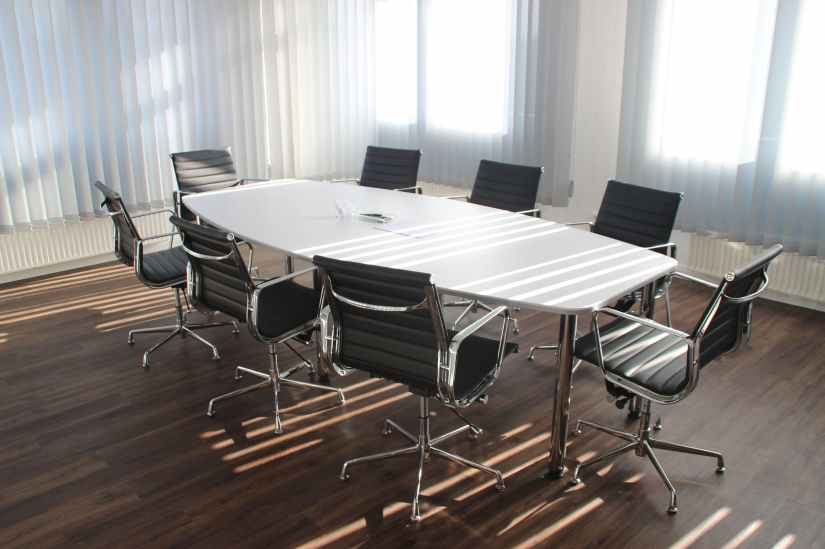
Chairs and tables in meetings. 

Like many, I’m still getting to grips with video conferencing.  But I think I am hooked.  I must admit.  And I am wondering if there is greater equality in online meetings.

Over the past four months I have attended several and organised many more.  I’ve used them for one-to-ones, small group discussions and seminars for up to 200 people at a time.  Telephone calls just don’t cut it anymore.  And with limited options to travel, and an understandable reluctance to do so, it is more than an attractive option.  Especially given how much smaller my social world is at work and at home.

The benefits are many.  Gone has the need to prepare to travel, present myself, travel, arrive, settle-in, participate in meeting preamble and small talk, attend the meeting, and then do everything again – but in reverse.

There’s the obvious and instant-nature of opening up a laptop screen and the saving of time for all that unnecessary stuff and actions leading up to a meeting.  Sometimes it can be a bit of a shock – the juxtaposition of work and home life.  One minute putting out the rubbish, the next talking with the CEO.

But it is the interpersonal dynamics and powerplays that have always fascinated me in meetings, and online is no different.  And this is where I miss the table.  There simply is not a table to sit around.  This is a huge shift.  Often it is the table that is the silent force in a meeting.  Some people arrive early so they get their pick of the positions.  They may organise to arrive with someone so they can sit together, or they may choose to sit beside or opposite someone else.  In online meetings, there is no head of the table.  The dynamics of who is sitting next to who are gone.  The small screen decides who sits where, there’s no hierarchy of placement or unspoken physical alliances and battle-lines.

Online meetings strip out the opportunities to give each other sideways glances, either hostile, supportive, encouraging, cynical or coercive.  Although, let me tell you I have noticed when people are texting each other – the tech equivalent of a sideways glance.  I do it myself, I must admit.

The screen limits what we see; heads and shoulders usually – user error excepting.  People are still not always positioning their cameras to their best advantage.  But mostly, we don’t get to see the whole body, the leaking body language, and all the other captivating observational cues and signals.

And what’s more we can choose how to participate.  The functionality allows for choices in our contributions as well.  You can sit back and listen, switch off your screen or your audio, chat away on the sidebar, or raise your electronic or actual hand to indicate you want to join in.  if things get tricky, dull or you get a better offer, you can cut off the connection and blame your broadband provider.  It’s like a meeting ejector seat, at the touch of a laptop button.  It’s the stuff of dreams.

A great benefit is the reduction of awful and meaningless pre- and post-meeting chit chat.  But I am not naive enough not to realise that this is where much business gets done.  Especially in unequal workplaces.  I always felt sorry for people dialling in to meetings because when meetings ended they hang up, but the chat continues.  It’s those Columbo moments when somebody ‘remembers’ an important question – you know, usually preceded by the phrase “oh, just before you go…”.  It disadvantages those that have already left the meeting.  To some extent there is greater equality if everyone ‘dials-in’ but beware not to hang up too soon is my advice.  Overall, it does seem to feel like a levelling, more equal and choice-filled workspace than what we had before.

Too much of a rose-tinted glasses view?  Probably.  There are classic dynamics in place.  Who organised the meeting, who is chairing it, and who decides who gets to speak?  All key questions and the answers reveal who the puppet master is. The role of chair has never been more important and they need to be up to the job.

Let’s not get ahead of ourselves and believe Teams or Zoom are emancipatory forces.  The meeting controller can mute you all at the touch of a button.  A very useful function I have to say.  I have joyfully used it.  Not only for improving the quality of sound, but it gives one uninterrupted time.  It is quite a unique tool I must say.  One that really comes into play when delivering training to potentially hostile learners.  If only I’d had the benefit of that years ago.  And so, the role of meeting lead is a responsible one.  It is one that should commit to equality in participation and to make the best of this new way of working.  Perhaps an online meeting chair also needs to be the table?

chairs daylight designer empty
Photo by Pixabay on Pexels.com


Leadership and management – easy mistakes to make, easy problems to solve.

Running a country, managing a business, or leading a family – they all need a considered approach. Recent events have made me think about the common mistakes people make in leadership and management. Its not their fault, there’s so much confusion out there, and it is all too easy to fall into unhelpful habits.

It’s the huge proliferation of Government COVID-19 guidance that has stimulated today’s thoughts. I must admit. I tweeted as far back as 12 May 2020 “Swimming in guidance? Makes me think: Lead from the centre. Don’t manage from the centre. Allow local to decide, manage and deliver. Enable local to inform central leadership. Focus energy on doing, not over working guidance. Allow flexibility to evolve, don’t manufacture it.”

I blogged in June on similar themes https://workstylelifestyle.blog/2020/06/13/government-is-telling-us-what-to-do-like-never-before-lets-think-about-it-before-we-agree-to-comply/

Back then I had read guidance for early years and childcare, schools, retail, gyms and barbers. Since then I have been trying to keep up with updates and changing goalposts. I had started to feel unable to breathe in and out, put one foot in front of another, or decide what to have for breakfast without consulting guidance. I feared I, like everyone around me, I was at risk of becoming guidance dependent. Guidance has its place. And its place is to advise and inform our autonomous decision-making as free-thinking individuals, with induvial circumstances, needs and wants.

I listen as every new piece of guidance is issued, and pause to wait for the inevitable barrage of questions and exclamations for people who ask “what about me? It doesn’t tell me what to do”. There should be lots of areas of our lives that aren’t specified or forethought by Whitehall mandarins. It’s a good thing. I mean, what sort of a world would it be if they did take it upon themselves to meddle in everything? One problem is all this well-intentioned guidance and its regular updates started pretty early to tie itself, and us, in knots.

Leaders lead. They inspire, empower, motivate, and enable. Managers tell you what to do check you are doing it and measure its success throughout and afterwards. It’s a somewhat simplistic view I know, but there are big differences and it can be confusing if you mix these roles up too much, and a real challenge if you are the person that has to do both.

But government should remember to lead from the centre. Managing from the centre across 151 different and diverse local authority areas (in England), is impossible. Something only necessary when local becomes dysfunctional. That is why we have local councils, to lead and manage locally. There needs to be a return to a greater sense of allowing local to decide, manage and deliver. It a lesson any business leader should heed.

Because just like in a business, if you enable the workforce, shop-floor or front-line to take ownership and make decisions, then this practical learning has the potency to better inform central leadership. As long as you listen. This results in better leadership and decision and policy making. If we allow for that, then people and colleagues can focus their energy on the business of doing or living, and not fearfully over-thinking guidance. And they can do so flexibility and innovatively. I worry that many business leaders could fall into the trap of over-thinking and controlling, following the blueprint set by the detail and frequency of government guidance. Best lead, talk, listen and manage together as a team.

img_1101

School readiness – still an issue for children, parents, providers and schools

In early years we have been familiar with this term, ‘school readiness’, for a little while now. Perhaps far too long. I wrote this piece in 2014 for the Nursery World website, after Ofsted published Are you ready? Good Practice in School Readiness. Today, I have revisited it. I needed to, as the issue remains unresolved.

School readiness is one of many aims of early learning for preschool children. One of many aims, did you notice? We aim to ensure that as children join us at age one, two or three, we equip them in their transition into school and into their childhoods and adulthoods. We often share a child’s first experiences of being separated from their parents, interacting with non-family member adults, taking turns, and making new friends. We can introduce families to books, positive behaviours and self-regulation, and safe boundaries and risk-taking, and a whole range of new opportunities socially, educationally and economically.

The term emerged from various reviews, guidance, and training modules including and significantly: the Allen Report (2011) on early intervention, and the Tickell Report (2011) that looked at reviewing the Early Years Foundation Stage (EYFS) and used the term school ‘unreadiness’. There is no clear and agreed definition though. Shared understanding and agreement here would be a uniting force for partnership between early years and schools. This is something we still need.

If school readiness means we support children to develop their key skills in communication, speaking, listening and questioning, social and emotional well-being, and physical development, then count me in. If it is about producing learning robots trained to comply with a rigid and inflexible education system, then I am less keen on the idea. This is my quote and was included in The Complete Companion for Teaching and Leading Practice in the Early Years (Jarvis et al 2016). Yes, we must do our bit, but the mantle should be taken on by later educators in ways that are individualised, sensitive, inclusive and enabling. In early years we are not mechanical production lines churning out identical school-ready children like ready-meals prepared for the oven.

Ofsted agreed, somewhat, their report said “children require high quality provision and individualised support”. All types of provision should remember this and individualise their approaches. One size never fit all.

My argument is that school readiness is a partnership, and not just the ‘job’ of the early years sector, it is one that is best achieved by parents, providers, partners and schools. I fear our sector is often judged or singled-out to blame if a child doesn’t conform to the norm when arriving at schools for the first time. And on that matter, schools need to have child-readiness for working with young children and their families. It’s a two-way thing. This is all the more important now children have experienced lockdown and the effects of the pandemic. They haven’t missed out and need to catch up, they need to be supported to make sense of what has and is happening and convert these unique learning experiences into resilience and skills necessary for their successful studies, social and working lives.

What parents and carers do on a daily basis to support their children’s learning is not only important – it is essential. Even for our most frequent and long-term users of early learning, their most significant influence is their parenting. And as a sector, we should feel proud of how we engage and include parents into our services. And the ways in which we support home learning. I am pleased to see this has an ever-increasing focus across many programmes and projects, Hungry Little Minds included. However, we should not be complacent, we can always do more. So often I meet children who have low confidence, untapped potential in language and learning, and I see this replicated in their parents. Our role, in all children’s services, including schools, is to support parents to achieve their full potential too. And we do. By providing our services, we offer parents opportunities to grow and develop, learn and work, build self-esteem and confidence, and improve their and their family’s communication skills. These all contribute to a school readiness for parents. School ready parents are much more confident to engage with school and able to feel included and respected in their communities. They will also be best placed to support those vitally important periods of transition as well.

Partnerships with other settings acknowledge that children may attend two or more provisions. And specialist interventions such as speech and language therapy also offer other inputs. They help to inform assessments, recommendations and effective transitions for individual children. Initial assessments must effectively and efficiently identify a child’s starting point. Accuracy and quality here buys us the time we need to develop and individualise development programmes for all children, and drive our work in partnership with other services and professionals that offer a specialist perspective.

There are opportunities for us to balance the use of child-led and adult-led sessions. If a child becomes used to participating and enjoying adult-led learning activities, they will be ready to engage with this when it is presented to them in school. Not forgetting that it is child led activities that allow children to become independent learners, explorers and individuals, and this is of equal value to me, and something that needs to be reflected more in the school day. This is because learning in later school years, and certainly in FE and HE sectors is structured in this way. Research shows how beneficial to language development it is for children if adults around them (early years workers and parents or carers) speak clearly to children and offer opportunities to speak, be imaginative, construct sentences and ask questions. Research has shown that least advantaged children are likely to hear much fewer spoken words in their early years than their peers (Hart & Risley (1995).

We still need to agree and share a definition, one that encompasses the multi-sided nature of school readiness, one that includes children, parents and their schools. And in the meantime, let’s make sure we build in some of these principles into our everyday practice in early years.


b8d6e669-978c-48d5-b51c-4fdf5db44999