Blog

No surprises!

Some people like surprises, some people don’t.  Our reactions to them are influenced by their type – whether they are good or bad.  That seems obvious enough.  Then of course there is the issue of timing.  Timing is everything.  A good leader will understand that.  Good news is one thing, and there’s often room for fun and spontaneity at work, but I mean to tell you why we need to be careful with surprises.

Two things come to mind.  The first being the real importance of involving team members and colleagues early in thinking and decision-making.  Not all decisions have a long lead-in time, but most do.  If you don’t involve early or consult, when decisions are then made that can feel like a big surprise if a colleague didn’t see it coming at all.  If you do consult at the earliest possible moment, then your team will feel they have been included and their views take into account before decisions were made.  These we understand are very valuable thoughts and feelings.  Even if the ultimate decision isn’t what they were hoping for, or they disagree with it, they will have a deeper and greater appreciation of the process and often dilemmas leading towards it. 

The second thing is about meetings and/or conversations.  Whether they be formal, informal, planned or impromptu.  Everyone needs clear information about the aim and purpose of all of these.  If a difficult conversation is coming up, then people need to know about it – so they can prepare for it and do their best.  Recently I was hijacked in a meeting.  Someone came to a routine progress checking meeting and used the opportunity to throw their power and contractual and organisational ‘weight’ around.  They wanted to take the chance of showboating in front of the group by complaining and making accusations about what they thought was slow progress.  They crossed the line.  It felt like bullying.  Because it was. What a different scenario it would have been if they had raised their concerns in advance, rather than sharing them by surprise.  That would have allowed everyone to have a sensible, professional and helpful discussion about the concerns and what was planned to address them.  Because they held the power and the money, this unacceptable and unprofessional behaviour went unchallenged because of that power. Those around went into shock and did a great job of initial response, but it could have been a whole lot more productive and professional.

So, there you go, involve and include, ask for input and ideas, as early and as often as you can.  That will not only build your best decisions, but it will also model how to lead the process for your team.  They will be all the happier for it.  And prepare others to be able to prepare themselves, share considered thinking, and develop solutions to problems in the future.  That way there are no unwelcome surprises and most likely positive outcomes. 

Photo by Edmond Dantu00e8s on Pexels.com

My university friend has retired.  And I am in shock. 

It was one of those days today.  A milestone moment. I’d been away to a friend’s mum’s funeral yesterday.  Today I had arranged to meet up with an old university friend for breakfast, as she lived nearby.  That was a great move, it always is.  Each time it is a pleasure. 

We met when I was barely 18 and she was just turning 21.  That was quite some time ago, I might add.  We both studied the same degree and spent hours together eating, drinking, partying, debating, and dancing.  Getting together doesn’t happen very often, but like all good friends, we are okay with that, we pick up where we were last time very easily indeed.  with a little less dancing.      

There was news to share, and updates to be given.  Children, careers, volunteering, hobbies, pastimes, art, pandemic responses, health, marriages, and squaring the circle her child at university, quite the list.  Then like a bolt out of the blue, she said she had retired, and so had her husband.  Wow.  I did not see that coming.  I probably should’ve. 

This woman, with whom I shared my early adult years, and I still see through that lens, was the physical embodiment of that life stage I been contemplating and writing about.  A real person, a contemporary, and one of my own generation.  Up to that point all I had been doing was imagining, thinking ahead, and pondering concepts of retirement.  Everyone who has retired around me so far has been quite a bit older, and not one of my inner circle.

Now retirement, and whatever other stages of career and life choices, had crossed that line that separates fantasy from reality.  And I am left to deal with the thoughts and feelings it has generated.  There are many questions.  Am I envious or jealous?  I don’t think so, I have a sort of plan.  Do I want the same or the opposite?  I mean, do I want to retire early or work much later?  Has it made me feel younger or older?  It has undeniably made me feel retirement adjacent!  Has it derailed my ideas of all of this?  Let’s wait and see.  One thing for sure, this is now a reality and not the stuff of dreams.    

Photo by Asad Photo Maldives on Pexels.com

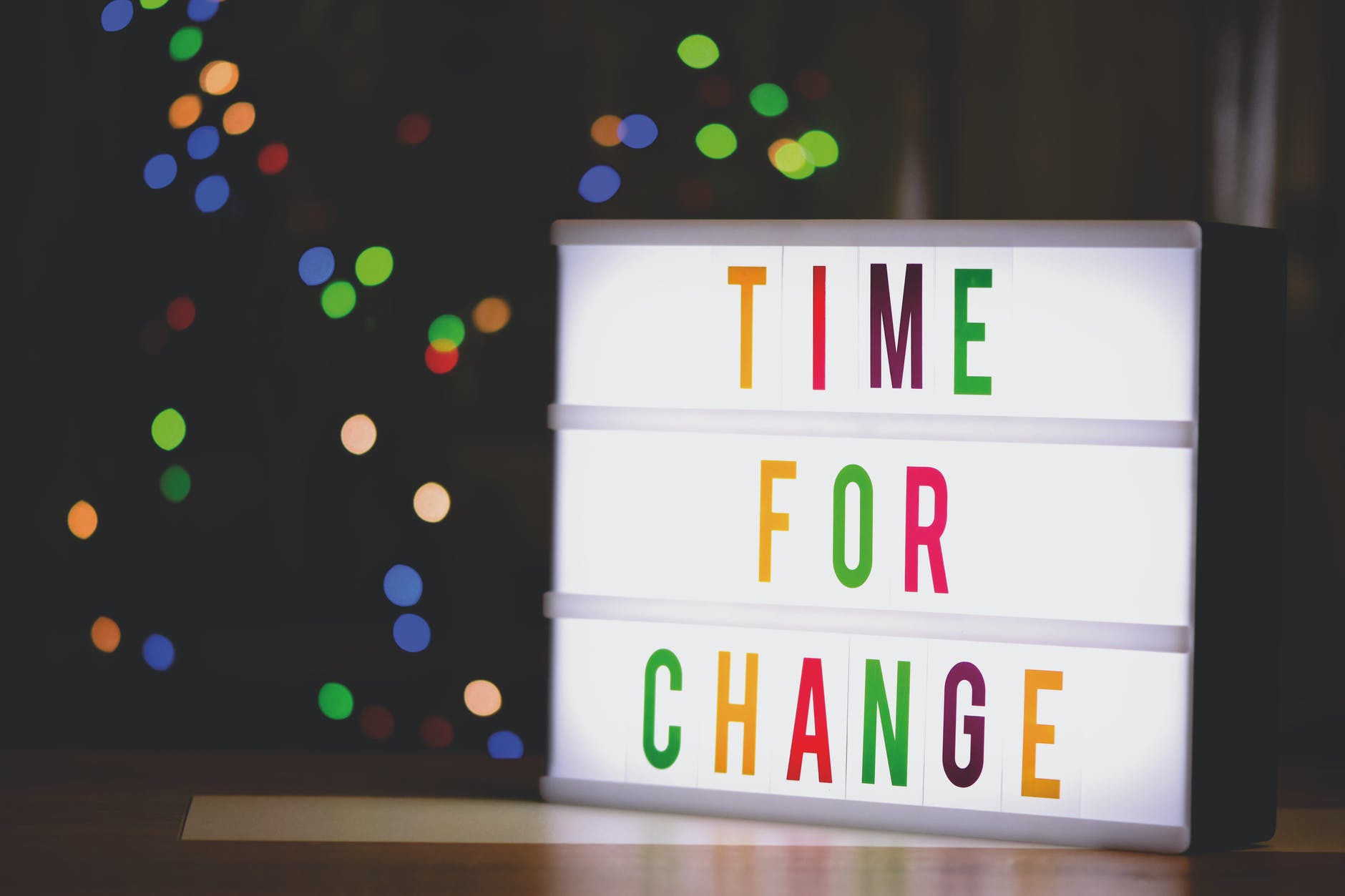
COVID-19 is changing what we want out of life and work.

Survey after survey is asking our workforce about their future intentions. They are finding a groundswell of thinking of career change, home relocation, and fantasies of quitting the rat-race. Is this a good thing? Or is it a sign of a crisis of confidence? We need to tread carefully.

We need to ask ourselves if we really do want all this change.  And what change anyway?  Because let’s face it, most people fear change and prefer the status quo.  And it has been pretty common that once a big move has been completed the grass has been found to be no greener.  Change can be as stressful and the things that cause it. 

Perhaps the pandemic has lifted the lid off lots of deeply held unhappiness in life and work.  Maybe it has done us all a huge favour by rebooting our thinking, our aims, and our ambitions.  Whatever, we need to focus on what is important.  No amount of pressure causing stress is acceptable.  And stress can be caused by all aspects of the pandemic, overworking (by holding together a business or role in adverse circumstances), under working (by being at home on furlough), and through uncertainty, and all types of change (when coping with the after-effects and a return to ‘normal’). 

It is important to recognise this and counter the causes and the effects, as soon as possible.  As we consider the possible diminishing of the pandemic, the pressure points shift and change as we recover personally and reconstruct ourselves professionally.  These effects will not just disappear as fast as they arrived, they will indeed reverberate for many years, possibly even generations to come.

The next steps are exciting and entirely possible.  Remember, you have taken many decisions before that have resulted in actions and direction.  All of them have brought you here.  You therefore have the tools in your box to make the decisions for now and next.  If you don’t feel like you have, talk to a trusted friend and colleague who can help you navigate the fog.

There are lots of things to work through, if this is sounding anything like you.

Firstly, we need to focus on our thoughts and feelings. What are they, can you name them? You may need help to recognise them, but this is worth the work. Timing is everything, how long you’ve been feeling like this is important, the feelings may have pre-dated COVID-19, or they may have been prompted or exacerbated by it. It is possible and totally understandable if unhealthy behaviours have been adopted or have been maintained. Now is the time to name them, then let go of them, one by one.

Your instincts may be to freeze, fight or fly. This classic stress reflex model helps us to understand what may be going on, and which impulses we are triggering. It is revealing. Doing nothing (freezing) isn’t very helpful in the medium to long terms if you want things to change. It may help us feel better in the short-term though. Conflict (flight) can be destructive and could cause a whole mess. And running (flight) literally runs the risk of leaving lots of value behind, only to regret it later. Remember that the grass isn’t always greener. We must think carefully.

Goal setting can help describe want you want in life and work in the short-term, medium-term, and long-terms.  It offers the chance to help identify what must happen right away, steps towards the dream, and what the end goal actually is.  The outcome might surprise you.

You are the best agent of change. It is crucial you pinpoint the changes you can make happen right here, right now. As is naming which of these changes you can take control or ownership yourself right away. If they aren’t happening, what is stopping you then? It might be that to gain change you need to be willing to let go of something. And this should not always be a solitary business. It is entirely likely you will need the support of others, your partner, family, friends, colleague or boss. What do you need them to do to help – and have you asked?

Who knows, your changes could change not only yourself, but the goals and dreams of those around you.  That is something worth celebrating.   

Photo by Alexas Fotos on Pexels.com

We all live on the streets.

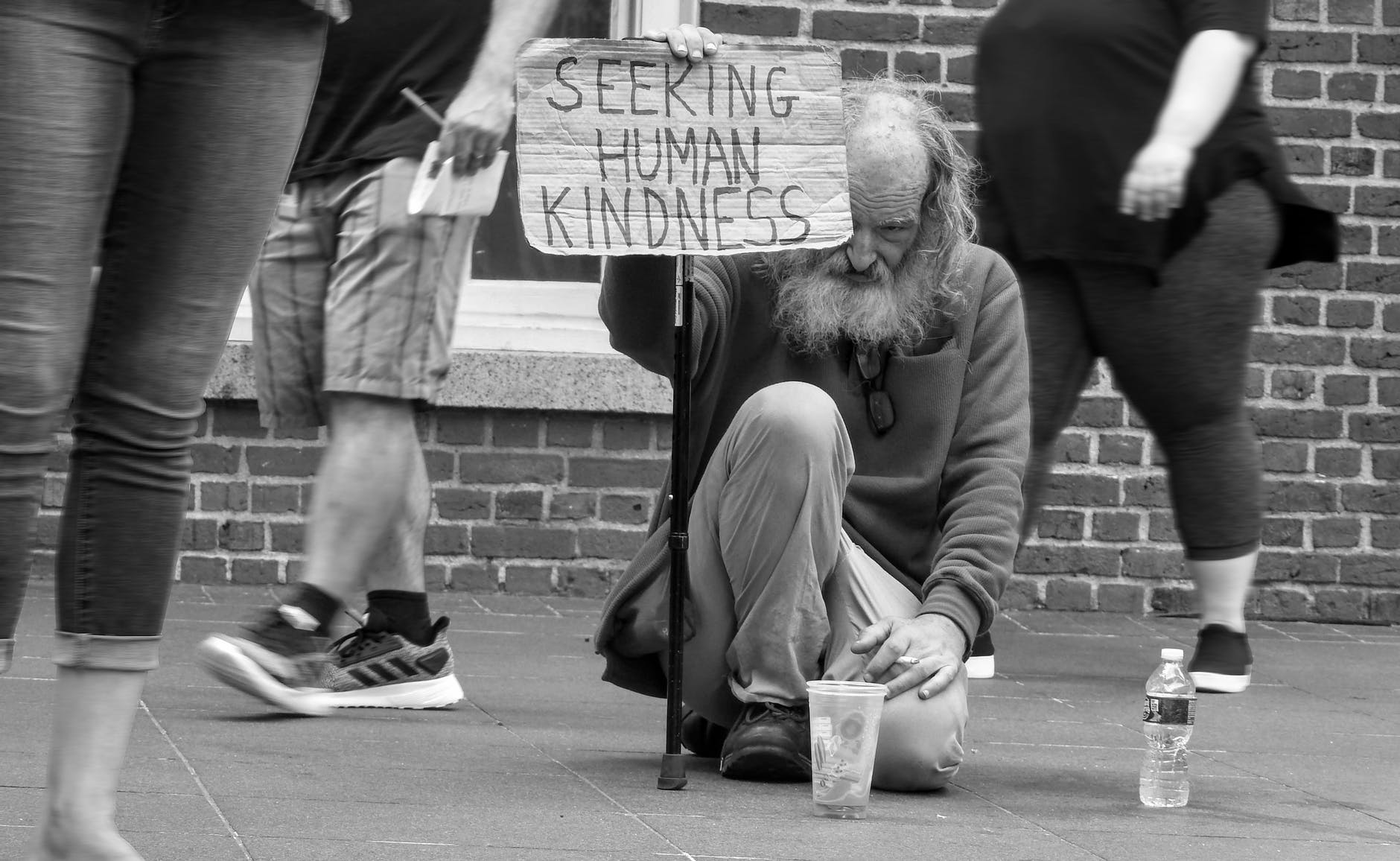
Yesterday I learned my local Big Issue seller had died.  A man my age, he was a familiar sight to many in the city.  I would usually, not always, remember to carry some cash to give to him.  If we did see each other, we would mostly stop and catch up on news.  Sometimes I would think I was too busy to stop.  Sometimes I didn’t. 

I was upset to hear the news of his passing, but alas, I was not shocked nor surprised. Over the past difficult year, I (like many others) had watched how his health had deteriorated.  I had urged him to go to the doctors.  He told me he would or he was. 

The last time I saw him, some two weeks before he died, was an event I had shared with friends and colleagues since.  We had bumped into each other in a part of town that now has its pavements, and it has to be said roads, crowded with chairs and tables as the cafes, restaurants, and bars work to secure their businesses.  One cannot walk in straight line on these streets anymore, instead one has to weave in and out whilst trying not to get in anyone’s way.  Before being asked, I searched for change.  There was none.  No problem, I have my card machine, he said.  A development I thoroughly approved of, not only for my convenience, but for the business opportunity now so few of us carry cash. 

He placed his pack of magazines on an empty table so he could manage the transaction.  Then came the complaint.  Two diners on a table a little further along tutted and gasped at how their lunch had been spoiled by having to share the streets with beggars and I was only encouraging them.  I picked up his pack, suggested we moved along, and helped him with the card machine – as he was struggling with it at that time.  We chatted and I asked about his health.  He told me he was off to the day shelter where he could get a shower and a shave.  We agreed to walk along the road for a little while as we were going in the same general direction.  He said he would go to the doctor again.  I was sceptical. 

The couple called over a waiter and continued their complaining.

We said goodbye.  And that was it.  The last time. 

That event stuck with me.  Being homeless or experiencing fragile housing, various addictions, or other issues, is a familiar situation for too many.  It is something that enters all our lives, if we are prepared to fully engage with people in our families, friendship circles, society in general, and when walking the streets of towns and cities.  It is something none of us can ignore. 

Those diners need to understand these streets belong to all of us.  Not just the few.  Streets are our society.  They are not just for those who choose to sit outside a restaurant and eat a meal on them.  For some, the streets are home, it is where they spend all their day walking up and down, asking for small change or selling The Big Issue.  It is where they sleep. 

These busy spaces are lonely places.  Over the past year or so they have been much quieter and far lonelier.  There simply hasn’t been enough people around for life to carry on as it had before.  Those diners most likely considered him to be invading their space.  The one they temporarily occupied for an hour or two.  My friend, might have considered them an intrusion into his streets.  He showed no sense of why they may be complaining about the use of the table, questioning me as to why I thought we should move along.  He had most probably got used to blocking out much of the unpleasant things said and done to him over the years. 

Now we are coming to live with the after-effects of COVID-19, we must all do more to be tolerant and understand how we can share these spaces and our lives.  We should not fall into old or bad habits.  Instead, we owe it to everyone to think again about how we rebuild our society, and our streets, for the best. 

Photo by Hejaar on Pexels.com

Embrace the average.

I loved, loved, loved it when in Meet the Fockers (2004), Gaylord Focker’s parents sex therapist Roz and retiree Bernie (played by Barbra Streisand and Dustin Hoffman) revealed their ‘wall of Gaylord’ displaying all of his lack-lustre ‘achievements’. 

There were no gold medals, no first prizes.  Gaylord, expertly played by Ben Stiller, was clearly an ‘also ran’ and was embarrassed, awkward, and confused by his parents’ unquestioning and unwavering pride in him.  Especially as he was at that very moment failing in his attempts to impress Jack, his rigid and high-performing potential father-in-law, (Robert de Niro, no less), who observed he “didn’t know they made ninth place ribbons”.  His loss I say.  Jack never had to imagine them.  He no doubt came in first place or at least the top three.  That’s privilege that is. 

For the rest of us, it’s reality.  Meanwhile, Bernie tells us it “isn’t about winning or losing, it is about passion.  We just wanted him to love what he is doing.”  Well said that father.  Maybe we should all be more Bernie.  Champions don’t need medals or trophies.  They achieve in life, in championing for other people, or for a good cause. 

That was also one of my take-aways from Marcus Rashford’s book (You Are A Champion).  Champions take the honourable role of caring for those around them, or changing the world for the better, rather than the compliance of measuring against previously set standards or records. 

I wish they gave out prizes at school for absence, defiance, rebellion, innovation – not qualities welcomed at school, (especially some of the secondary schools I have visited).  These qualities are highly desirable in life and at work and should be encouraged not stifled.  For the record, there were no sports prizes in my bedroom – but there were art, class, and year prizes (I brag). 

This can all sit awkwardly with modern twenty-first century life.  And that’s not just a problem, it feels like a conspiracy.  We are all living in stretch-goal-orientated, self-publishing, social-media-filtered, fast-moving, hyphenated-times.  Too much of this frenetic activity is causing us to overlook, underappreciate, or devalue the middle. 

I say embrace the average. That’s the real winning language of champions.

Photo by Brett Sayles on Pexels.com