Blog

Watch out! 2022 is on its way, fast.

It is all too easy to think in the here-and-now, but what can we expect work to be like in 2022?  I can see the need to be fleet-of-foot, value-able, point-full, courageous, and open.  Read on…

The past two years have fast-forwarded many of the emerging trends that previously were ticking over at a slower speed and gradually gaining momentum.  COVID-19 and its effects on our working methods, patterns and aspirations has turbo-charged change.  Everything is changing quickly: attitudes, technology, politics, opinions, trends, health, ways of working – the lot.  So what can we do as leaders?

Increase the pace of change: This all means that leaders need to speed-up their planning, and their steering of change management processes.  Leaders will need to be ready to respond to new internal needs and demands, from all corners of the workforce and organisation.  All are being powerfully influenced by the external environment, climate concerns, volatile social change, political direction and direct action, and vibrant technology.  If leaders don’t, then they risk a bumpy ride indeed. 

Being value-able: Being fast-paced is not enough though, neither should it be the limit to how leaders should approach their role moving forward.  Indeed, the flavours and nuances that will permeate the period are as much value-laden, as they are moral and/or ethical. I say more about this later.

Work differently: We have learned a lot by working apart, at home, in emerging hybrid arrangements, and in reorganising how we do everything at work.  We must now all better recognise and value ways of working, embracing our individual and collective human talent so that we can maximise its impact.  And that is how we should measure it: by impact and difference made, the productivity achieved, contribution delivered, over and above the traditional and basic counting of time/hours/minutes served, or the tracking of start and finish times.  Presenteeism really is flying out of the window.  All of this requires managers to trust new methods, and the team members they work with, and support healthy relationships with work, the work environment, and time management (including their own) – because there are real risks things of things becoming unhealthy and unhelpful.

Balance people and tech: There is much opportunity to be had through a greater focus on the symbiosis and synergy of ‘working with people working with technology’ – so it is all mutually beneficial. The lines are blurring between the two, but we will always need both.  Perhaps we could even contemplate a merger of HR and IT teams, so we are fully taking benefit from all our people and tech.  There needs to be balance.  I mean, use devices, but be able to stop using devices once in a while.  That will help with trust, truth, and team work (and home life) in my view.   

Point-full.  A made-up word, the opposite of pointless. Why we work is becoming more and more important for the workforce, and for the consumer of our services or products.  People are making choices, informed by their perception and priority placed upon being purposeful.  Our organisations need to be explicitly value-laden – with a solid focus on doing good work (working for good), measured in meaningful, truthful, and ethical ways.  An example is how we manage and practice sustainably, so we are properly and attentively using resource, supply-chains (and their workforces), by minimising environmental impact, and consciously consuming.  All of this needs to be fully integrated and communicated through all business activities. 

Partnership and accountability.  Bravery here relies upon stepping outside of that hierarchical/structure comfort-zone.  Leaders, teams, and organisations need to be more democratic, fluid, reactive and proactive constructions, with the flatness, dialogic, openness and confidence able to form deep-rooted collaborations and partnerships across teams, between teams and departments (such as that idea of merging HR and IT.), and with other organisations in the external environment.

Do more: And finally, if you feel you are doing pretty well on all these measures and ideas, my message is, do more, and do it faster.  You will thank me for it. 

Photo by Eva Elijas on Pexels.com

Every early years provider needs to be thinking about HAF.

In October, the Government announced a further £200m per year for the Holiday Activities and Food (HAF) programme for the next three years to 2025.  At first glance you might think a programme for school-aged children isn’t for you, but it really could be.  Why?  Read on. 

The idea of activities for children and young people in school holidays is not new.  But the national HAF programme is a relative newcomer on the scene.  It follows a growing interest in the needs of children in receipt of free school meals (FSM) when they are not at school, and the issues of holiday hunger, food poverty, summer learning loss and gaps between the attainment of disadvantaged children and their peers.  Combine with that the real sense that parents find a lack of out of school childcare, and we have a new provider opportunity.

DfE launched pilot programmes between 2018 and 2020, and by 2021/22 the first national roll out in every local authority area saw funds grow to £220m.  HAF aims to offer valuable support to families on lower incomes, through access to rewarding activities for school-aged children in receipt of FSM (including four-year-olds in reception.  Provision is fully funded and free to families, and typically runs for around four hours a day, four days a week, for four weeks in summer, and a week at Easter and Christmas holidays. 

Activities should include provision (with food) across a range of outdoor and indoor sport, physical activities, arts and crafts, games and play, food and nutrition learning and cooking, and trips etc.  All with the aim of supporting outcomes for children and families:

  • Eating more healthily and being more active in the school holidays.
  • Taking part in engaging and enriching activities to support development of resilience, character and wellbeing, along with wider educational attainment.
  • Being safe and socially connected.
  • Building greater knowledge of health and nutrition, and adopting good food behaviours.
  • Being more engaged with school and other local services.

In short, HAF can be a huge agent of change, breaking cycles and opening up new experiences and relationships for families who need it most.  This is where early years and childcare providers come in.  You can support HAF provision, help families find and use it, or become a HAF provider yourself.  One thing I am predicting is that need and demand for HAF will grow over the next three years.  You could play your part:

  • Sharing HAF information with families with school-aged children.
  • Supporting families to understand HAF, find it, and use it.
  • Connecting up or partnering with HAF provision to join up services.
  • Becoming a HAF provider for four- to eight-year-olds, for example. 
  • Extending HAF through much needed paid for childcare supported by parents’ fees, and/or Tax Free Childcare.

Want to know more?  Why don’t you contact your local council early years team and ask them to connect you with the council’s HAF Coordinator?

No surprises!

Some people like surprises, some people don’t.  Our reactions to them are influenced by their type – whether they are good or bad.  That seems obvious enough.  Then of course there is the issue of timing.  Timing is everything.  A good leader will understand that.  Good news is one thing, and there’s often room for fun and spontaneity at work, but I mean to tell you why we need to be careful with surprises.

Two things come to mind.  The first being the real importance of involving team members and colleagues early in thinking and decision-making.  Not all decisions have a long lead-in time, but most do.  If you don’t involve early or consult, when decisions are then made that can feel like a big surprise if a colleague didn’t see it coming at all.  If you do consult at the earliest possible moment, then your team will feel they have been included and their views take into account before decisions were made.  These we understand are very valuable thoughts and feelings.  Even if the ultimate decision isn’t what they were hoping for, or they disagree with it, they will have a deeper and greater appreciation of the process and often dilemmas leading towards it. 

The second thing is about meetings and/or conversations.  Whether they be formal, informal, planned or impromptu.  Everyone needs clear information about the aim and purpose of all of these.  If a difficult conversation is coming up, then people need to know about it – so they can prepare for it and do their best.  Recently I was hijacked in a meeting.  Someone came to a routine progress checking meeting and used the opportunity to throw their power and contractual and organisational ‘weight’ around.  They wanted to take the chance of showboating in front of the group by complaining and making accusations about what they thought was slow progress.  They crossed the line.  It felt like bullying.  Because it was. What a different scenario it would have been if they had raised their concerns in advance, rather than sharing them by surprise.  That would have allowed everyone to have a sensible, professional and helpful discussion about the concerns and what was planned to address them.  Because they held the power and the money, this unacceptable and unprofessional behaviour went unchallenged because of that power. Those around went into shock and did a great job of initial response, but it could have been a whole lot more productive and professional.

So, there you go, involve and include, ask for input and ideas, as early and as often as you can.  That will not only build your best decisions, but it will also model how to lead the process for your team.  They will be all the happier for it.  And prepare others to be able to prepare themselves, share considered thinking, and develop solutions to problems in the future.  That way there are no unwelcome surprises and most likely positive outcomes. 

Photo by Edmond Dantu00e8s on Pexels.com

My university friend has retired.  And I am in shock. 

It was one of those days today.  A milestone moment. I’d been away to a friend’s mum’s funeral yesterday.  Today I had arranged to meet up with an old university friend for breakfast, as she lived nearby.  That was a great move, it always is.  Each time it is a pleasure. 

We met when I was barely 18 and she was just turning 21.  That was quite some time ago, I might add.  We both studied the same degree and spent hours together eating, drinking, partying, debating, and dancing.  Getting together doesn’t happen very often, but like all good friends, we are okay with that, we pick up where we were last time very easily indeed.  with a little less dancing.      

There was news to share, and updates to be given.  Children, careers, volunteering, hobbies, pastimes, art, pandemic responses, health, marriages, and squaring the circle her child at university, quite the list.  Then like a bolt out of the blue, she said she had retired, and so had her husband.  Wow.  I did not see that coming.  I probably should’ve. 

This woman, with whom I shared my early adult years, and I still see through that lens, was the physical embodiment of that life stage I been contemplating and writing about.  A real person, a contemporary, and one of my own generation.  Up to that point all I had been doing was imagining, thinking ahead, and pondering concepts of retirement.  Everyone who has retired around me so far has been quite a bit older, and not one of my inner circle.

Now retirement, and whatever other stages of career and life choices, had crossed that line that separates fantasy from reality.  And I am left to deal with the thoughts and feelings it has generated.  There are many questions.  Am I envious or jealous?  I don’t think so, I have a sort of plan.  Do I want the same or the opposite?  I mean, do I want to retire early or work much later?  Has it made me feel younger or older?  It has undeniably made me feel retirement adjacent!  Has it derailed my ideas of all of this?  Let’s wait and see.  One thing for sure, this is now a reality and not the stuff of dreams.    

Photo by Asad Photo Maldives on Pexels.com

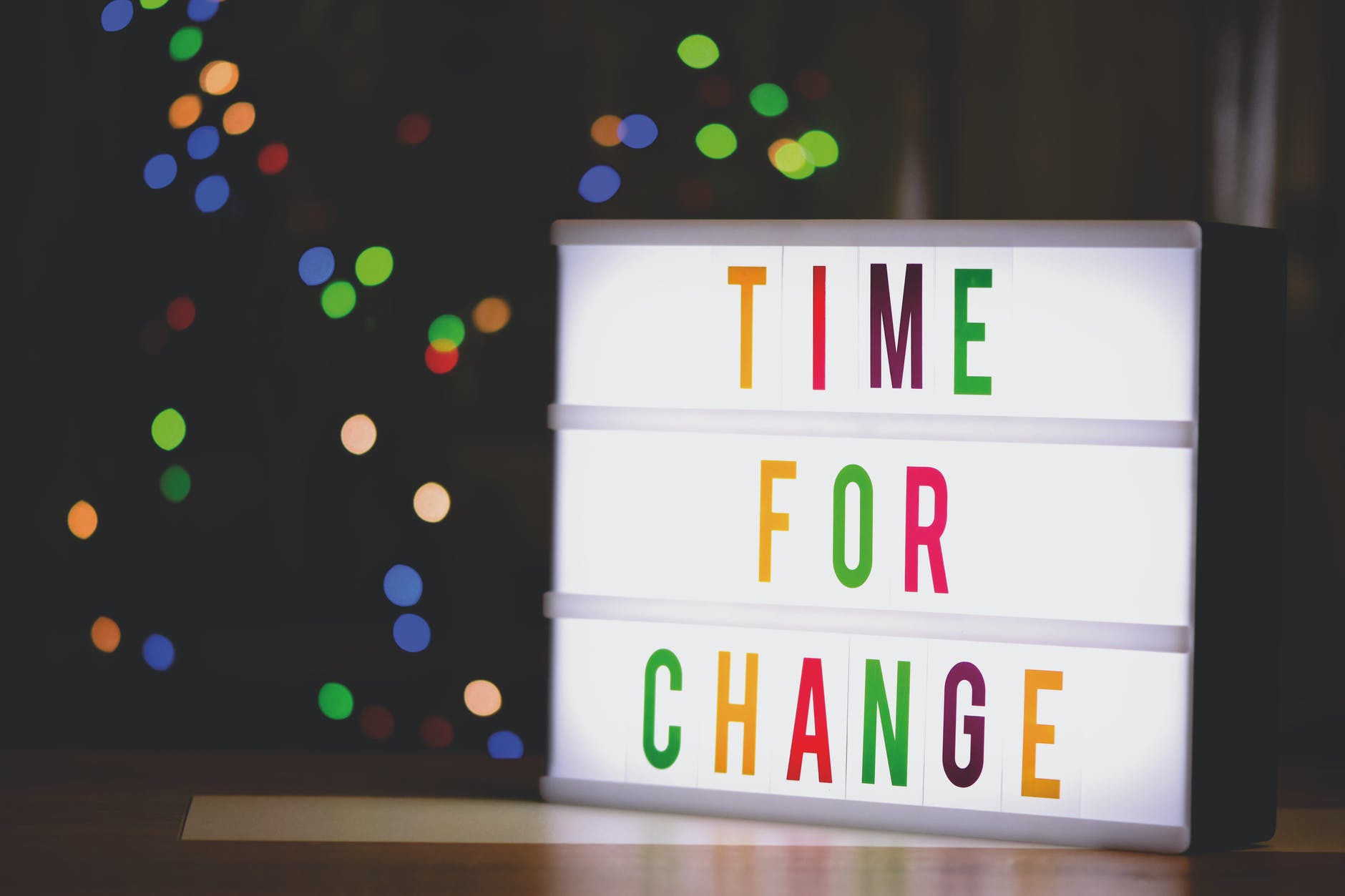
COVID-19 is changing what we want out of life and work.

Survey after survey is asking our workforce about their future intentions. They are finding a groundswell of thinking of career change, home relocation, and fantasies of quitting the rat-race. Is this a good thing? Or is it a sign of a crisis of confidence? We need to tread carefully.

We need to ask ourselves if we really do want all this change.  And what change anyway?  Because let’s face it, most people fear change and prefer the status quo.  And it has been pretty common that once a big move has been completed the grass has been found to be no greener.  Change can be as stressful and the things that cause it. 

Perhaps the pandemic has lifted the lid off lots of deeply held unhappiness in life and work.  Maybe it has done us all a huge favour by rebooting our thinking, our aims, and our ambitions.  Whatever, we need to focus on what is important.  No amount of pressure causing stress is acceptable.  And stress can be caused by all aspects of the pandemic, overworking (by holding together a business or role in adverse circumstances), under working (by being at home on furlough), and through uncertainty, and all types of change (when coping with the after-effects and a return to ‘normal’). 

It is important to recognise this and counter the causes and the effects, as soon as possible.  As we consider the possible diminishing of the pandemic, the pressure points shift and change as we recover personally and reconstruct ourselves professionally.  These effects will not just disappear as fast as they arrived, they will indeed reverberate for many years, possibly even generations to come.

The next steps are exciting and entirely possible.  Remember, you have taken many decisions before that have resulted in actions and direction.  All of them have brought you here.  You therefore have the tools in your box to make the decisions for now and next.  If you don’t feel like you have, talk to a trusted friend and colleague who can help you navigate the fog.

There are lots of things to work through, if this is sounding anything like you.

Firstly, we need to focus on our thoughts and feelings. What are they, can you name them? You may need help to recognise them, but this is worth the work. Timing is everything, how long you’ve been feeling like this is important, the feelings may have pre-dated COVID-19, or they may have been prompted or exacerbated by it. It is possible and totally understandable if unhealthy behaviours have been adopted or have been maintained. Now is the time to name them, then let go of them, one by one.

Your instincts may be to freeze, fight or fly. This classic stress reflex model helps us to understand what may be going on, and which impulses we are triggering. It is revealing. Doing nothing (freezing) isn’t very helpful in the medium to long terms if you want things to change. It may help us feel better in the short-term though. Conflict (flight) can be destructive and could cause a whole mess. And running (flight) literally runs the risk of leaving lots of value behind, only to regret it later. Remember that the grass isn’t always greener. We must think carefully.

Goal setting can help describe want you want in life and work in the short-term, medium-term, and long-terms.  It offers the chance to help identify what must happen right away, steps towards the dream, and what the end goal actually is.  The outcome might surprise you.

You are the best agent of change. It is crucial you pinpoint the changes you can make happen right here, right now. As is naming which of these changes you can take control or ownership yourself right away. If they aren’t happening, what is stopping you then? It might be that to gain change you need to be willing to let go of something. And this should not always be a solitary business. It is entirely likely you will need the support of others, your partner, family, friends, colleague or boss. What do you need them to do to help – and have you asked?

Who knows, your changes could change not only yourself, but the goals and dreams of those around you.  That is something worth celebrating.   

Photo by Alexas Fotos on Pexels.com