Ratio revolution?

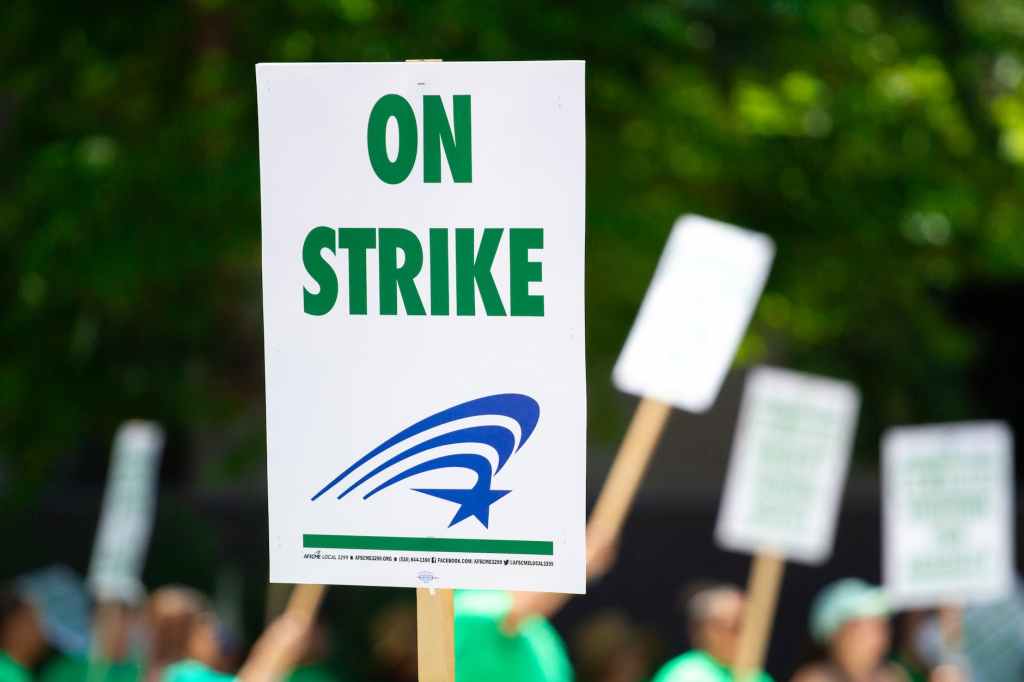
Rumour has it the former early years minister, and now prime minister, Liz Truss is considering ditching the recently proposed tweaks to adult: child ratios and axing them altogether.  An article published in The Times (7 October) suggested Truss is up for getting rid of regulations and leaving it up to childcare settings to decide how many staff they need to work with children in their care.  Cue instant, predictable, and justifiable outrage from those working in early years roles, and those speaking on their behalf.  I knew something was going on.  My end of the week inbox was sparking up like the fifth of November, my Twitter feed was pinging like a supermarket checkout.  People started asking me ‘what could we do?’

Now, early years and childcare certainly needs reform.  I have written much about that. We all need to take a good hard look at what we have been doing so far, what we have been asked, nay required, to do, what we need to do now, and what our collective long-term vision is.  And that includes critically reviewing all the anachronisms that govern our work, and the unhelpful incremental conditions placed upon us over the past decades.  We don’t always need to be told what to do, as we know best.  I am convinced of that.

To move forward together necessitates a thorough examination of the literature and research we have amassed in the UK and beyond our borders across the world.  We must use that to have an informed debate, based on all the evidence, and our maturing professional expertise.  That debate also needs to be constructive, respectful, visionary, ambitious, and confident in the knowledge the role of early years has been secured in the public’s, politicians’, and policy-makers’ awareness, value, and expectation – forever.  That is why we launched hey! this summer (Hempsall’s Early Years) and we made it our mission to do what we can to help all our future dreams. 

Many battles have been fought, some have even been won.  But, the war is far from over.  Whilst many are demanding, expecting, and relying upon us for better outcomes and impact, they don’t fully appreciate the inputs and outputs needed to make that happen.  And guess what?  Those with the power won’t just wake up one day and experience a moment of sudden and great revelation of such understanding.  They are more likely to pose more and more random ideas and headline grabbing funding or voucher offers.  Instead, it is our job and solemn responsibility, no duty, to help them realise sense and resource what our profession needs to properly and equally work with our youngest children and their families. 

It will not be easy.  To effectively influence and make the change we need, we must avoid the pitfall of conflict and assemble around the table to build and speak a common language, adopt an informed and evidenced approach, and create sound policy decisions that we can all work within.  For now, for the future, and for the benefit of children and families, and those dedicated and committed to working in early years and childcare.

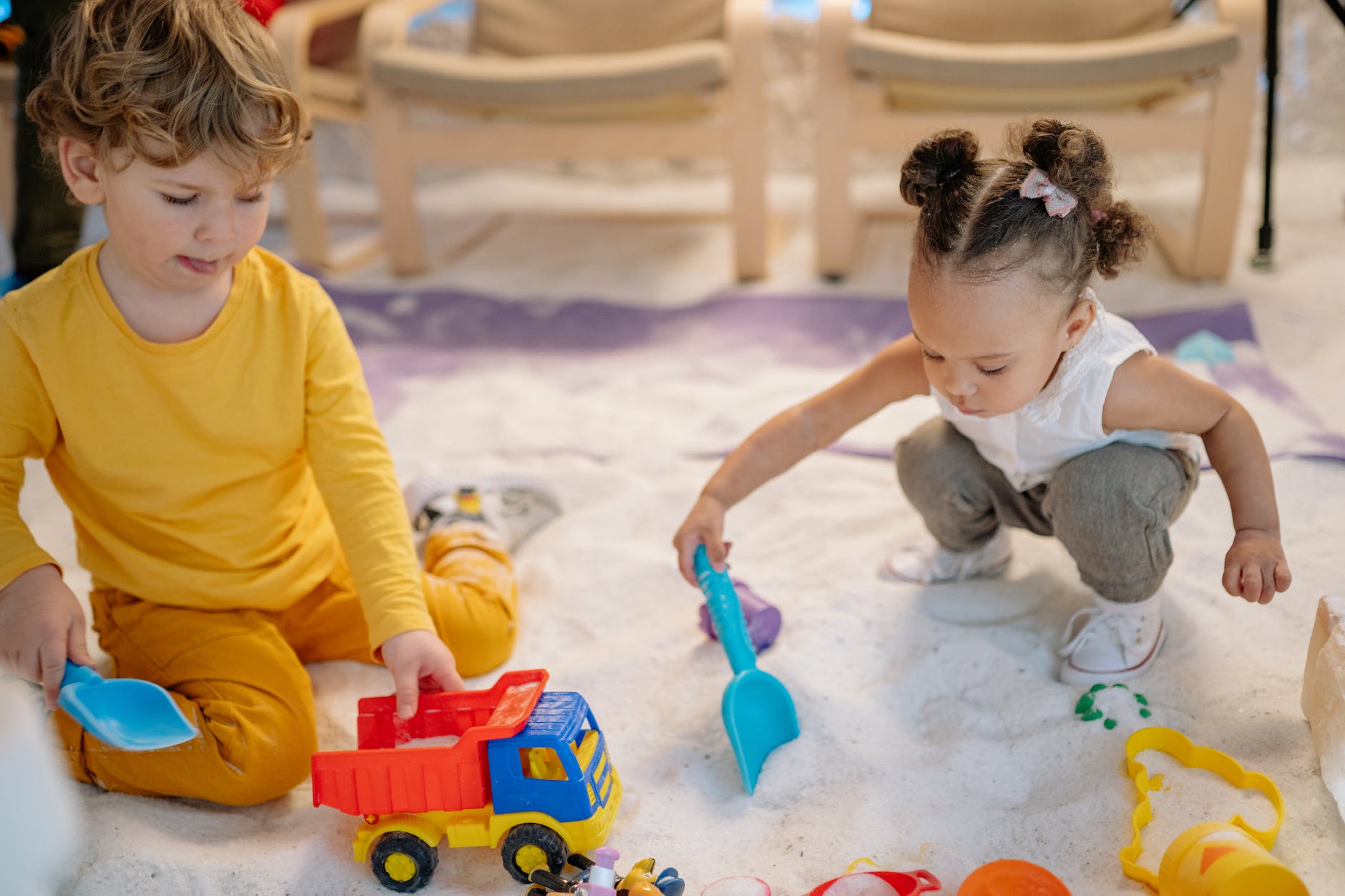
Photo by Karolina Grabowska on Pexels.com

Can we bring our sector together better by redrafting our lexicon?

I am equally proud of the terms childcare, early learning, early education, pre-school learning, early years, play and playwork, and I use them interchangeably.  In the absence of an alternative, of a universally agreed catch-all phrase, I have to.  This is the problem.  All these words, instead of bringing us together are at risk of tearing us apart.  Like many (but not all) in the sector, I place equal value on the terms childcare and early years.  And I think this is something parents do too.  To suggest equality in them shouldn’t diminish either side of the bargain.  Instead, this should bring them and us all in the sector closer together in the intended spirit of the profession.  A profession that seeks to support children’s early learning, and provide childcare to help parents and families socially, economically and developmentally. 

In our lively debates, colleagues react to each term in different ways, some baulk at the notion of being called a childcarer, arguing their role is much more significant than that.  Placing emphasis on their education role, whilst at pains to differentiate early education from that offered later in schools. I agree it is both significant and distinct.  But that should not, as a consequence, lessen the value and impact of childcare services and their vital role in supporting children, young people and families in innumerable ways.  Through what used to be frequently described as Every Child Matters five outcomes of: being healthy, staying safe, enjoying and achieving, making a positive contribution, and achieving economic wellbeing.

In recent years, there has been a huge emphasis on government funding of places for children of pre-school age.  Not always, actually never, has this funding been attributed to multiple outcomes.  Instead, it has been compartmentalised to single or super-focused aims and objectives.  For the least advantaged two-year-olds, they have been offered 15 hours of early learning to counter the effect on their educational progress compared to their peers.  For all three- and four-year-olds, they have settled on 15 hours of funded early learning a week.  For those with working parents who meet the criteria, there is an extra 15 hours topping up to 30 hours.  The additional 15 hours though is childcare, not early learning.  Not that any practitioner delivering or child benefiting from it should be able to tell the difference.  All types of provision is variously offered across home-based, group care, private and school settings, some registered and inspected by Ofsted, some not, and some delivering the Early Years Foundation Stage (EYFS) statutory framework.  Confusing, isn’t it?  But the point is it goes a long way to unhelpfully widening the gap between our dual roles. 

What can we do?  An option would be to call all pre-school provision, ‘early education’ and to cement its position and role as the first steps in a child and young person’s education journey to boot.  Regardless of its delivery model, location, registration status or EYFS delivery.  Because every engagement in pre-school provision is a learning experience.  Everything else from the beginning of school age could be termed ‘childcare’, out of school childcare if we are to be precise, whether it occurs at breakfast, after school or in the holidays.  But hang on, every engagement with childcare is a learning experience too.  I know that to be true.  Perhaps that would be the learning we all need to achieve. 

Photo by Pixabay on Pexels.com

Generation Zzzz?

Recently I have read a flurry of articles all sharing their concerns about Gen Z, from various perspectives such as from the older generation, therapists, or parents.  Yesterday a friend tweeted he was at the Edinburgh Fringe Festival and couldn’t believe how they were all at the gym or jogging in the streets – rather than getting wasted in the half-empty bars, like he did before.  ‘How things have changed since my day’ was the sub text.  A familiar phrase the older (and wiser) one gets. 

It seems we are all thinking ‘zoomers’ are not as much fun as we thought we were at their age.   We’re worried they are all too sensible, healthy, moral and ethical.  It seems there is an inter-generational dichotomy at play.  Us languishing in the middle age are apparently confused by Zs who are absolutely and rightly focused upon striving for the eradication of anachronistic social boundaries, whilst being socially, healthily, and environmentally considerate.  We fought for such freedoms and attitudes on their behalf, and we should be delighted they have grasped the baton in the relay race of conscious progress.  Even though I admit to being annoyed when they turn around and claim policies, politics and choices as their own.  I mean, I didn’t need to be made aware of the misogyny of James Bond, or the serious risks of food allergies recently, did I?

Collectively, society isn’t saying Gen Z is boring, but there is a cautionary tale here that aims to prevent them falling asleep on the job.  All this seriousness seems too much, too soon.  We are worried our young adults are creating a self-limiting lived experience, viewed through anxiety-provoking apocalyptic lens.  Surely there is a balance to be achieved here?  This is a cohort that has been bombarded with pressures and 24-hour news like never before.  They have been hot-housed in education, striving for ever-narrowing educational attainment measures, and have been equipped to broadcast the best and worst of their lives across social media, in a minute-by-minute quest for comparison and competition. 

Sensible advice is that we should all live and learn in education and beyond in equal measure, make mistakes, test boundaries, and lose control occasionally.  We need to discover for ourselves how that feels, interact widely with diverse people of all ages, backgrounds and cultures, and broaden our horizons. Learning how to be with the best and the worst of them so we develop relationships, critical capacity, tolerance and negotiation skills.  There does need to be more joy, happiness, less anxiety, and freely chosen living.  That goes for all of us.

Photo by RODNAE Productions on Pexels.com

Cheer up!  It may never happen.

Everything these days seems to be about risk.  In the media, we are bombarded by all sorts of information from around the world, the latest health research, climate change or events, the twists and turns of the economy, the behaviours and misbehaviours of our politicians, crime figures or incidents, diet and exercise, celebrity distractions – the list is almost endless.  Never have we had so much, so readily accessible, or so often.  But there is a problem.  One of the very significant subtexts of these multiple messages is the propagation of a real or perceived threat of danger.  Much of which is unhealthy, and we can all appreciate, how wildly worrying it all is for us and our families (young and old).  Mental health awareness is ballooning, mental illness seemingly more evident, and anxiety levels are ever-present. 

Too often, the reported risks to all our safety, security, lifestyles, health, finances, and communities are founded upon rocky research and statistics ground.  We are told certain behaviours, like drinking wine, eating chocolate can double or halve a risk of whatever condition they are interested in that day.  And low and behold, the next day, different research hypothesises the opposite view. Rarely do they qualify the research with sample sizes, or indeed the level of the initial risk being affected, which is often inconveniently infinitesimal.

It seems our social media influencers, press, and broadcasters cannot resist but to use every opportunity to promulgate their narrative.  We used to be able to watch a weather forecast, and simply learn about the weather for the day.  Nowadays, every single bulletin includes statistics about weather averages, with implied shock and awe when the current climate does not fall within such tightly defined parameters.  They tell us about the risks of associated with UV, possible disruption to travel, the need to carry an umbrella, how we might fare by walking on potentially slippery pavements.  Often, we are told to go outside at our own risk, and encouraged to stay in instead.  It is almost like they are adopting the traditional role of a parent briefing an inexperience teenager as they dare to leave the house and venture into the dangerous world of the outside without a jacket. 

At work, and in our lives, we have two choices.  The first is to completely ignore what is happening out there and carry on regardless.  That in itself is a very risky business.  However, unbelievably, many do this.  The subtle changes in the world around is politically, economically, socially, technologically, environmentally and legally (PESTLE) all connect with our leadership and management responsibilities.  The second option is to carefully and frequently monitor the external world on all these factors, to analyse them, consider them, discuss them and reach sensible decisions that acknowledge risk and proportionately mitigate it.  “How on earth do you know that?” I am asked frequently at work.  I reply “because I scan the external environment”.  I see it as essential in my role, and the desirable role of every other team member. 

The experience of the pandemic has told us that the unthinkable and the extraordinary can happen.  At that has been a very useful and serious lesson for all of us.  But that was the latest in a long line of similar threats that did not manifest in the ways we were perhaps being led to believe.  And it will not be the last.  The danger though is our media and leaders seem to be chasing any occasion to be the ones that break a story, to be the first to call something out, to be the prophet of doom.  This vanity project is running the real risk of causing more harm by making us all think the world is completely, totally, and inevitably dangerous and difficult.  It is in part, and that is the challenge of life and work.  But to cope better, given there is no sign our media is going to stop soon, is to make conscious choices about what and ow much we do take-in, with sceptical positivity, because the worst may just not happen.  Like Bobby McFerrin famously sang “Don’t worry, be happy”. 

Photo by Liza Summer on Pexels.com

Rethinking the working week: four lessons. 

What is a working week anyway?  Is it just me who gets to the end of Tuesday and feels like its Wednesday already?  Do you manage to survive through to Thursday, yet still cannot believe there is another day to go?  It may be my age and stage of life.  It may be a symptom of a busier desk life due to changes in working demands since the beginning of the pandemic.  It could be a result of a change of working style driven by fast-paced technology.  Whatever, this deserves my and our attention.

My working week is broadly speaking a Monday to Friday, mainly desk-based existence, loosely 9-5, with the occasional trip out and about to meet with clients, deliver training, and attend or speak at events.  I must say I am getting out and about a lot less these days, directly as a result of the growth of the use of online and hybrid meetings.  There are signs that things are returning to be closer to what they were before.  I don’t expect it will fully recoil.  That will be a good thing as far as I am concerned, for many reasons, including, productivity, work life balance, and financial and environmental costs.  But I realise that travel was what gave me variety in the week, and it recharged my social, interpersonal and interprofessional batteries.  There is a wonderful, inspiring, and informative world out there that isn’t all accessible via a webcam.  Lesson one: be proactive and get out more.    

Going back to that word productivity, things certainly are fast and furious at the keyboard and in the zoom room.  It is easy to go from one meeting or topic to another at the touch of a button.  This removes any sense of recovery or reflection, preparation or personal time, if we aren’t sufficiently and consciously vigilant, and confident enough to build this in.  We need to take ownership of this and be careful to help those around us who fall into this trap and are doing their upmost to make us join them.  Technology certainly has given us the potential to be more flexible.  But flexibility should be about creativity and balance, not a device to being over-stretched.  Lesson two: slow down and build in more downtime for thinking and creativity. 

I’ve had many colleagues reach a certain point in their lives and careers and decide to reduce from five to four days a week.  I watched from afar and with curiosity.  Now I am here myself. Thinking more deeply I realise that it has been typical for me to work four days a week for quite some time.  The fifth day has been usually taken up with other endeavours such as studying or writing.  Both stimulating activities that broke up the week in different ways, and both things that I am not currently doing.  Lesson three: reorganise the week on a 4:1 structure.

Finally, it should be acknowledged there is much to do, and for many of us fewer people around to do it.  That can drive a sense of presenteeism and that should not cloud the need to regrow capacity again nor diminish our confidence to do so.  Yes, new ways of working have increased our capacity and productivity, but that is not sustainable in itself, especially if others are thinking like me and wanting to reduce the time they are in attendance at work.  Lesson four: be bold, grow and take more risks to build again. 

Photo by Karolina Grabowska on Pexels.com