Fuel your business like a car

Recently, I heard a friend’s business wasn’t too busy and very different alternative work was being urgently sought.  It was a surprise as their services are in demand, and previously workloads were said to be “too busy and demanding”.  I started to consider what may have caused this turn-of-events.  Especially, given how my own business has grown in the past two years. It has not only bounced back from the effects of the pandemic but is breaking records too.  I wondered what was driving the contrasting experiences. 

To start, develop, grow, and sustain a business needs much investment.  Not always financial, but certainly the investment of time, energy, vision, and commitment.  Business leadership also needs us to adapt to internal, external, and local and global change.  That isn’t news.  Everything in this world is linked, even more than ever it was.  Information and economic conditions travel at the speed of light right across the world.  Business leaders must be permanently on the look-out, monitoring the external environment, and anticipating and second-guessing what could or should happen next.  We need to do this as accurately as possible, whilst acknowledging our ‘hit-rate’ may be frequent than we might want it to be.  All our efforts should be preparing ourselves, our colleagues, and our services to be ready to spring into action when such change occurs – or not.

Some of the factors I believe have helped us to grow recently have been our adapting to new ways of working, online working being one of them (we weren’t using online communications at all before).  That is unremarkable and is no different to very many businesses out there.  Not all businesses can deliver their services online, and so there have been other challenges – but they can certainly connect and communicate using this tech.  For us, we are connecting more regularly with our customers, offering open dialogue and discussion, and building a great deal of friendship and community beyond geographical and transport boundaries.  Being online has enabled us to offer lots of opportunities for our market to get involved with discussion about our work – at absolutely no cost to the customer, and minimal outlay for us.  In return, that has manifested reciprocity in spade fulls in the form of loyalty, direct orders, and mutual support and respect.  It is the connection with customers; however it is done, that is the x factor.

Running a business and managing the customer base and relations with it, is a bit like operating a car.  The heartbeat of the business is the fuel tank/electric battery.  And therefore, the levels of ‘fuel’ or energy within it should be constantly observed.  Regular glances down to the fuel gauge when travelling along the road and whilst going about day-to-day activities.  A business’ energy reserves should never fall below being half-full, at which point a top-up is recommended.  It is time to pull into the service station, to plug-in with previous, recent and current customers.  Easier said than done I agree, but it is no good being one of those business leaders or drivers always running on empty, with the red-light flickering on the dashboard.  Customers need regular contact, and a reactive response when they need and want you.  This is where the sensible energy is applied.  Attracting new customers is always needed, but often that is where people focus their attention, frequently to the detriment of existing ones.  To not apply energy in the right places at the right time is a risky business indeed.  Eventually the business (or car) will run out of energy, it will crawl to a halt on the hard shoulder, and you will be left wondering what to do next. 
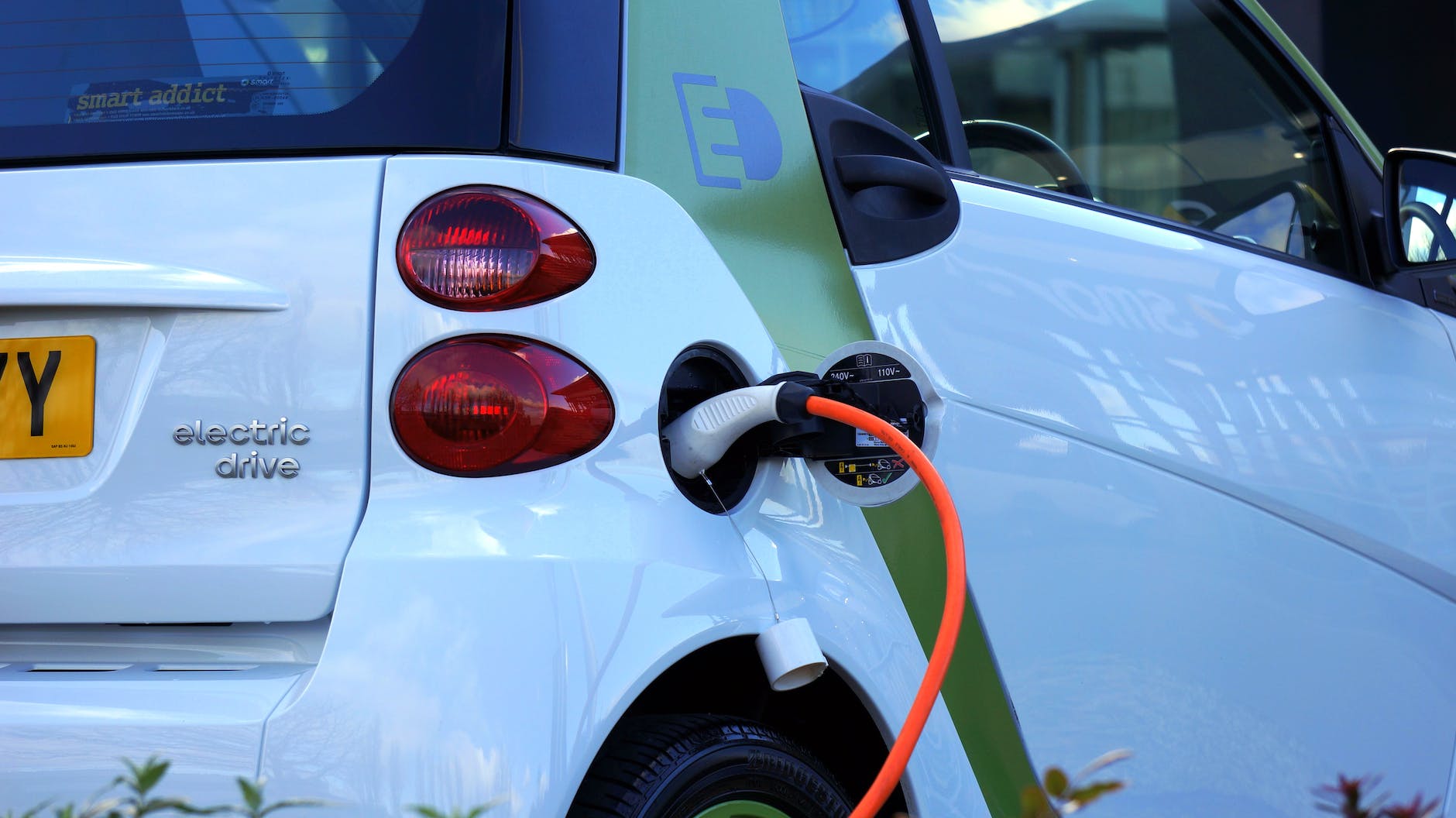
Photo by Mike B on Pexels.com

Remember, remember the fifth of November

37 years ago, I was a student.  In the November, a university friend took me to Lewes in East Sussex for bonfire night.  The local community paraded through the streets, flaming torches in their hands, exclaiming ‘burn the pope’, watched by hundreds of onlookers.  Their march concluded in the burning of an effigy of a generic Pope atop the huge bonfire.  It felt pagan, slightly shocking, and amusing in equal measure. 

Fast forward to 2022, and since then various public figures have received a similar fate. This week, the Lewes Guy Fawkes celebration set alight a likeness of Liz Truss – the recently ousted Prime Minister (just in case you haven’t been keeping up).  She was represented sawing a Union Jack covered coffin in half.  Truss, the political equivalent of Lady Jane Grey (queen of England for nine days before her execution), was only PM for 45.  Nevertheless, her tenure was arguably divisive and destructive, causing the public much distress in due course. It all ended in her abrupt dismissal to the backbenches and her Norfolk constituency.  And so, Lewes’ choice for 2022’s sacrificial burning was made. It was to be Liz Truss herself.  That’s democracy and that’s politics, I guess.  Some might say it is amusing, satirical and just harmless fun.  I am not so sure.  Let me explain.

First, I ask how short our memories are?  Have we forgotten how in the run up to the EU referendum only six years ago, divisive politics led to the murder of Jo Cox MP?  It was only last year when David Amess MP was killed during his constituency surgery – indeed the anniversary has only just passed. You may not at first easily link this bonfire night prank to that event, or indeed things even more sinister than that, but things can take unexpected and significant turns.  I have been fortunate to travel to many places and on too many occasions have witnessed the aftermaths of man’s inhumanity to man.  I have seen the desolation of Hiroshima, visited the killing fields of Cambodia, and spent time in the bustling and ambitious city of Kigali in Rwanda carrying on life after their genocide in 1994. 

I have been motivated to look at the stages that took seemingly peaceful communities towards horror and genocide.  And what I witnessed in Lewes has the foundation of such a journey into unthinkable and unspeakable behaviours.  People never usually see genocide happening, and as we know, many choose to deny it, often through an inability to accept or to comprehend it would ‘happen around here’ perpetrated by ‘people like us’.  I am not saying that rural England is on such a brink.  But I think there is danger and there is risk. 

These devasting events start with people not respecting differences between people.  This characteristic, I think, is far too abundant in our society at present, a division of ‘us’ and ‘them’ which is discharged through stereotypes or excluding people who are perceived to be different.  This is the fuel of discrimination.  Dominant groups deny basic civil rights or even citizenship to identified groups.  For us, in a time of refugees and population migration, it is all too depressingly common for people in society not to have equal citizenship or employment status. It is a key political issue for us now and for the foreseeable future.  Next, and critically, there is the process of dehumanisation.  Those perceived as ‘different’ are treated with no form of human rights or personal dignity.  

This all creates the environment where attacks are encouraged, or at least tolerated through a lack of consequences. During the Genocide in Rwanda, Tutsis were referred to as ‘cockroaches’; the Nazis referred to Jews as ‘vermin’.  Social media is a thriving repository of such unchecked language.  It drives people to think in dehumanising ways.  Then there is the concept of organisation – preparing actions that do all of this.  The Lewes event was not unplanned. No doubt a committee of volunteer organisers considered proposals and agreed to do this and spent many weeks preparing the image to be paraded and burned. 

Polarisation really is an accelerant. We all know the news media is controlled by a small group of individuals, all with their own and deliberate agendas.  Nowadays, the proliferation of social and online media facilitates all sorts of deliberate dialogues.  Social media also promotes and facilitates polarised viewpoints.  There’s little space for evidenced nuance, for being reasonable.  In Twitter, you just don’t have the character count to explain or evidence (it was 140 characters, in 2017 it doubled to 280).  It is impossible to give more than one side of the story, to achieve a reasonable balance. 

In ethics and philosophy, we talk about the importance of non-maleficence, that actions should do no harm, or that we evaluate and reconcile the level of harm or consequences of our actions. What lessons are people learning from such an event, especially the children at this family event, and what fire is being lit in them? I simply ask, how would you feel if this was your image being paraded through the street, to the amusement and entertainment of baying crowds.  How would you feel if this was your partner, daughter, or mother?  Truss is all of these. You may argue that politicians choose their careers and their political actions and should be accountable for them.  Save that for the ballot box and not for such symbolic incineration I say.

Photo by Jens Mahnke on Pexels.com

Ratio revolution?

Rumour has it the former early years minister, and now prime minister, Liz Truss is considering ditching the recently proposed tweaks to adult: child ratios and axing them altogether.  An article published in The Times (7 October) suggested Truss is up for getting rid of regulations and leaving it up to childcare settings to decide how many staff they need to work with children in their care.  Cue instant, predictable, and justifiable outrage from those working in early years roles, and those speaking on their behalf.  I knew something was going on.  My end of the week inbox was sparking up like the fifth of November, my Twitter feed was pinging like a supermarket checkout.  People started asking me ‘what could we do?’

Now, early years and childcare certainly needs reform.  I have written much about that. We all need to take a good hard look at what we have been doing so far, what we have been asked, nay required, to do, what we need to do now, and what our collective long-term vision is.  And that includes critically reviewing all the anachronisms that govern our work, and the unhelpful incremental conditions placed upon us over the past decades.  We don’t always need to be told what to do, as we know best.  I am convinced of that.

To move forward together necessitates a thorough examination of the literature and research we have amassed in the UK and beyond our borders across the world.  We must use that to have an informed debate, based on all the evidence, and our maturing professional expertise.  That debate also needs to be constructive, respectful, visionary, ambitious, and confident in the knowledge the role of early years has been secured in the public’s, politicians’, and policy-makers’ awareness, value, and expectation – forever.  That is why we launched hey! this summer (Hempsall’s Early Years) and we made it our mission to do what we can to help all our future dreams. 

Many battles have been fought, some have even been won.  But, the war is far from over.  Whilst many are demanding, expecting, and relying upon us for better outcomes and impact, they don’t fully appreciate the inputs and outputs needed to make that happen.  And guess what?  Those with the power won’t just wake up one day and experience a moment of sudden and great revelation of such understanding.  They are more likely to pose more and more random ideas and headline grabbing funding or voucher offers.  Instead, it is our job and solemn responsibility, no duty, to help them realise sense and resource what our profession needs to properly and equally work with our youngest children and their families. 

It will not be easy.  To effectively influence and make the change we need, we must avoid the pitfall of conflict and assemble around the table to build and speak a common language, adopt an informed and evidenced approach, and create sound policy decisions that we can all work within.  For now, for the future, and for the benefit of children and families, and those dedicated and committed to working in early years and childcare.

Photo by Karolina Grabowska on Pexels.com

Can we bring our sector together better by redrafting our lexicon?

I am equally proud of the terms childcare, early learning, early education, pre-school learning, early years, play and playwork, and I use them interchangeably.  In the absence of an alternative, of a universally agreed catch-all phrase, I have to.  This is the problem.  All these words, instead of bringing us together are at risk of tearing us apart.  Like many (but not all) in the sector, I place equal value on the terms childcare and early years.  And I think this is something parents do too.  To suggest equality in them shouldn’t diminish either side of the bargain.  Instead, this should bring them and us all in the sector closer together in the intended spirit of the profession.  A profession that seeks to support children’s early learning, and provide childcare to help parents and families socially, economically and developmentally. 

In our lively debates, colleagues react to each term in different ways, some baulk at the notion of being called a childcarer, arguing their role is much more significant than that.  Placing emphasis on their education role, whilst at pains to differentiate early education from that offered later in schools. I agree it is both significant and distinct.  But that should not, as a consequence, lessen the value and impact of childcare services and their vital role in supporting children, young people and families in innumerable ways.  Through what used to be frequently described as Every Child Matters five outcomes of: being healthy, staying safe, enjoying and achieving, making a positive contribution, and achieving economic wellbeing.

In recent years, there has been a huge emphasis on government funding of places for children of pre-school age.  Not always, actually never, has this funding been attributed to multiple outcomes.  Instead, it has been compartmentalised to single or super-focused aims and objectives.  For the least advantaged two-year-olds, they have been offered 15 hours of early learning to counter the effect on their educational progress compared to their peers.  For all three- and four-year-olds, they have settled on 15 hours of funded early learning a week.  For those with working parents who meet the criteria, there is an extra 15 hours topping up to 30 hours.  The additional 15 hours though is childcare, not early learning.  Not that any practitioner delivering or child benefiting from it should be able to tell the difference.  All types of provision is variously offered across home-based, group care, private and school settings, some registered and inspected by Ofsted, some not, and some delivering the Early Years Foundation Stage (EYFS) statutory framework.  Confusing, isn’t it?  But the point is it goes a long way to unhelpfully widening the gap between our dual roles. 

What can we do?  An option would be to call all pre-school provision, ‘early education’ and to cement its position and role as the first steps in a child and young person’s education journey to boot.  Regardless of its delivery model, location, registration status or EYFS delivery.  Because every engagement in pre-school provision is a learning experience.  Everything else from the beginning of school age could be termed ‘childcare’, out of school childcare if we are to be precise, whether it occurs at breakfast, after school or in the holidays.  But hang on, every engagement with childcare is a learning experience too.  I know that to be true.  Perhaps that would be the learning we all need to achieve. 

Photo by Pixabay on Pexels.com

Generation Zzzz?

Recently I have read a flurry of articles all sharing their concerns about Gen Z, from various perspectives such as from the older generation, therapists, or parents.  Yesterday a friend tweeted he was at the Edinburgh Fringe Festival and couldn’t believe how they were all at the gym or jogging in the streets – rather than getting wasted in the half-empty bars, like he did before.  ‘How things have changed since my day’ was the sub text.  A familiar phrase the older (and wiser) one gets. 

It seems we are all thinking ‘zoomers’ are not as much fun as we thought we were at their age.   We’re worried they are all too sensible, healthy, moral and ethical.  It seems there is an inter-generational dichotomy at play.  Us languishing in the middle age are apparently confused by Zs who are absolutely and rightly focused upon striving for the eradication of anachronistic social boundaries, whilst being socially, healthily, and environmentally considerate.  We fought for such freedoms and attitudes on their behalf, and we should be delighted they have grasped the baton in the relay race of conscious progress.  Even though I admit to being annoyed when they turn around and claim policies, politics and choices as their own.  I mean, I didn’t need to be made aware of the misogyny of James Bond, or the serious risks of food allergies recently, did I?

Collectively, society isn’t saying Gen Z is boring, but there is a cautionary tale here that aims to prevent them falling asleep on the job.  All this seriousness seems too much, too soon.  We are worried our young adults are creating a self-limiting lived experience, viewed through anxiety-provoking apocalyptic lens.  Surely there is a balance to be achieved here?  This is a cohort that has been bombarded with pressures and 24-hour news like never before.  They have been hot-housed in education, striving for ever-narrowing educational attainment measures, and have been equipped to broadcast the best and worst of their lives across social media, in a minute-by-minute quest for comparison and competition. 

Sensible advice is that we should all live and learn in education and beyond in equal measure, make mistakes, test boundaries, and lose control occasionally.  We need to discover for ourselves how that feels, interact widely with diverse people of all ages, backgrounds and cultures, and broaden our horizons. Learning how to be with the best and the worst of them so we develop relationships, critical capacity, tolerance and negotiation skills.  There does need to be more joy, happiness, less anxiety, and freely chosen living.  That goes for all of us.

Photo by RODNAE Productions on Pexels.com